
There’s something magical about the way the smell of garlic and fresh basil fill the kitchen, especially when you’re cooking something as humble as spaghetti. It’s not just about feeding yourself; it’s about the ritual—the sizzling, the aroma, the way the ingredients come together in a dance of scent and texture that feels like a small celebration.
This dish harks back to lazy Sunday afternoons and family dinners where simplicity reigns, but every bite feels like a warm hug. I love how the fresh basil adds a peppery brightness that lifts the ripe tomatoes into something vibrant and alive. It’s a recipe I turn to when I want comfort that’s quick, honest, and deeply satisfying.
Focusing on the sensory experience of making and eating this dish, emphasizing how the aroma of fresh basil and the sizzle of garlic transform the simple ingredients into a comforting ritual that connects me to my childhood and the seasons’ bounty.
The sensory joy of simple pasta
- Cooking this dish always reminds me of my grandmother’s tiny kitchen, where the air was thick with garlic and promise.
- There’s a rush of pride when I manage to get the tomatoes just right—so sweet and bursting, it’s like summer on a plate.
- I get oddly nostalgic every time I tear fresh basil, the smell instantly takes me back to childhood gardens and lazy afternoons.
- This simple pasta has been my comfort on cold nights, its warm, fresh flavors making everything feel a bit more manageable.
- Sometimes, I feel a tiny thrill when I discover a new twist—like a splash of chili oil—that makes it feel like my own little culinary secret.
The story behind this recipe
- Making this spaghetti with fresh tomatoes and basil always takes me back to summer evenings in Italy, where simplicity was king. I remember stealing ripe cherry tomatoes straight from the garden, feeling the sun-warmed skin burst with sweetness as I bit into them. That fresh, almost primal flavor is what I chase every time I make this dish — a reminder that good food doesn’t need fancy techniques, just honest ingredients and a bit of patience.
- What keeps me coming back to this recipe is how it’s like a little ritual—cracking garlic, tearing basil leaves, the sizzle of oil in the pan. It’s a small act of mindfulness, turning humble pantry staples into something vibrant and alive, like capturing a fleeting moment of summer in a bowl. It’s more than just pasta; it’s a connection to the season, to memory, and to that unspoken joy of simple, honest cooking.
- heading:
Contextual origin, trivia, or history
- This dish traces its roots to Italy’s simple peasant cuisine, where fresh ingredients were all that was needed.
- Tomatoes and basil became a natural pairing in Italian cooking, celebrated for their vibrant flavors and aromatic synergy.
- The idea of combining pasta with fresh herbs and tomatoes gained popularity in the 19th century, embodying rustic simplicity.
- Interestingly, basil was once considered a sacred herb in ancient Greece and Rome, symbolizing love and protection.
- The classic red, white, and green of this dish mirror the Italian flag, echoing national pride in humble ingredients.
Ingredient breakdown: key components
- Tomatoes: I love using plump, ripe heirlooms; their sweet, juicy burst when bitten is unmatched. If you prefer a tangier sauce, try cherry tomatoes—they soften quickly and add a concentrated flavor.
- Fresh Basil: The aroma of torn basil leaves is my cue that I’m almost there. Skip dried basil here—nothing beats the peppery brightness of fresh leaves, especially when sprinkled at the end for vibrancy.
- Garlic: I gently crush and chop garlic to release its pungent, nutty aroma. If you want a milder flavor, roast the garlic first; for more punch, add it earlier in the pan until golden.
- Olive Oil: I use extra-virgin for its fruity richness and silky mouthfeel. If you want a lighter touch, reduce the amount slightly but don’t skip it—it’s the base of flavor.
- Spaghetti: I prefer a good-quality, bronze-cut pasta for its rough surface that holds sauce better. If I’m short on time, I’ll break the spaghetti in half for a quicker, more rustic presentation.
- Salt: I season the pasta water generously—salty like the sea—so the noodles are flavorful from the inside out. For a subtle tweak, add a pinch of chili flakes to the water for a subtle heat.
- Black Pepper: I grind fresh over the finished dish, adding a spicy kick that complements the sweet tomatoes. If you don’t have a grinder, a pinch of crushed red pepper can work as a substitute.
Spotlight on key ingredients
Tomatoes:
- I love using ripe heirlooms; their sweet, juicy burst when bitten is unmatched. If you prefer a tangier sauce, try cherry tomatoes—they soften quickly and add a concentrated flavor.
- Fresh Basil: The aroma of torn basil leaves is my cue that I’m almost there. Skip dried basil here—nothing beats the peppery brightness of fresh leaves, especially when sprinkled at the end for vibrancy.
Fresh Basil:
- Basil: The bright green leaves release a peppery, aromatic scent when torn, infusing the dish with freshness. Be gentle when adding to preserve their vibrant color and flavor.
- Basil: During cooking, basil leaves wilt quickly, releasing a sweet, peppery aroma that’s essential for that authentic, vibrant flavor profile. Use fresh for best results.
Notes for ingredient swaps
- Fresh Tomatoes: I love using ripe heirlooms for their sweet, juicy burst. Swap with cherry tomatoes for a more concentrated, tangy flavor—quick to soften and perfect for a quick sauce.
- Basil: The aroma of torn basil is my cue for freshness. Dried basil can be used in a pinch, but it loses that bright, peppery punch—add it earlier in cooking to extract some flavor.
- Olive Oil: Extra-virgin olive oil gives a rich, fruity note. For a lighter option, try a mild vegetable oil, but you’ll miss that deep, grassy aroma.
- Garlic: I crush and chop garlic to release its pungent aroma. Roasting garlic first can mellow it out for a sweeter, nuttier flavor—skip raw if you want less punch.
- Spaghetti: I prefer bronze-cut pasta for better sauce adherence. If unavailable, any good quality dried pasta works; for a rustic look, break it in half before boiling.
- Salt: I season pasta water generously—salty as the sea. For a different flavor, add a pinch of chili flakes to the water for a subtle heat.
- Parmesan: Grated Parmesan adds umami. For a dairy-free version, skip cheese or top with toasted breadcrumbs for texture and saltiness.
Equipment & Tools
- Large pot: Boil pasta evenly
- Skillet: Cook the sauce and combine with pasta
- Slotted spoon: Drain pasta without excess water
- Chopping board: Prepare garlic and basil
- Chef’s knife: Chop garlic and tear basil
Step-by-step guide to spaghetti with tomato and basil
- Gather all equipment: a large pot for pasta, a skillet for sauce, a slotted spoon, and a chopping board. Fill the pot with water, add a generous pinch of salt, and bring to a rolling boil at 100°C (212°F).
- While waiting for the water, peel and finely chop 3-4 garlic cloves. Tear about 1 cup of fresh basil leaves into rough pieces. Set aside.
- Add spaghetti to boiling water, cook until al dente—about 8 minutes, or until it just starts to taste tender but still firm. Stir occasionally to prevent sticking. Drain, reserving a cup of pasta water.
- Heat the skillet over medium heat, about 160°C (320°F). Pour in 2-3 tablespoons of good-quality olive oil. When it shimmers, add the chopped garlic. Sizzle for about 30 seconds until fragrant and slightly golden—be careful not to burn.
- Add the chopped tomatoes (about 2 cups), season with salt, and cook on medium heat for 10 minutes. Stir occasionally, watching for the tomatoes to soften and release their juices, creating a slightly chunky sauce.
- Toss the drained spaghetti directly into the skillet with the tomato mixture. Add a splash of reserved pasta water if needed to loosen. Mix well, letting the pasta soak up the flavors for 1-2 minutes.
- Remove from heat. Tear fresh basil leaves over the top and gently toss. Taste and adjust seasoning—more salt or a pinch of pepper if needed.
- Finish with a drizzle of olive oil and a sprinkle of grated Parmesan (if using). Rest for 1-2 minutes, then serve immediately, garnished with extra basil if desired.
Serve immediately in warmed bowls. Garnish with extra basil and a drizzle of olive oil for fresh aroma and vibrant presentation.
How to Know It’s Done
- Pasta should be al dente, with a slight bite when tasted.
- Tomato sauce should be vibrant, slightly chunky, with a sweet, fresh aroma.
- Basil leaves should be bright green, fragrant, and slightly wilted but not mushy.
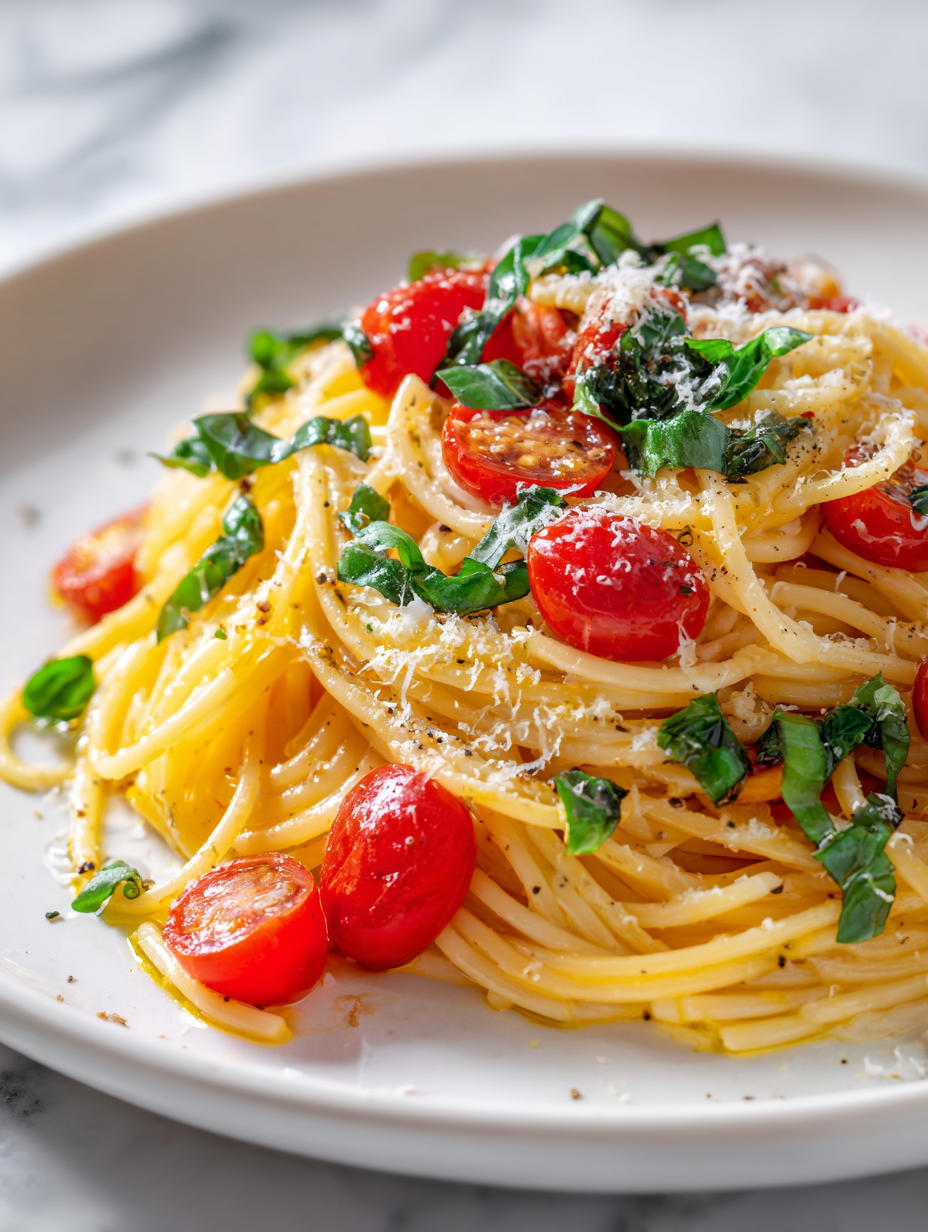
Spaghetti with Fresh Tomato and Basil
Ingredients
Equipment
Method
- Fill a large pot with water, add a generous pinch of salt, and bring to a rolling boil. This will be your pasta cooking water.
- While the water heats, peel and finely chop the garlic cloves. Tear the basil leaves into rough pieces and set both aside.
- Add the spaghetti to the boiling water, stirring occasionally to prevent sticking. Cook until al dente, about 8 minutes, until it just starts to taste tender with a slight bite.
- While the pasta cooks, heat 2 tablespoons of olive oil in a skillet over medium heat. When shimmering, add the chopped garlic and sauté for about 30 seconds until fragrant and golden, releasing a warm, nutty aroma.
- Add the chopped tomatoes to the skillet with garlic, stirring to combine. Season with salt and cook for 10 minutes, allowing the tomatoes to soften and release their juices, creating a slightly chunky, glossy sauce.
- Drain the spaghetti using a slotted spoon or colander, reserving about a cup of the pasta water.
- Add the drained spaghetti directly into the skillet with the tomato sauce. Toss gently to coat the noodles, adding a splash of reserved pasta water if needed to loosen the sauce and help it cling to the pasta.
- Remove the skillet from heat, then tear fresh basil leaves over the pasta and gently toss to distribute. Drizzle with a little more olive oil for shine and aroma.
- Taste and adjust seasoning with more salt or freshly ground black pepper as desired. Serve immediately in warmed bowls, garnished with extra basil if you like.
Pro tips for perfect spaghetti
- Use flavorful oil: Extra-virgin olive oil adds a fruity aroma—skip light oils for depth.
- Salt pasta water generously: It’s the foundation for well-seasoned noodles that taste like the sea.
- Tear basil by hand: Preserves aroma and prevents bruising, releasing more peppery brightness.
- Cook garlic carefully: Sizzle over medium heat until fragrant, golden, but not burned to avoid bitterness.
- Reserve pasta water: A splash helps loosen sauce and helps it cling better to the noodles.
- Taste before serving: Adjust salt, pepper, and basil at the end for a lively, balanced bite.
- Finish with olive oil: A drizzle over hot pasta enhances flavor and adds a silky sheen.
Common mistakes and how to fix them
- FORGOT to taste and adjust seasoning before serving—always check for balance.
- DUMPED the pasta water down the drain—save some to loosen sauce if needed.
- OVER-TORCHED the garlic—stir constantly and remove from heat once fragrant.
- SKIPPED tearing basil—rough tearing releases more aroma and flavor.
Quick fixes and pantry swaps
- When sauce is watery, splash in a little more tomato paste and simmer until thickened.
- If sauce tastes flat, add a pinch of sugar or a squeeze of lemon to brighten flavors.
- Splash a bit of pasta water if noodles stick together after draining.
- Patch burnt garlic by removing it immediately; start over with fresh garlic if necessary.
- Shield delicate basil from high heat to preserve its vibrant aroma and color.
Prep, store, and reheat tips
- You can chop garlic and tear basil leaves a few hours ahead; store separately in airtight containers in the fridge. The aroma stays fresh and vibrant if kept cool.
- Prepare the tomato sauce up to 1 day in advance. Store in an airtight jar in the fridge; the flavors deepen and meld overnight, mellowing the acidity slightly.
- Cook the spaghetti al dente, then toss with a little olive oil to prevent sticking. Keep in fridge for up to 24 hours—reheat gently to avoid mushiness.
- Reheat in a skillet over medium-low heat, adding a splash of reserved pasta water or olive oil. The aroma will revive, and the texture remains firm if done gently.
- Fresh basil is best added just before serving to keep its bright aroma. If you reheat the dish, sprinkle fresh basil on top afterward for a fresh burst.
Top questions about spaghetti with tomato and basil
1. What kind of tomatoes work best?
Use fully ripe, fragrant tomatoes for the best flavor, especially heirlooms or vine-ripened. If using cherry tomatoes, cook them slightly longer until they soften and release their juice.
2. Can I substitute dried basil?
Fresh basil should be torn just before adding to preserve its aroma. If you must use dried basil, add it early during cooking to extract flavor, but it won’t be as vibrant.
3. Can I use a different oil?
Use good-quality extra-virgin olive oil for richness and aroma. A milder oil can be used if you prefer a less pronounced olive flavor, but skip cheap or bland oils.
4. How do I know when the pasta is ready?
Cook the pasta until it’s al dente, about 8 minutes, then drain quickly. Reserve some pasta water to loosen the sauce if it thickens or sticks.
5. How do I prevent garlic from burning?
Add garlic to hot oil and cook until fragrant and golden, about 30 seconds to 1 minute. Be careful not to burn it, or it will taste bitter.
6. When should I add the basil?
Tear basil leaves just before serving to keep their bright flavor. Adding basil too early can cause it to turn brown and lose aroma.
7. Should I season the sauce during cooking or at the end?
Adjust seasoning at the end—taste for salt, pepper, and basil. If the sauce is too acidic, a tiny pinch of sugar can balance the flavors.
8. Can I make this dish ahead of time?
You can prepare components ahead: chop garlic and tear basil leaves a few hours before, store separately in the fridge to keep freshness.
9. How do I reheat this dish without overcooking?
Reheat leftovers gently in a skillet over low heat, adding a splash of reserved pasta water or olive oil. Serve immediately once heated through.
10. What if my sauce is too runny?
If sauce is too watery, stir in a teaspoon of tomato paste and simmer until thickened. For a quick fix, add a bit of grated Parmesan or breadcrumbs.
This dish feels like a quiet act of rebellion—simple ingredients, but full of life and flavor. The aroma of basil and garlic, the slight chew of perfectly cooked spaghetti—these are small pleasures that ground me in the moment. It’s a reminder that good food doesn’t need fuss, just honest effort and a little patience.
In the end, it’s about those fleeting, vibrant bites—fresh, bright, and comforting all at once. A bowl of spaghetti with tomato and basil isn’t just dinner; it’s a small celebration of season, simplicity, and the joy of coming home to what’s real.

Hi, I’m Grace Morgan, and welcome to my kitchen. This is a space shaped by family meals, curious hands reaching for snacks, paws under the table, and recipes that come together in the middle of real life. I’m a food blogger, a mother, and a passionate pet keeper. Most days, I’m cooking with one eye on the stove and the other on someone who needs me, whether that’s a child asking for a taste or a dog hoping something might fall.


