
I’ve learned that perfect scrambled eggs aren’t about rushing through them or tossing in every fancy ingredient. It’s about patience, gentle heat, and a watchful eye. When you slow down, those eggs turn from a dull, rubbery mess into something luxuriously creamy, almost velvety in texture.
There’s a quiet joy in taking the time to stir slowly, watching the curds form gradually, and resisting the urge to crank up the heat. It’s a mindful process that rewards you with eggs that are tender, moist, and flavorful—nothing like the hurried scramble you might do in a rush. Once you get the rhythm, it’s hard to go back to the quick, overcooked version.
Focusing on the importance of gentle heat and patience, I want to share how giving scrambled eggs time to cook slowly transforms their texture from rubbery to luxuriously creamy. It’s not about the ingredients alone, but about respecting the process—embracing the slow, almost meditative rhythm of stirring and watching the eggs evolve.
The art of gentle heat
- There’s a nostalgic comfort in the simple act of stirring eggs slowly, like reclaiming a quiet moment in a busy morning.
- I’ve felt the pride that comes with mastering gentle heat—seeing those curds softly form without turning rubbery is a small victory.
- Sometimes, I get lost in the process, the warm smell of eggs filling the kitchen, reminding me why I love cooking for myself.
- A rushed scramble feels chaotic, but when I take my time, the eggs become a tender, creamy treat I truly savor.
- Cooking eggs this way has taught me patience—turning a humble breakfast into a moment of mindful quiet.
The story behind this recipe
- I first started paying attention to how gentle the heat was when I realized rushed eggs often tasted flat and rubbery. One morning, I decided to slow down, using lower heat and a wooden spoon, just to see what would happen. The eggs transformed into something creamy, almost custardy, and I haven’t gone back since.
- That quiet moment of stirring, feeling the soft curds come together slowly, became a small ritual for me. It’s about respecting the eggs and the process—letting patience turn a simple breakfast into a small, mindful act.
- There’s a kind of meditative satisfaction in coaxing the eggs into silky submission, and it’s a reminder that good things often take time and gentle handling.
Trivia and historical notes
- The technique of gently scrambling eggs gained popularity in France, emphasizing patience and low heat for a creamy texture.
- In the early 20th century, some chefs believed that constant stirring over high heat was the key, but modern cooks favor slow, gentle methods.
- Eggs have been a breakfast staple across cultures for centuries, but the idea of ‘perfect’ scrambled eggs is a relatively recent culinary refinement.
Key ingredients and tips
- Fresh eggs: I love that bright, almost lemony smell when cracking fresh eggs; if yours smell off, skip them.
- Butter: I prefer European-style butter for its rich, slightly nutty flavor, but a good salted butter works fine—just watch the salt.
- Cream or milk: A splash makes the eggs creamier and more luxurious; skip if you want a leaner scramble, but it’s a game-changer.
- Salt: I add it early to help break down the proteins, making the eggs tender; too much, though, can make them watery.
- Pepper: Freshly ground pepper adds a sharp bite; sprinkle at the end to preserve that bright, spicy aroma.
- Optional herbs: Chives or parsley brighten the eggs with a fresh, grassy note—add just before serving to keep their color and flavor vibrant.
Spotlight on key ingredients
Eggs:
- Fresh eggs: They have a bright, lemony aroma and a slightly runny yolk; fresher eggs produce fluffier, more cohesive curds.
- Eggs behave differently depending on freshness—older eggs tend to be drier and less cohesive, affecting the creaminess of the scramble.
Butter:
- When melted slowly, it adds a rich, nutty aroma and a silky texture; if overheated, it browns and can add a bitter note.
- The quality of butter influences flavor—European-style butters bring a more complex, savory note to the eggs.
Notes for ingredient swaps
- Dairy-Free: Use coconut cream or plant-based milk instead of butter and cream—your eggs will still be rich, just a little different in mouthfeel.
- Vegan: Swap eggs for tofu scramble—blend silken tofu with a pinch of turmeric and nutritional yeast for color and flavor.
- Low Salt: Reduce or omit salt; rely on fresh herbs and pepper to boost flavor without the sodium punch.
- Lactose-Intolerant: Skip dairy altogether; use olive oil or avocado oil for cooking—still gentle, still tasty.
- Herb Variations: Swap chives or parsley for dill or basil—different fresh notes to brighten your scramble.
- Extra Creaminess: Add a dollop of Greek yogurt or sour cream after cooking—makes the eggs extra velvety and tangy.
- Spice Kick: Mix in a pinch of smoked paprika or cayenne for a subtle smoky heat—just a little spice to wake up the palate.
Equipment & Tools
- Non-stick skillet: Prevents sticking and allows gentle stirring.
- Silicone spatula: For gentle folding and scraping without scratching.
- Small mixing bowl: Whisking eggs smoothly.
- Whisk: To fully combine eggs, salt, and cream.
Step-by-step guide to perfect eggs
- Equipment & Tools: Use a non-stick skillet for easy stirring and clean-up. A silicone spatula is best for gentle folding. Have a small bowl ready for whisking eggs, and a plate for resting.
- Crack 3 large eggs into the bowl. Add a pinch of salt and a splash of cream or milk. Whisk vigorously until fully combined, about 15 seconds. Look for a slight froth and even color.
- Place your skillet over low heat (~120°C / 250°F). Add 1 tablespoon of butter, letting it melt slowly without bubbling or browning. Wait until the butter is just foaming.
- Pour the beaten eggs into the skillet. Let them sit undisturbed for about 10 seconds, then gently stir with the spatula, pushing eggs from the edges toward the center. Keep the heat low throughout.
- Continue stirring gently, folding the eggs over themselves. After approximately 30 seconds, you’ll notice curds forming and becoming slightly translucent. Keep stirring slowly and evenly.
- Check the eggs: they should look moist but not runny, with a soft, slightly glossy appearance. If they start to bubble or look dry, remove from heat immediately.
- Remove the skillet from heat just before they reach your desired consistency—they will continue to cook off-heat. Let them rest for 30 seconds to settle and finish gently.
- Plate immediately. Finish with a pinch of freshly ground pepper and optional herbs. Serve while warm and creamy, with a gentle jiggle in the center.
Let the eggs rest for 30 seconds after removing from heat. Serve immediately on a warm plate, garnished with herbs if desired. Enjoy the soft, creamy texture while still warm.
How to Know It’s Done
- Eggs look moist, slightly glossy, and softly curdled.
- No bubbling or dry edges on the eggs during cooking.
- Eggs gently jiggle in the center when plated, indicating creaminess.
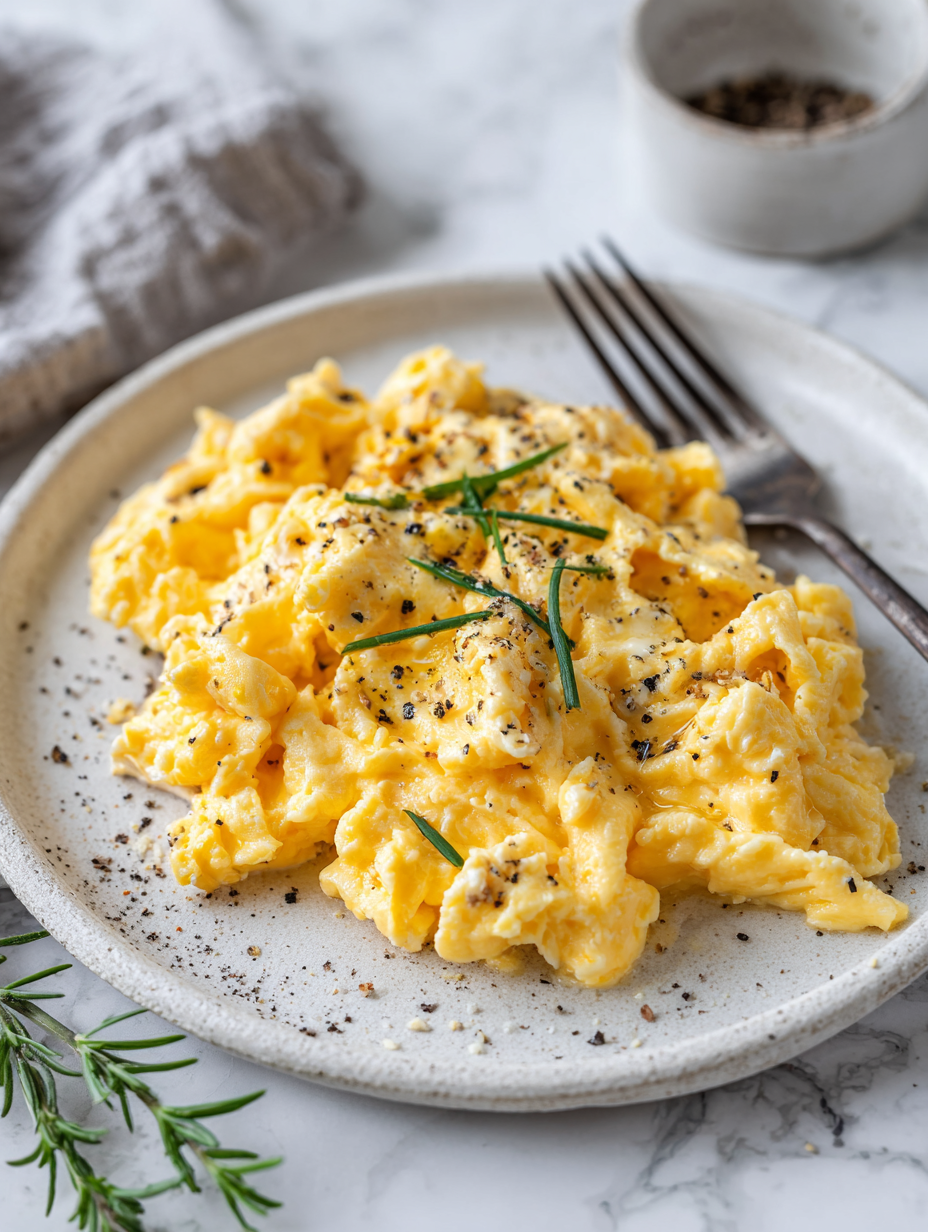
Perfect Slow Scrambled Eggs
Ingredients
Equipment
Method
- Crack the eggs into a small mixing bowl, add a pinch of salt, and a splash of cream or milk if using. Whisk vigorously until the mixture is frothy and evenly combined.
- Place your non-stick skillet over the lowest heat setting and add the butter. Let it melt slowly, listening for a gentle sizzling and watching for a slight foaming without browning.
- Pour the beaten eggs into the skillet once the butter is just bubbling, then let them sit undisturbed for about 10 seconds, so the eggs start to set at the edges.
- Begin gently stirring the eggs with your silicone spatula, pushing the curds from the edges toward the center, maintaining a slow, circular motion. Keep the heat low and the movement gentle.
- Continue stirring slowly and evenly, allowing the eggs to softly curdle and become glossy. This process should take about 30 seconds to a minute, during which the eggs will gradually thicken and form tender, moist curds.
- Once the eggs look creamy, slightly translucent, and softly set, remove the skillet from the heat. They will continue to cook slightly from residual warmth, so it's best to take them off just before they are fully firm.
- Gently fold in freshly chopped herbs if desired, and give the eggs a final stir. Taste and adjust seasoning with additional salt or pepper as needed.
- Serve immediately on a warm plate, enjoying the soft, velvety texture with a subtle shine and bright flavor from the herbs and seasoning.
Notes
Pro tips for perfect scrambled eggs
- Low and slow: Use gentle heat to coax out silky curds, avoiding rubbery eggs and harsh textures.
- Constant gentle stirring: Keep the eggs moving softly to create even, creamy curds without overcooking.
- Remove early: Take the eggs off heat when slightly underdone; residual warmth finishes the cooking perfectly.
- Use a silicone spatula: Scrape and fold smoothly for tender, fluffy eggs without breaking the curds.
- Add butter last: Finish with a small knob of butter off-heat for a glossy, rich finish and enhanced flavor.
- Whisk thoroughly: Incorporate air and ensure uniform mixture for light, cohesive scramble.
- Avoid high heat: High temperatures cause rapid curdling and dryness; patience yields better texture.
Common mistakes and how to fix them
- FORGOT the gentle heat → Use low heat to prevent overcooking.
- DUMPED too much butter → Use just enough for a silky texture, not greasiness.
- OVER-TORCHED eggs → Remove from heat early; eggs continue cooking off-heat.
- MISSED stirring rhythm → Stir slowly and continuously for creamy curds.
Quick fixes and pantry swaps
- When eggs look dry, splash in a little warm milk to restore creaminess.
- If eggs stick, shield the pan with a damp cloth and lower the heat.
- DUMPED too much butter? Use a paper towel to soak up excess and prevent greasiness.
- Splash cold water on the pan if eggs overcook quickly; momentarily cools and slows cooking.
- When in doubt, rescue with a quick five-second stir to redistribute heat and moisture.
Prep, store, and reheat tips
- Crack and whisk the eggs in advance, store in an airtight container in the fridge for up to 24 hours. The mixture may slightly lose some fluffiness but remains workable.
- Prepare your butter and herbs ahead—melt butter and chop herbs the night before. Keep refrigerated; herbs stay fresh for 1-2 days, adding brightness when stirred in just before serving.
- Reheat leftovers gently in a non-stick skillet over low heat, stirring constantly until just warmed through. Expect a slightly firmer texture and a mellow, cooked aroma.
- For best flavor, consume freshly cooked eggs within 1 hour. Reheating can dull the creamy mouthfeel and alter the delicate aroma of butter and herbs.
- If storing for longer than a day, consider freezing prepared egg mixture in small portions—defrost in the fridge overnight and reheat gently, watching for slight moisture separation and aroma changes.
Top questions about perfect scrambled eggs
1. Should I use fresh eggs or can I go for older ones?
Use fresh eggs for a brighter flavor and better texture. Older eggs can be slightly drier and less cohesive.
2. Can I make scrambled eggs without dairy?
A splash of cream or milk makes the eggs creamier and richer. Skip if you prefer a leaner scramble.
3. Is high heat better for faster cooking?
Low, gentle heat is key. Cooking on high heat makes eggs rubbery and dry out quickly.
4. How should I stir the eggs for the best texture?
Stir slowly and constantly to create soft, even curds. Rapid stirring or over-agitation leads to tough eggs.
5. When do I know they are done?
Remove eggs from heat just before they look fully set; residual warmth finishes cooking them perfectly.
6. When should I add butter or herbs?
Add butter or herbs at the end for flavor and shine. Overcooking butter can make eggs greasy and dull.
7. What tools are best for fluffy scrambled eggs?
Use a non-stick skillet and silicone spatula for easy folding and gentle handling without breaking the curds.
8. How can I reheat scrambled eggs without ruining them?
Reheat leftovers gently over low heat, stirring constantly. Expect a firmer texture and slightly mellow flavor.
9. What happens if I overcook my eggs?
Overcooking results in dry, rubbery eggs. Fix this by lowering the heat immediately and removing from stove.
10. Should I season during or after cooking?
Taste and adjust with salt and pepper at the end. Fresh herbs brighten the flavor and add visual appeal.
Taking the time to gently cook scrambled eggs really changes how they feel and taste. It’s a simple shift in approach that makes breakfast feel more special, even on busy mornings.
Once you get used to that slow, patient rhythm, it’s hard to go back to the rushed, overcooked version. There’s a quiet satisfaction in creating something creamy and tender with just eggs, butter, and a little care.

Hi, I’m Grace Morgan, and welcome to my kitchen. This is a space shaped by family meals, curious hands reaching for snacks, paws under the table, and recipes that come together in the middle of real life. I’m a food blogger, a mother, and a passionate pet keeper. Most days, I’m cooking with one eye on the stove and the other on someone who needs me, whether that’s a child asking for a taste or a dog hoping something might fall.


