
Making lobster ravioli from scratch isn’t just about the end dish; it’s about the tactile joy of kneading, shaping, and feeling the pasta come alive in your hands. There’s a quiet satisfaction in crafting each piece, feeling the silky dough give way, and imagining that burst of fresh lobster flavor inside every bite.
This recipe is a slow dance with texture and aroma. I love the way the lobster’s briny sweetness mingles with the tender pasta, and how the process becomes almost meditative—each fold and crimp a mindful act that transforms simple ingredients into something special. It’s not quick, but the sensory rewards are worth every minute spent.
Focusing on the overlooked art of making lobster ravioli from scratch, highlighting the tactile joy and sensory satisfaction of shaping pasta by hand, and infusing each step with mindful attention to texture and aroma.
The tactile joy of handmade pasta
- Folding each ravioli feels like a quiet ritual, connecting me to centuries of pasta makers before me.
- That first bite, when the lobster’s sweet, briny flavor hits just right, makes all the effort worth it.
- I love the chaos of decorating the edges perfectly—each one a tiny handmade treasure.
- Sharing this dish with friends feels like offering a piece of my culinary heart, messy edges and all.
- There’s a nostalgic rush in the aroma of lobster and butter filling the kitchen, reminding me of coastal summers.
The inspiration behind this dish
Making lobster ravioli by hand always takes me back to a summer trip along the coast, where I watched local fishermen pull fresh lobsters from the sea. Inspired by those mornings, I started experimenting with wrapping that sweet, briny lobster meat in delicate pasta — a process that feels both luxurious and grounding. It’s a dish that’s as much about the tactile act of shaping as it is about tasting that first burst of oceanic flavor inside each bite.
Lobster Ravioli Trivia & Origins
- Lobster ravioli has roots in Italian coastal cuisine, blending luxury ingredients with traditional pasta-making.
- The dish gained popularity in the U.S. during the 1980s as a symbol of decadent, seafood-inspired fine dining.
- Historically, ravioli were handmade for special occasions, often filled with local seafood or seasonal ingredients.
- Lobster was once considered food for the elite, making lobster ravioli a modern twist on historical indulgence.
Ingredient breakdown: key components
- Lobster: First-person, I love the sweet, briny aroma of fresh lobster, which really shines through in the filling. Swap with shrimp if you want a milder seafood flavor, but don’t expect that oceanic punch.
- Pasta dough: I prefer a simple, silky dough made with just flour and eggs; it’s forgiving and holds the filling well. You could try gluten-free flour, but it might need a bit more water or oil to get that tender, pliable texture.
- Egg wash: I use it to seal the ravioli edges—makes a shiny, tight fold that won’t leak during boiling. Skip it if you’re egg-sensitive, but be prepared for a slightly less glossy finish.
- Herbs & seasonings: A touch of fresh thyme or tarragon adds brightness without overpowering the lobster. Dried herbs work in a pinch, but fresh really elevates the flavor and aroma.
- Butter & lemon: I finish with a butter sauce brightened with lemon zest—oozy and fragrant. You can swap lemon for a splash of white wine if you prefer a different acidity level, but the lemon keeps it lively.
- Cheese (optional): A light dusting of Parmesan adds a salty, nutty note that complements the seafood. Skip it for a dairy-free version, but the flavor will be a bit less rounded.
- Cooking liquid: I use seasoned, salted water with a bay leaf or two. It’s the simplest way to keep the pasta tender and flavorful. If you forget to season the water, the ravioli can taste bland—so don’t skip that step.
Spotlight on key ingredients
Pasta dough:
- Lobster: First-person, I love the sweet, briny aroma of fresh lobster, which really shines through in the filling. Swap with shrimp if you want a milder seafood flavor, but don’t expect that oceanic punch.
- I prefer a simple, silky dough made with just flour and eggs; it’s forgiving and holds the filling well. You could try gluten-free flour, but it might need a bit more water or oil to get that tender, pliable texture.
- Egg wash: I use it to seal the ravioli edges—makes a shiny, tight fold that won’t leak during boiling. Skip it if you’re egg-sensitive, but be prepared for a slightly less glossy finish.
Lobster:
- The sweet, briny aroma is unmistakable and intensifies during cooking, adding a luxurious scent. Keep the lobster cold before cooking to preserve that fresh ocean smell.
- Its firm, tender meat retains a slight resistance when bitten, releasing a rich, almost buttery flavor that’s distinct and memorable. Overcooking turns it rubbery—aim for tender, not tough.
Notes for ingredient swaps
- Seafood: First-person, I find shrimp a milder, more budget-friendly swap, but it loses that oceanic punch. Use scallops for a sweet, tender alternative.
- Pasta flour: I stick with all-purpose for reliability, but almond flour can work in a pinch—just expect a denser texture and slightly different bite.
- Eggs: I rely on large eggs for structure; flaxseed meal mixed with water can replace eggs for a vegan version, though the dough may be a bit less pliable.
- Lemon: I love fresh lemon zest’s bright aroma, but a splash of white wine can add acidity without the citrus punch, if you prefer subtler acidity.
- Butter: I use unsalted butter for control, but olive oil can give a fruity, smoky note—just reduce the amount slightly to avoid greasiness.
- Herbs: Fresh tarragon or chives add a lively aroma; dried herbs can be used but should be added earlier during filling prep to rehydrate and release flavor.
- Seasoning: Salt in the dough enhances flavor, but if you’re low-salt or on a diet, use a pinch of sea salt and taste before sealing.
Equipment & Tools
- Pasta roller or rolling pin: To roll dough evenly thin.
- Pastry brush: To apply egg wash for sealing.
- Sharp knife or ravioli cutter: To cut and seal each ravioli.
- Large pot: To boil the ravioli.
- Slotted spoon: To remove ravioli from boiling water.
Step-by-step guide to lobster ravioli
- Equipment & Tools: Gather a pasta roller or a good rolling pin, a small pastry brush, a sharp knife, a large pot, and a slotted spoon. You’ll also need a mixing bowl and a clean work surface.
- Make the dough: Mix 2 cups of all-purpose flour with 2 large eggs, a pinch of salt. Knead until smooth, about 8 minutes. Wrap in plastic, rest for 30 mins.
- Prepare the lobster filling: Chop cooked lobster meat finely. Mix with a tablespoon of softened butter, a squeeze of lemon, a pinch of salt, and chopped herbs if using. Set aside.
- Roll out the dough: Divide into 4 portions. Roll each through the pasta machine on the thickest setting, gradually thinning to about 1 mm. Or use a rolling pin, aiming for even thinness.
- Assemble the ravioli: Lightly flour the work surface. Place one sheet of dough, spoon small mounds of filling about 2 inches apart. Brush edges with egg wash. Cover with another sheet of dough.
- Seal and cut: Press around each mound to seal, then cut with a sharp knife or ravioli cutter. Crimp edges securely. Place on a floured tray, keep covered until boiling.
- Cook the ravioli: Bring a large pot of salted water (about 1 tbsp salt per liter) to a boil at 100°C / 212°F. Drop in ravioli gently. Cook for 3-4 minutes, until they float and are tender.
- Check doneness: Ravioli should be plump, tender, and floating. The filling should be hot and firm but not rubbery. The pasta will be shiny and slightly translucent.
- Finish with butter sauce: Melt butter in a pan, add lemon zest and a squeeze of lemon juice. Toss cooked ravioli gently in the sauce. Serve immediately, garnished with herbs or a sprinkle of Parmesan if desired.
- Rest & plate: Let ravioli rest for a minute to settle before plating. Drizzle with extra butter, lemon, or a light cream if you want richness. Serve hot.
Let the cooked ravioli rest for a minute on a warm plate. Drizzle with the butter and lemon sauce. Serve immediately with a sprinkle of herbs or cheese if desired.
How to Know It’s Done
- Ravioli float and are tender, with a slight translucency.
- Filling is hot, firm, and holds shape inside the pasta.
- Sauce is fragrant, lemon-bright, and coats the ravioli smoothly.
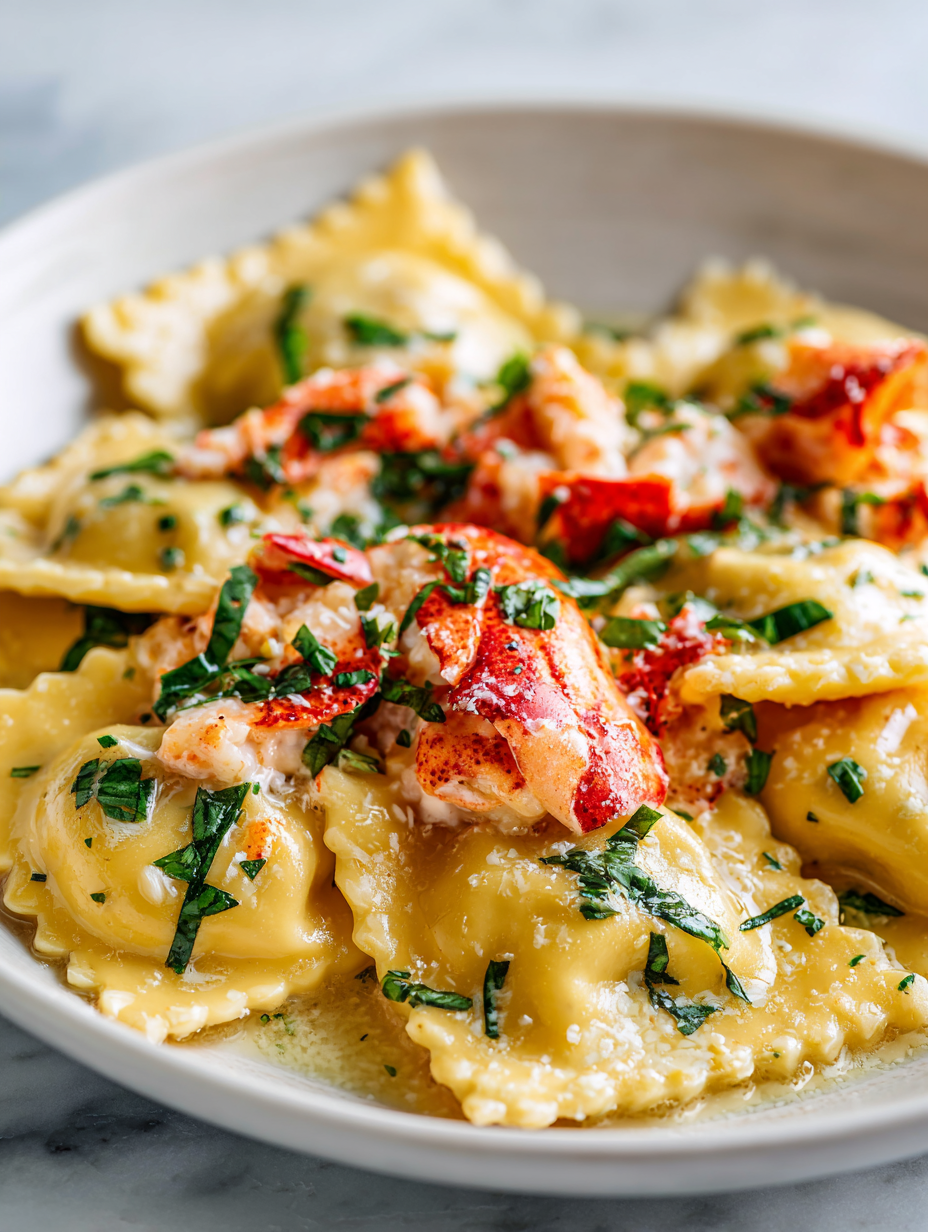
Homemade Lobster Ravioli
Ingredients
Equipment
Method
- Mix the flour and eggs together in a bowl until a shaggy dough forms, then knead on a floured surface for about 8 minutes until smooth and elastic. Wrap in plastic and let rest for 30 minutes.
- While the dough rests, finely chop the cooked lobster meat and mix it with softened butter, lemon zest, chopped herbs, a pinch of salt, and a squeeze of lemon juice to create the filling. Set aside.
- Divide the rested dough into four portions. Using a pasta roller or rolling pin, roll each portion into thin sheets about 1mm thick, aiming for translucent, even layers.
- Lay one sheet on a floured surface. Spoon small mounds of lobster filling about 2 inches apart on the sheet. Brush the edges of each mound with beaten egg wash to help seal.
- Cover the filled sheet with another pasta layer and press gently around each mound to seal, removing any air pockets. Use a sharp knife or ravioli cutter to cut between the filled sections into individual pieces. Crimp edges to ensure a tight seal.
- Bring a large pot of salted water to a rolling boil. Carefully drop the ravioli into the water, making sure not to overcrowd. Cook for 3-4 minutes until they float and are tender.
- Meanwhile, melt butter in a skillet over medium heat. Add lemon zest and juice, cooking until fragrant and slightly thickened. Gently toss the cooked ravioli in the lemon-butter sauce.
- Remove the ravioli with a slotted spoon and plate them carefully, drizzling with the lemon-butter sauce. Garnish with extra herbs or a sprinkle of Parmesan if desired for added flavor and aroma.
- Serve immediately while warm, enjoying the tender pasta, luscious lobster filling, and bright citrus sauce for a truly luxurious dish.
Pro tips for perfect lobster ravioli
- Bolded Mini-Head: Use a pasta roller or pin to achieve an even, thin sheet—look for translucency around the edges.
- Bolded Mini-Head: When sealing, brush edges with egg wash to prevent leaks and ensure a tight fold.
- Bolded Mini-Head: Drop ravioli gently into boiling, salted water—avoid overcrowding to prevent sticking and uneven cooking.
- Bolded Mini-Head: Cook until ravioli float and are tender—test by gently pressing; they should feel firm yet supple.
- Bolded Mini-Head: Finish with a quick toss in lemon-butter sauce—shimmer and fragrant, it should coat each piece smoothly.
- Bolded Mini-Head: Rest cooked ravioli briefly before plating—allows flavors to settle and prevents sogginess.
- Bolded Mini-Head: If ravioli stick together, dust with a little extra flour or cornstarch before boiling.
Common mistakes and how to fix them
- FORGOT to seal edges tightly → Use a little egg wash to prevent leaks.
- DUMPED in boiling water too quickly → Lower gently and stir to prevent sticking.
- OVER-TORCHED the ravioli → Cook until they float and are tender, about 3-4 minutes.
- MISSED the seasoning in water → Salt generously, like pasta water, for flavor infusion.
Kitchen fixes for lobster ravioli
- When ravioli stick together, splash a little more flour on the surface and gently separate.
- If the filling leaks, dump the ravioli back in boiling water briefly to re-seal with heat.
- When sauce shimmers, shield ravioli with a lid for a minute to help absorb flavors and heat evenly.
- If the pasta feels too tough, rescue with a quick extra rest covered with a damp towel before boiling.
- Panicking over under-seasoned water? Pantry swap: add a pinch of sea salt or a splash of broth for flavor.
Prep, store, and reheat tips
- You can prepare the lobster filling a day ahead; keep it covered in the fridge to preserve freshness and aroma.
- Make the pasta dough up to 24 hours in advance, wrapped tightly in plastic to prevent drying out.
- Assembled but uncooked ravioli can be frozen on a baking sheet for up to 2 months; transfer to a bag once solid, and avoid stacking.
- Reheat cooked ravioli gently in simmering salted water for 1-2 minutes until heated through, watching for floating to gauge doneness.
- The flavors meld and intensify after resting for a few hours in the fridge, but avoid storing for more than 24 hours to keep the filling vibrant and fresh.
Top questions about lobster ravioli
1. How does fresh lobster smell when cooked?
Fresh lobster has a briny, sweet aroma that intensifies when cooked, adding oceanic depth to the dish. Use cold lobster before cooking to preserve this scent.
2. How do I know when lobster ravioli is cooked?
Ravioli are done when they float to the surface, look translucent, and feel tender but firm. They should crackle slightly when gently pressed.
3. What if the filling leaks during boiling?
If the filling leaks out, gently lower ravioli into boiling water, and make sure edges are sealed with egg wash before cooking.
4. Can I roll the pasta by hand?
Using a pasta roller gives an even, thin sheet, but a rolling pin works too—aim for translucency and uniform thickness.
5. How should I store leftover ravioli?
Frozen ravioli can be stored for up to 2 months. Cook directly from frozen, adding an extra minute to boiling time.
6. How long should I boil lobster ravioli?
Overcooking turns lobster rubbery and pasta mushy. Cook until they float, then remove immediately for tender, ocean-briny bites.
7. What can I substitute for lemon in the sauce?
Use a high-quality, bright lemon zest for a lively, aromatic sauce that complements the ocean flavor of lobster. Swap for a splash of white wine if preferred.
8. How salty should the boiling water be?
Avoid under-salting the water; seasoned water ensures the pasta absorbs flavor and prevents bland bites.
9. How do I freeze ravioli properly?
To prevent sticking during freezing, place ravioli on a baking sheet first, then transfer to a bag once frozen solid.
10. How do I reheat cooked lobster ravioli?
Reheat gently in simmering salted water for 1-2 minutes until heated through. Avoid boiling too vigorously or too long to prevent breakage.
Making lobster ravioli is a tactile journey that reconnects me to traditional pasta-making and coastal memories. Each fold and seal feels like a small act of mindfulness, culminating in a dish that’s rich in both flavor and personal history.
In the end, it’s about those moments of sensory clarity — the aroma of lobster and butter, the delicate bite of handmade pasta — that make this dish more than just a meal. It’s a quiet celebration of craftsmanship and coastal nostalgia, perfect for savoring slowly.

Hi, I’m Grace Morgan, and welcome to my kitchen. This is a space shaped by family meals, curious hands reaching for snacks, paws under the table, and recipes that come together in the middle of real life. I’m a food blogger, a mother, and a passionate pet keeper. Most days, I’m cooking with one eye on the stove and the other on someone who needs me, whether that’s a child asking for a taste or a dog hoping something might fall.