
Hell’s Kitchen Mac and Cheese isn’t just about melting cheese and pastas; it’s a raw, unfiltered look at the chaos of a busy kitchen. Every bite echoes the hustle, the sweat, and that little spark of rebellion that comes with pushing through a grueling service. It’s a dish that’s honest, a little messy, but always satisfying in its own stubborn way.
What makes this recipe special isn’t just the creamy cheese or the perfect al dente pasta, but the story behind it—how a simple comfort food gets turned into a bold statement by a chef who refuses to hold back. It’s a reminder that even in chaos, there’s beauty, and sometimes, the best dishes come from a little bit of madness.
Focusing on how Hell’s Kitchen Mac and Cheese is more than comfort food—it’s a chaotic, honest reflection of the chef’s hustle, with a secret ingredient that turns a simple dish into a bold statement.
The no-nonsense comfort of bold cheese
- This dish reminds me of late nights in the kitchen, fighting for flavor amid the chaos.
- Nothing beats the thrill of getting that perfect cheesy pull—like a small victory every time.
- I love how a simple bowl can carry so much history, rebellion, and honest cooking in every bite.
- The chaos of Hell’s Kitchen somehow makes this mac and cheese feel like a badge of honor.
- It’s messy, loud, and unapologetically bold—just like the best nights I’ve ever had in a kitchen.
The story behind this recipe
- This recipe came from a night in the kitchen when I was craving something loud and unapologetic. I wanted a mac and cheese that didn’t hold back—something that reflected the chaos and energy of a real kitchen, where mistakes turn into flavor and every batch is a little different but always satisfying.
- It’s not about perfection; it’s about capturing that messy, adrenaline-fueled spirit. I’ve always loved how a simple dish like mac and cheese can be turned on its head with a splash of hot sauce or a handful of unexpected cheeses, making each bowl a little rebellion.
- The real inspiration was the rush of service, the scramble of ingredients, and that moment when everything comes together just right—cheese melted, pasta hot, and a little chaos still lingering on the edges. That feeling of triumph, even in mess, is what I chase with this dish.
Contextual origin, trivia, or history
- This dish gained notoriety after its feature on the intense, high-stakes kitchen show, Hell’s Kitchen, where chaos reigns supreme.
- Originally, mac and cheese was a humble European peasant dish, but here, it’s turned into a bold, fearless statement of flavor.
- The secret ingredient often hinted at in this version is a splash of hot sauce, adding that rebellious kick that echoes in every bite.
- It’s believed that the dish’s fiery name reflects the fiery temper and relentless energy of the kitchen environment it celebrates.
- This recipe is less about perfect presentation and more about embracing the messy, loud, honest spirit of a real kitchen.
Key ingredients in focus
- Cheddar cheese: I love that sharp, tangy bite—just make sure to grate it fresh for smooth melting. Swap in Monterey Jack if you want milder, but don’t skip the sharpness.
- Cream: I prefer heavy cream for that velvety, rich sauce. You can use half-and-half if you want a lighter feel, but the sauce will be less luscious and slightly thinner.
- Pasta: I go for elbow macaroni because it’s classic and holds the cheese well. Fusilli or cavatappi work too if you want a little twist in texture.
- Hot sauce: I add a splash for that fiery kick—think smoky chipotle or bright Frank’s RedHot. Skip if you’re not into spice, but it’s the secret that elevates this dish.
- Breadcrumbs: I toast mine with a little butter until golden—adds crunch and depth. Panko works great, but regular breadcrumbs are fine if you want a softer topping.
- Butter: I use unsalted, just enough to give the breadcrumb topping some crispness. Olive oil can be a good swap, but it won’t brown as nicely.
- Mustard powder: Just a pinch for that subtle tang—don’t overdo it, or it’ll overpower the cheese. Dijon works if you want a more complex flavor.
Spotlight on key ingredients
Cheddar cheese:
- I love that sharp, tangy bite—just make sure to grate it fresh for smooth melting. Swap in Monterey Jack if you want milder, but don’t skip the sharpness.
- Cream: I prefer heavy cream for that velvety, rich sauce. You can use half-and-half if you want a lighter feel, but the sauce will be less luscious and slightly thinner.
- Hot sauce: I add a splash for that fiery kick—think smoky chipotle or bright Frank’s RedHot. Skip if you’re not into spice, but it’s the secret that elevates this dish.
Breadcrumbs and butter:
- Breadcrumbs: I toast mine with a little butter until golden—adds crunch and depth. Panko works great, but regular breadcrumbs are fine if you want a softer topping.
- Butter: I use unsalted, just enough to give the breadcrumb topping some crispness. Olive oil can be a good swap, but it won’t brown as nicely.
Notes for ingredient swaps
- Dairy-Free: Use a cashew-based cheese sauce or plant-based milk. It won’t be as oozy but still creamy.
- Cheddar Cheese: Swap for Gruyère or Monterey Jack for a milder, mellower melt. Sharpness is key, so choose wisely.
- Heavy Cream: Replace with coconut cream or a thick cashew slurry. Expect a subtle coconut aroma or a richer, nutty flavor.
- Pasta: Whole wheat or gluten-free options work, but may alter texture slightly—firm and hearty, not as tender.
- Breadcrumbs: Panko panko adds crunch, but crushed crackers or toasted oats can add a different, interesting texture.
- Hot Sauce: Use smoked paprika or chipotle for smoky heat, or skip altogether for a milder, more balanced dish.
- Butter: Olive oil or vegan margarine can be used, but it may affect richness and browning on topping.
Equipment & Tools
- Large pot: To boil pasta efficiently and quickly.
- Heavy-bottomed saucepan: To make the cheese sauce evenly and prevent scorching.
- Whisk: To smoothly incorporate flour and cream without lumps.
- Baking dish: To bake and finish the mac and cheese with a crispy topping.
Step-by-step guide to Hell’s Kitchen Mac and Cheese
- Gather your equipment: a large pot for boiling pasta, a heavy-bottomed saucepan for the cheese sauce, a whisk, and a baking dish. Preheat your oven to 200°C (390°F).
- Cook pasta: Bring a large pot of salted water to a boil. Add elbow macaroni and cook until just al dente, about 8 minutes. Drain and set aside. The pasta should be firm but not hard.
- Make the cheese sauce: In the saucepan, melt butter over medium heat (around 160°C/320°F). Add flour and whisk constantly for about 1 minute until slightly golden and fragrant. Slowly pour in heavy cream, whisking to prevent lumps. Cook until it thickens, about 3-5 minutes, until it coats the back of a spoon.
- Add cheese: Lower the heat to medium-low. Gradually stir in grated cheddar, a handful at a time, allowing it to melt before adding more. Stir in hot sauce, mustard powder, and a pinch of salt. The sauce should be smooth, cheesy, and slightly bubbly around the edges.
- Combine pasta and sauce: Add the cooked pasta into the cheese sauce. Stir well until all the noodles are evenly coated, ensuring the sauce clings to every piece. If the mixture seems too thick, thin it with a splash of milk or reserved pasta water.
- Prepare topping: In a small skillet, toast breadcrumbs with a teaspoon of butter until golden and crispy, about 3 minutes. Toss with a pinch of salt and a dash of smoked paprika if desired.
- Assemble and bake: Pour the cheesy pasta into a buttered baking dish. Sprinkle the toasted breadcrumbs evenly over the top. Bake for 15-20 minutes until bubbling and the topping is golden brown.
- Rest and serve: Let the dish rest for 5 minutes to settle. Serve hot, with a little extra hot sauce or fresh herbs if you like. The cheese should be gooey, the topping crunchy, and the aroma rich and spicy.
Allow the baked mac and cheese to rest for 5 minutes before serving. This helps the cheese set and makes it easier to scoop. Plate with a sprinkle of fresh herbs if desired, and serve hot for maximum gooeyness.
How to Know It’s Done
- Cheese sauce is smooth, not grainy, and coats the back of a spoon.
- Breadcrumbs are golden and crispy, not burnt or soggy.
- The dish is bubbling around the edges and cheese is melted through the pasta.
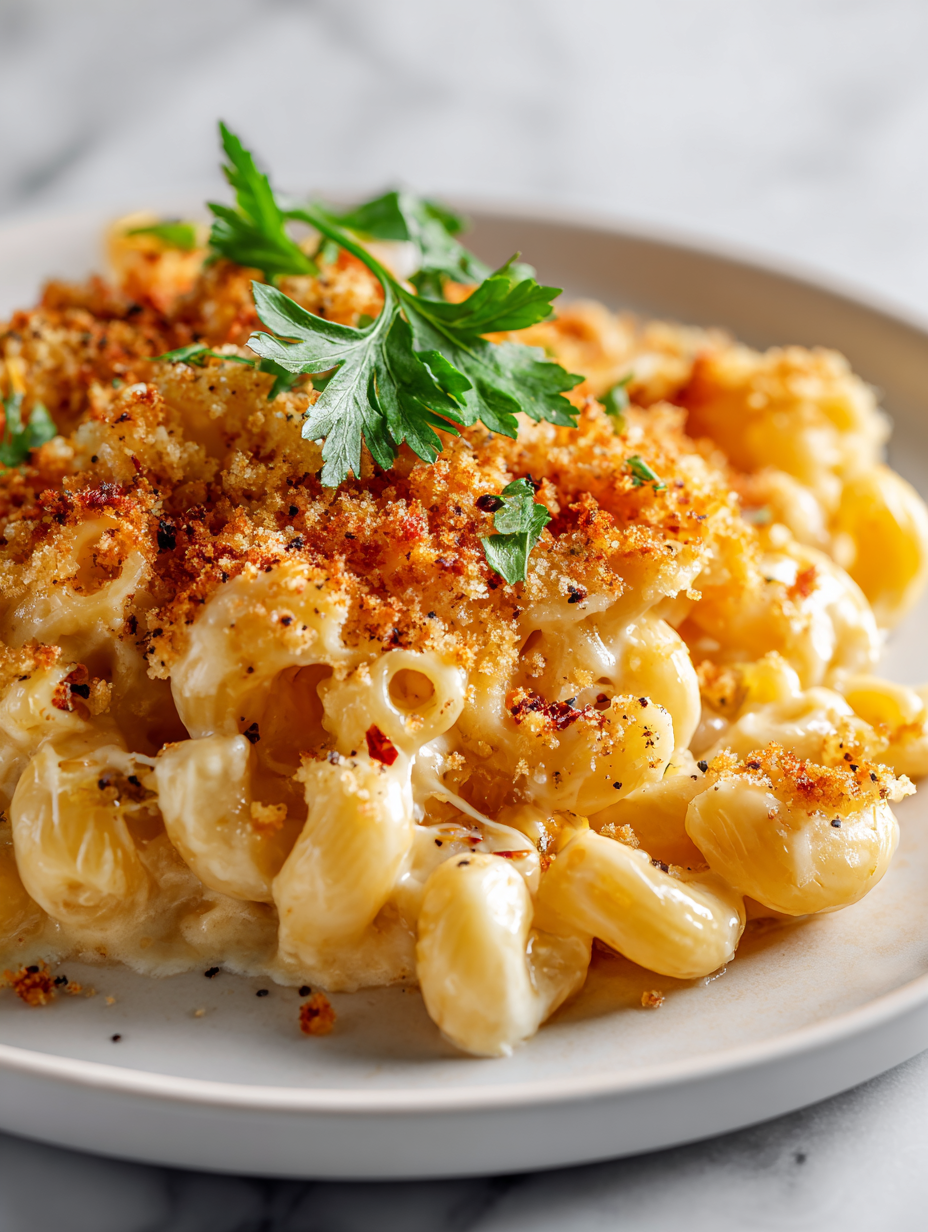
Hell’s Kitchen Mac and Cheese
Ingredients
Equipment
Method
- Cook the pasta in a large pot of salted boiling water until just al dente, about 8 minutes. Drain and set aside.
- In a heavy-bottomed saucepan, melt 2 tablespoons of butter over medium heat until it begins to foam and smell nutty.
- Add the flour and whisk constantly for about 1 minute, until the mixture turns light golden and fragrant.
- Slowly pour in the heavy cream while whisking vigorously to create a smooth, thickened sauce, about 3-5 minutes.
- Lower the heat to medium-low and gradually stir in the grated cheddar cheese, a handful at a time, allowing each addition to melt completely before adding more. Stir in hot sauce and mustard powder, then season with a pinch of salt if needed.
- Add the cooked pasta into the cheese sauce and stir until well coated, ensuring every piece is covered in gooey, cheesy goodness.
- In a small skillet, melt 1 tablespoon of butter over medium heat and toast the panko breadcrumbs until golden brown and crispy, about 3 minutes.
- Pour the cheesy pasta into a buttered baking dish and sprinkle the toasted breadcrumbs evenly over the top.
- Bake in a preheated oven at 200°C (390°F) for 15-20 minutes, until bubbling around the edges and the topping is golden and crispy.
- Remove from oven and let rest for 5 minutes to allow the cheese to set slightly and make serving easier.
- Scoop out portions, serve hot, and enjoy the gooey, crispy, rebellious flavors that echo the chaos of a busy kitchen.
Pro tips for perfect mac and cheese
- Bold cheese: Use freshly grated cheddar for smooth melting and a sharp flavor punch.
- Simmer gently: Keep the cheese sauce just below boiling point to prevent separation and graininess.
- Breadcrumb crunch: Toast breadcrumbs in butter until golden for a crispy, flavorful topping.
- Pasta texture: Cook pasta until just al dente; it will continue to soften slightly during baking.
- Layer flavors: Add a splash of hot sauce or a pinch of mustard to boost depth and complexity.
- Rest before serving: Let the baked mac and cheese sit for 5 minutes; it firms up, making serving easier.
- Adjust consistency: Thin with reserved pasta water or milk if the sauce thickens too much during baking.
Common mistakes and how to fix them
- FORGOT to stir cheese thoroughly → Stir until cheese is fully melted and smooth.
- DUMPED cheese directly into hot sauce → Add cheese gradually over low heat, stirring constantly.
- OVER-TORCHED breadcrumb topping → Toast breadcrumbs on low heat, watch to avoid burning.
- USED cold pasta directly from fridge → Warm pasta slightly before mixing to prevent clumping.
Quick fixes and pantry swaps
- When sauce is grainy, splash in a bit of hot water and whisk vigorously.
- If breadcrumbs burn quickly, lower the heat and toast more slowly with a pat of butter.
- Splash a little milk or cream if the cheese sauce thickens too much during baking.
- Patch a cheesy sauce split by whisking in a teaspoon of cold milk until smooth.
- Shield the top with foil if breadcrumbs turn dark before cheese is bubbly.
Prep, store, and reheat tips
- Prep the cheese sauce and cook pasta a day in advance; store separately in airtight containers in the fridge for up to 2 days. Reheat gently, stirring often, until warm and smooth—watch for sauce separation.
- Assemble the baked dish up to the point of topping; cover tightly with foil and freeze for up to 1 month. Thaw in the fridge overnight before baking. Expect a slightly denser texture upon reheat.
- Refrigerated mac and cheese will develop a richer, more concentrated flavor as the cheese melds overnight. Reheat in the oven at 180°C (350°F) until bubbling and cheese is gooey—about 20-25 minutes.
- For best reheating results, add a splash of milk or cream before warming to restore creaminess. The dish may thicken during storage; stir well to loosen the sauce and achieve that cheesy, silky consistency again.
Top questions about Hell’s Kitchen Mac and Cheese
1. Can I use pre-grated cheese?
Yes, using pre-grated cheese can make the sauce grainy because it often contains anti-caking agents that prevent smooth melting.
2. Can I substitute the cheese?
Absolutely, substituting with Monterey Jack or Gruyère will give a milder, creamier flavor, but it won’t have that sharp bite.
3. Can I use milk instead of cream?
Yes, heavy cream gives the sauce its velvety texture. You can replace it with half-and-half for a lighter dish, but expect less richness.
4. Can I use different pasta?
Elbow macaroni is traditional, but fusilli or cavatappi work well, adding a fun twist and holding the cheese nicely.
5. Should I add hot sauce?
Adding hot sauce is optional, but it’s what gives this dish its rebellious kick. Use smoky chipotle or classic Frank’s RedHot for flavor.
6. How do I know when it’s done?
Bake until bubbly and golden on top, about 15-20 minutes at 200°C (390°F). The cheese should be melted, and the topping crispy.
7. Can I use different toppings?
Use panko breadcrumbs for a crunchier topping, toasted with butter. Regular breadcrumbs work, but they won’t be as crispy.
8. What if the cheese sauce splits?
If your cheese sauce splits, whisk in a splash of cold milk to bring it back together smoothly.
9. How do I reheat leftovers?
Reheat in the oven at 180°C (350°F) until bubbling, adding a splash of milk if it thickens too much.
10. How do I fix burnt breadcrumbs?
To prevent burning, toast breadcrumbs on low heat and keep an eye on them. Cover with foil if top browns too fast.
This dish isn’t just about the cheese or the chaos—it’s about embracing the messy, loud energy of a real kitchen. Each bite carries that rush of adrenaline and the thrill of turning simple ingredients into something bold and honest.
When you serve it up, it’s like sharing a piece of that kitchen spirit—loud, unapologetic, and full of flavor. It’s a reminder that sometimes, the best comfort food is born from a little madness and a lot of heart.

Hi, I’m Grace Morgan, and welcome to my kitchen. This is a space shaped by family meals, curious hands reaching for snacks, paws under the table, and recipes that come together in the middle of real life. I’m a food blogger, a mother, and a passionate pet keeper. Most days, I’m cooking with one eye on the stove and the other on someone who needs me, whether that’s a child asking for a taste or a dog hoping something might fall.


