
Eggplant Parmesan is one of those dishes that feels like a kitchen hug—simple, forgiving, and endlessly adaptable. I love how it can be thrown together with whatever eggplants and cheeses I have lingering in the fridge, making it an easy fallback on busy weeknights or when I’m feeling a little overwhelmed but craving something hearty. It’s not about perfection; it’s about rustic charm and flavor that come from just a bit of patience and a good eye for what’s in season.
There’s a beauty in how forgiving this dish can be—thin slices, thick slices, even a little extra cheese if you’re feeling indulgent. It’s a recipe that welcomes improvisation and personal touches, which makes it perfect for casual dinners or when you want to clear out the veggie drawer without fussing over exact measurements. Plus, it smells like roasted garlic and bubbling cheese—comfort in the oven that fills the whole house.
Focusing on how eggplant Parmesan can be a forgiving, rustic dish that adapts to whatever you have in the fridge, making it perfect for casual weeknight dinners or when you’re feeling overwhelmed but still craving comfort food.
The forgiving charm of rustic eggplant
- I love how this dish feels like a cozy kitchen secret—simple ingredients, big flavor, no fuss.
- There’s a nostalgic rush when the cheese bubbles up and the eggplant turns tender and smoky.
- Sometimes I toss in a splash of hot sauce or fresh basil just to shake things up a bit.
- It’s one of those recipes that makes me feel resourceful—no fancy ingredients needed, just what’s in the fridge.
- Sharing this with friends always sparks a little more laughter and a lot more plates passed around.
The comfort in rustic eggplant
Making eggplant Parmesan always takes me back to my grandmother’s kitchen, where she’d hack away at the eggplants with a kind of stubborn love. I remember the smell of garlic frying in olive oil, the way she’d sprinkle salt and herbs without measuring, just instinct. It’s not a fancy dish, but it’s honest, unpretentious, and full of little lessons about patience and improvisation. I’ve come to see it as a quiet reminder that comfort food doesn’t have to be perfect, just heartfelt.
Trivia and historical notes
- Eggplant Parmesan as we know it today traces back to Southern Italy, where eggplants were embraced as a hearty, vegetable-based alternative to meat dishes.
- The dish gained popularity in America during the mid-20th century, coinciding with the rise of Italian-American cuisine and home-cooked comfort foods.
- Originally, the recipe used fried eggplant slices layered with cheese and tomato sauce, but regional variations include baked or grilled eggplant for a lighter touch.
- Eggplant was once considered a mysterious, exotic vegetable in many parts of Europe, and its incorporation into everyday dishes like this helped demystify it.
Key ingredients and tips
- Eggplant: I choose firm, glossy eggplants that feel heavy—I find they turn tender and smoky when roasted. If yours feels soft or dull, skip it or use it for other dishes.
- Breadcrumbs: I like using coarse panko for that crispy, golden crust. If you want less crunch, swap in fine breadcrumbs—just keep an eye on the coating’s color.
- Mozzarella: Melty, gooey mozzarella is key. I prefer fresh, but if you only have shredded, it melts just as well—look for a mild, milky flavor that balances the tangy sauce.
- Tomato Sauce: I go for a simple, bright tomato sauce—fresh basil, garlic, olive oil. If you’re in a rush, a good-quality jar works, but skip overly sweet or chunky varieties.
- Herbs & Seasonings: Fresh basil or oregano add a burst of aroma—crush them in your palm for more punch. Dried herbs work too, just use a little less and let them hydrate first.
- Olive Oil: I drizzle a good extra virgin over the eggplant before baking—adds richness and helps with browning. If you want to cut down, use a splash instead, but it’ll be less fragrant.
- Parmesan: I sprinkle plenty of grated Parmesan on top before baking—sharp, salty, and slightly nutty. If you prefer a milder flavor, mix in some Pecorino or skip it altogether.
Spotlight on key ingredients
Eggplant:
- I pick firm, shiny eggplants that feel heavy—when roasted, they turn tender and smoky. If yours feels dull or soft, consider using it in a different dish.
- Eggplant’s skin: It crisps up nicely when fried, adding texture. If you prefer less bitterness, remove the skin, but I like the rustic feel it gives.
Mozzarella:
- I love using fresh mozzarella for its meltiness and mild flavor. When baked, it turns creamy and gooey, balancing the tangy tomato sauce.
- Mozzarella’s moisture: It can be watery if not fresh or well-drained. Make sure to pat it dry before layering to prevent sogginess.
Notes for ingredient swaps
- Oil: I prefer extra virgin olive oil for its smoky, fruity notes. Swap with avocado oil for a milder flavor and higher heat tolerance.
- Cheese: Mozzarella can be replaced with provolone for a sharper, more complex melt. For a dairy-free option, try cashew cheese—rich but less gooey.
- Breadcrumbs: Use panko for extra crunch, or crushed gluten-free crackers if you need a grain-free crust. Both offer a satisfying texture.
- Eggplant: Zucchini slices can stand in if eggplant isn’t available. They cook faster and are less smoky but still absorb flavors well.
- Herbs & Seasonings: Fresh basil adds brightness; dried oregano works in a pinch. For a different twist, sprinkle some thyme or rosemary—more pungent but lovely.
- Tomato Sauce: Homemade with ripe tomatoes is ideal, but a good-quality store-bought marinara saves time. Look for one with simple ingredients and no added sugar.
- Parmesan: Pecorino Romano offers a saltier, sharper flavor, or skip it for a more modest, milder cheese layer—less salty but still flavorful.
Equipment & Tools
- large shallow baking dish or sheet: For assembling and baking layers of eggplant and sauce
- shallow bowl: For breading station with eggs
- skillet: To fry eggplant slices until crispy
- baking rack: To drain excess oil from fried slices
- spatula or tongs: To handle eggplant slices gently
Step-by-step guide to baking
- Gather your equipment: a large shallow baking dish or sheet, a shallow bowl for breading, a skillet for frying, and a baking rack for draining. Preheat your oven to 180°C (350°F).
- Slice the eggplants into 1/2 inch thick rounds. Salt them generously and set aside for 20 minutes to draw out moisture and bitterness. Rinse and pat dry.
- Set up your breading station: in one bowl, whisk eggs; in another, combine breadcrumbs with a pinch of salt, pepper, and dried herbs. Prepare a plate for the breaded slices.
- Dip each eggplant slice into the eggs, letting excess drip off, then coat thoroughly in the breadcrumb mixture. Place on a baking rack or tray.
- Heat a generous splash of olive oil in your skillet over medium heat—about 180°C (350°F). When hot, fry the eggplant slices in batches, about 2-3 minutes per side, until golden and crispy. Watch for a rich brown color and aroma of toasted breadcrumbs.
- Transfer fried slices to a paper towel-lined plate to drain excess oil. Repeat until all slices are cooked. If the oil smokes or the coating burns, lower the heat.
- Spread a thin layer of tomato sauce in your baking dish. Layer eggplant slices over the sauce, then top with more sauce, shredded mozzarella, and a sprinkle of Parmesan. Repeat layers if desired.
- Finish with a generous layer of cheese and a drizzle of olive oil. Bake uncovered for 25-30 minutes, until bubbling and cheese is golden brown. The sauce should be fragrant and slightly thickened.
- Remove from oven and let rest for 10 minutes. This helps the cheese set and makes serving easier. Garnish with fresh basil if you like. Serve hot, with a side of crusty bread or salad.
Let the baked eggplant Parmesan rest for 10 minutes to settle. Serve warm, garnished with fresh basil or herbs for a burst of aroma. Pair with crusty bread or a simple green salad for balance.
How to Know It’s Done
- Golden, crispy coating with no raw breading visible.
- Cheese melted and bubbling with a golden top.
- Eggplant tender and slightly smoky when pierced with a skewer or knife.
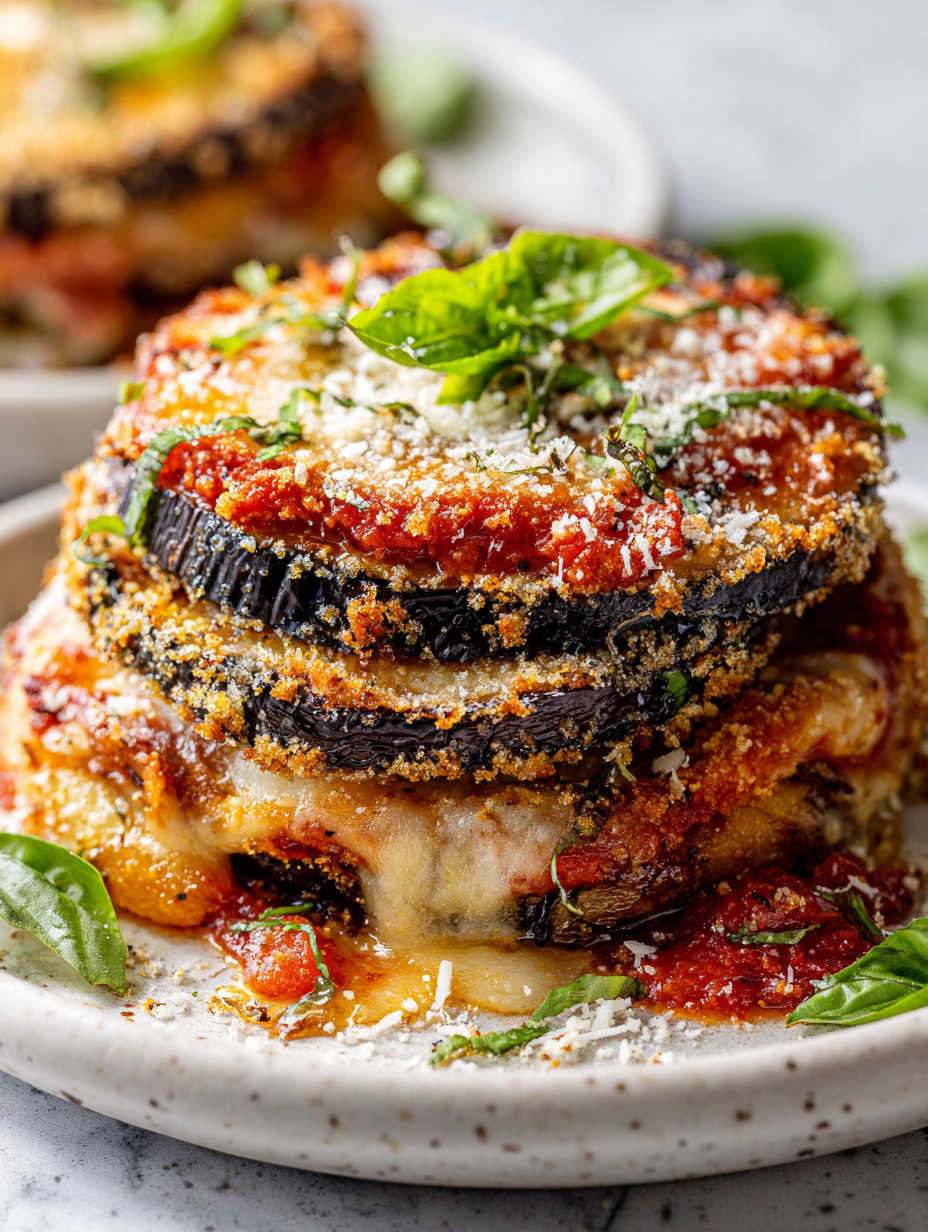
Rustic Eggplant Parmesan
Ingredients
Equipment
Method
- Slice the eggplants into 1/2-inch thick rounds and sprinkle generously with salt. Let sit for 20 minutes to draw out moisture and bitterness. Rinse off excess salt and pat dry with a clean towel.
- Set up your breading station: in one shallow bowl, whisk the eggs; in another, mix panko breadcrumbs with a pinch of salt, pepper, and minced garlic.
- Dip each eggplant slice into the beaten eggs, allowing excess to drip off, then coat thoroughly in the breadcrumb mixture. Place the breaded slices on a baking rack or tray.
- Heat a generous tablespoon of olive oil in a skillet over medium heat until shimmering and fragrant. Fry the breaded eggplant slices in batches for about 2-3 minutes per side, until golden brown and crispy. Listen for a gentle crackle and watch for a rich brown color.
- Transfer the fried eggplant slices to a paper towel-lined plate to drain excess oil. Repeat until all slices are cooked, adding more oil if needed.
- Spread a thin layer of tomato sauce in your baking dish. Layer fried eggplant slices over the sauce, then spoon more sauce on top, followed by slices of mozzarella and a sprinkle of Parmesan. Repeat layers if desired.
- Finish with a generous layer of shredded mozzarella, grated Parmesan, and a drizzle of olive oil. Bake in a preheated oven at 180°C (350°F) for 25-30 minutes until bubbling and golden around the edges.
- Remove from the oven and let rest for at least 10 minutes. Garnish with fresh basil leaves for a burst of herbal aroma. Serve hot with crusty bread or a fresh salad.
Pro tips for perfect eggplant Parmesan
- Bolded Mini-Head: Use coarse panko breadcrumbs for a crispy crust. They create a satisfying crunch with every bite.
- Bolded Mini-Head: Let eggplant slices rest after salting. This draws out moisture and reduces bitterness, helping them crisp up better.
- Bolded Mini-Head: Fry in hot oil—around 180°C (350°F)—until slices are golden brown, not burnt. Watch for a rich aroma and crackle.
- Bolded Mini-Head: Layer sauce and cheese generously, but avoid overloading—this keeps the dish balanced and prevents sogginess.
- Bolded Mini-Head: Rest baked eggplant Parmesan for at least 10 minutes. This helps cheese set and makes serving neater.
- Bolded Mini-Head: Use fresh basil after baking for a fragrant, bright herbal finish that balances the richness.
- Bolded Mini-Head: If breadcrumbs brown too quickly, lower the heat or stir constantly to prevent burning and uneven color.
Common mistakes and how to fix them
- FORGOT to dry eggplant slices → they won’t crisp, add more oil if needed.
- DUMPED too much oil in pan → use less for a healthier, less greasy crust.
- OVER-TORCHED breadcrumbs → lower heat and watch closely for golden color.
- SALTED too early or too late → salt after frying for better flavor absorption and texture.
Quick fixes and pantry swaps
- When eggplant slices are soggy, splash them with a little salt and let sit for 10 minutes.
- DUMPED too much oil in the pan? Patch with a paper towel to soak up excess before frying again.
- OVER-TORCHED breadcrumbs? Shield with a lower heat and stir constantly to prevent burning.
- FORGOT to salt the eggplant early? Fix by sprinkling with salt after frying to enhance flavor.
- When cheese isn’t melting evenly, rescue with a quick broil—watch for bubbling and golden edges.
Prep, store, and reheat tips
- You can prepare the eggplant slices and breading station a day ahead; keep breaded slices in the fridge for up to 24 hours, covered loosely to prevent drying out. The aroma of herbs and garlic will deepen overnight.
- Fried eggplant can be stored in an airtight container in the fridge for up to 2 days; reheat in the oven at 180°C (350°F) until crispy and warmed through, about 10 minutes, for that just-fried crunch.
- The assembled dish (before baking) can be made a day in advance and kept covered in the fridge for 12-24 hours. The flavors meld and the sauce will develop a richer tomato-y brightness.
- Reheat the baked eggplant Parmesan in the oven at 180°C (350°F) for 15-20 minutes, until bubbling and cheese is gooey. The crust may soften, but a quick broil can restore some crispness. Avoid microwaving, as it makes the coating soggy and dulls the cheese.
Top questions about eggplant Parmesan
1. Can I skip frying the eggplant slices?
Yes, breading and frying the eggplant slices adds a crispy texture, but baking slices without frying can also work for a lighter version. Just sprinkle with extra cheese and bake longer until bubbly.
2. How do I prevent eggplant from being bitter?
Eggplant can be bitter if not prepared properly. Salting slices and letting them sit for 20 minutes helps draw out moisture and bitterness, making them tender and less harsh in flavor.
3. Can I use different cheese types?
Fresh mozzarella melts beautifully and creates a gooey, rich topping, but shredded mozzarella works well too. For a sharper flavor, try provolone or Pecorino Romano as substitutes.
4. Can I make it vegan or vegetarian?
To keep the dish vegetarian, use a vegetable-based tomato sauce. If you want extra flavor, add sautéed garlic, onions, or fresh herbs like basil or oregano to the sauce.
5. How do I know when it’s fully baked?
Bake the assembled dish uncovered at 180°C (350°F) for about 25-30 minutes until the cheese is golden and bubbly. Check for bubbling edges and fragrant aroma as signs of doneness.
6. How should I store and reheat leftovers?
Refrigerate leftovers in an airtight container for up to 3 days. To reheat, bake at 180°C (350°F) for 15 minutes until hot and cheese is melted again. The crust might soften but will still taste good.
7. What if my breadcrumbs burn during frying?
Frying at too high a temperature can burn breadcrumbs; keep the oil around 180°C (350°F). If slices brown too quickly, lower the heat and cook in batches for even crispiness.
8. Which breadcrumbs work best?
Use coarse panko breadcrumbs for extra crunch and golden color. If you prefer a softer coating, switch to fine breadcrumbs, but watch the color to avoid burning.
9. Why do I need to salt the eggplant?
Salting eggplant slices before cooking draws out excess moisture and bitterness, resulting in a better texture and flavor. Rinse and pat dry before breading and frying.
10. When should I add herbs?
Adding fresh basil or herbs after baking preserves their bright, fragrant aroma. Incorporate herbs into the sauce or sprinkle on top just before serving for maximum freshness.
Eggplant Parmesan feels like a little rebellion against the fussier, more delicate dishes. It’s honest, rustic, and full of flavor that sticks with you long after the plates are cleared. In a way, it’s a reminder that comfort and simplicity often make the best memories.
This dish isn’t just about eating; it’s about the messy, imperfect joy of cooking with what you’ve got. It’s a perfect, no-nonsense meal for busy nights or when you need something familiar and real. And honestly, that’s enough.

Hi, I’m Grace Morgan, and welcome to my kitchen. This is a space shaped by family meals, curious hands reaching for snacks, paws under the table, and recipes that come together in the middle of real life. I’m a food blogger, a mother, and a passionate pet keeper. Most days, I’m cooking with one eye on the stove and the other on someone who needs me, whether that’s a child asking for a taste or a dog hoping something might fall.


