
Chicken Supreme is one of those dishes that feels fancy but is actually quite straightforward when you understand the importance of texture. The key for me is achieving that crispy skin without overcooking the tender, moist meat inside. It’s a balance that takes a bit of practice, but once you get it, every bite feels satisfying in a way that elevates a simple chicken dinner.
I’ve always loved how this dish plays with contrast — the crackle of skin giving way to juicy meat, the slight chew of the crispy edges, and that warm, savory aroma that fills the kitchen. It’s a recipe that rewards attention to detail, especially when you focus on crisping and resting properly. Honestly, making Chicken Supreme has become my go-to way to impress without fuss.
Focusing on the importance of texture and contrast in Chicken Supreme, highlighting the crispy skin and tender meat, and how mastering this balance elevates the dish from simple to memorable.
The texture game in Chicken Supreme
- Cooking this dish reminds me of Sunday afternoons at my grandma’s house, where the crispy skin was the highlight that everyone fought over.
- There’s a strange joy in hearing that satisfying crack as you cut through the skin, knowing you nailed the crispness just right.
- I feel a quiet pride when I watch my guests eagerly carve into tender, juicy chicken, surprised by how simple it is to impress.
- Sometimes, I get nostalgic thinking about how this recipe became my comfort food during stressful weeks—reliable and deeply satisfying.
- It’s a small victory each time I manage to get the skin perfectly crispy without sacrificing the moistness inside, like a secret I finally cracked.
The story behind this recipe
- This recipe was born out of a quest to elevate a humble chicken into something that feels special but doesn’t demand hours in the kitchen. I remember the first time I tried crispy-skinned chicken from a small bistro—something about that contrast of textures stuck with me. I wanted to recreate that magic at home, with ingredients I could control and a method that felt honest and straightforward.
- Over the years, I’ve tinkered with different techniques—learning that the secret isn’t just in the oven, but in the prep, the resting, and the way you get that skin just right. It’s become a dish I turn to when I want comfort that feels celebratory, especially when I need to remind myself that good food doesn’t have to be complicated. It’s become my little ritual for turning everyday chicken into something memorable.
- heading: The story behind this recipe
Contextual origin, trivia, or history
- Chicken Supreme is believed to have originated in French cuisine, where ‘supreme’ traditionally refers to the best or most chosen part, often the chicken breast.
- The term ‘Supreme’ gained popularity in the early 20th century, emphasizing a dish’s premium quality and refined presentation.
- Historically, it was a dish served in high-end restaurants, showcasing skill in crisping skin while keeping the meat tender.
- In some culinary circles, ‘Chicken Supreme’ is associated with a method of precise but simple cooking that highlights texture contrast.
- The dish has evolved over time, now often simplified for home cooks but still emphasizing crispy skin and juicy meat.
Key ingredients and tips
- Chicken breast: I prefer skin-on, bone-in for flavor and juiciness, but you can use skinless if you want leaner. The skin gives that irresistible crackle, especially when crispy and golden.
- Salt: I like to season the chicken generously with sea salt at least 30 minutes before cooking—this helps the skin crisp up and enhances flavor. Don’t skimp, it’s essential for that savory punch.
- Butter: A splash of butter in the pan adds richness and helps brown the skin beautifully, releasing a nutty aroma that makes the whole kitchen smell like comfort. Use clarified if you want less splatter.
- Herbs (thyme or rosemary): Fresh herbs are my secret—toss them in towards the end for aromatic bursts. If you prefer, dried herbs work but won’t give the same vibrant scent or flavor.
- Lemon: I always finish with a squeeze of lemon juice—brightens the dish with a zing that cuts through the richness. Skip if you prefer a milder, more subdued flavor.
- Flour (optional): A light dusting of flour under the skin can help crisp it even more, but if you’re going gluten-free, skip it. The skin will still crackle nicely with just oil and patience.
- Cooking oil (high smoke point): I use vegetable or canola oil for frying—resists burning at high heat and helps get that perfect golden skin. Olive oil can work but watch the smoke!
Spotlight on key ingredients
Chicken breast:
- I prefer skin-on, bone-in for flavor and juiciness, but you can use skinless if you want leaner. The skin gives that irresistible crackle, especially when crispy and golden.
- Salt: I like to season the chicken generously with sea salt at least 30 minutes before cooking—this helps the skin crisp up and enhances flavor. Don’t skimp, it’s essential for that savory punch.
- Butter: A splash of butter in the pan adds richness and helps brown the skin beautifully, releasing a nutty aroma that makes the whole kitchen smell like comfort. Use clarified if you want less splatter.
Herbs and lemon:
- Herbs (thyme or rosemary): Fresh herbs are my secret—toss them in towards the end for aromatic bursts. If you prefer, dried herbs work but won’t give the same vibrant scent or flavor.
- Lemon: I always finish with a squeeze of lemon juice—brightens the dish with a zing that cuts through the richness. Skip if you prefer a milder, more subdued flavor.
Notes for ingredient swaps
- Chicken breast: I prefer skin-on, bone-in for flavor and juiciness, but you can use skinless if you want leaner. The skin gives that irresistible crackle, especially when crispy and golden.
- Salt: I like to season the chicken generously with sea salt at least 30 minutes before cooking—this helps the skin crisp up and enhances flavor. Don’t skimp, it’s essential for that savory punch.
- Butter: A splash of butter in the pan adds richness and helps brown the skin beautifully, releasing a nutty aroma that makes the whole kitchen smell like comfort. Use clarified if you want less splatter.
- Herbs (thyme or rosemary): Fresh herbs are my secret—toss them in towards the end for aromatic bursts. If you prefer, dried herbs work but won’t give the same vibrant scent or flavor.
- Lemon: I always finish with a squeeze of lemon juice—brightens the dish with a zing that cuts through the richness. Skip if you prefer a milder, more subdued flavor.
- Flour (optional): A light dusting of flour under the skin can help crisp it even more, but if you’re going gluten-free, skip it. The skin will still crackle nicely with just oil and patience.
- Cooking oil (high smoke point): I use vegetable or canola oil for frying—resists burning at high heat and helps get that perfect golden skin. Olive oil can work but watch the smoke!
Equipment & Tools
- Heavy skillet (cast iron preferred): For even heat and crispy skin
- Tongs: To handle and turn the chicken safely
- Sharp knife: For precise carving and prep
- Paper towels: To dry chicken thoroughly
Step-by-step guide to Chicken Supreme
- Equipment & Tools: Gather a heavy skillet (preferably cast iron) for even heat, tongs to handle the chicken, a sharp knife for prep, and paper towels for drying.
- Pat dry the chicken breasts thoroughly with paper towels to remove excess moisture—this helps with crisping.
- Season generously with sea salt, pressing it into the skin and underside. Let sit at room temperature for 30 minutes.
- Optional but helpful—lightly dust the skin with flour if desired, for extra crunch. Shake off excess before cooking.
- Heat the skillet over medium-high heat until shimmering, about 2-3 minutes. Add a splash of oil, swirling to coat.
- Place chicken skin-side down. Sear without moving for 5-7 minutes until skin is golden brown and crispy, listening for crackle.
- Step 6a: Flip the chicken carefully with tongs. Reduce heat to medium. Add a small knob of butter and herbs to the pan.
- Step 6b: Continue to cook for another 8-10 minutes, basting with melted butter and juices, until the internal temp reaches 75°C (165°F).
- Step 6c: Check for doneness: skin should be crisp and deep golden, juices should run clear when pierced, and it should jiggle slightly when pressed.
- If the skin isn’t crispy enough, increase the heat slightly for a minute, then reduce again. If over-browning, lower heat and cover loosely.
- Resting & Finishing: Remove the chicken from pan, tent loosely with foil, and let rest for 5 minutes. Carve and serve immediately, skin side up for extra crunch.
- Checkpoints & How to Know It’s Done: Skin is crispy and golden, internal temperature hits 75°C (165°F), and juices are clear.
Let the chicken rest loosely covered with foil for 5 minutes to allow juices to redistribute. Serve skin side up to maintain crispness, with a squeeze of lemon or herbs if desired.
How to Know It’s Done
- Golden, crispy skin with crackle sound.
- Juices run clear when pierced.
- Internal temp reaches 75°C (165°F).
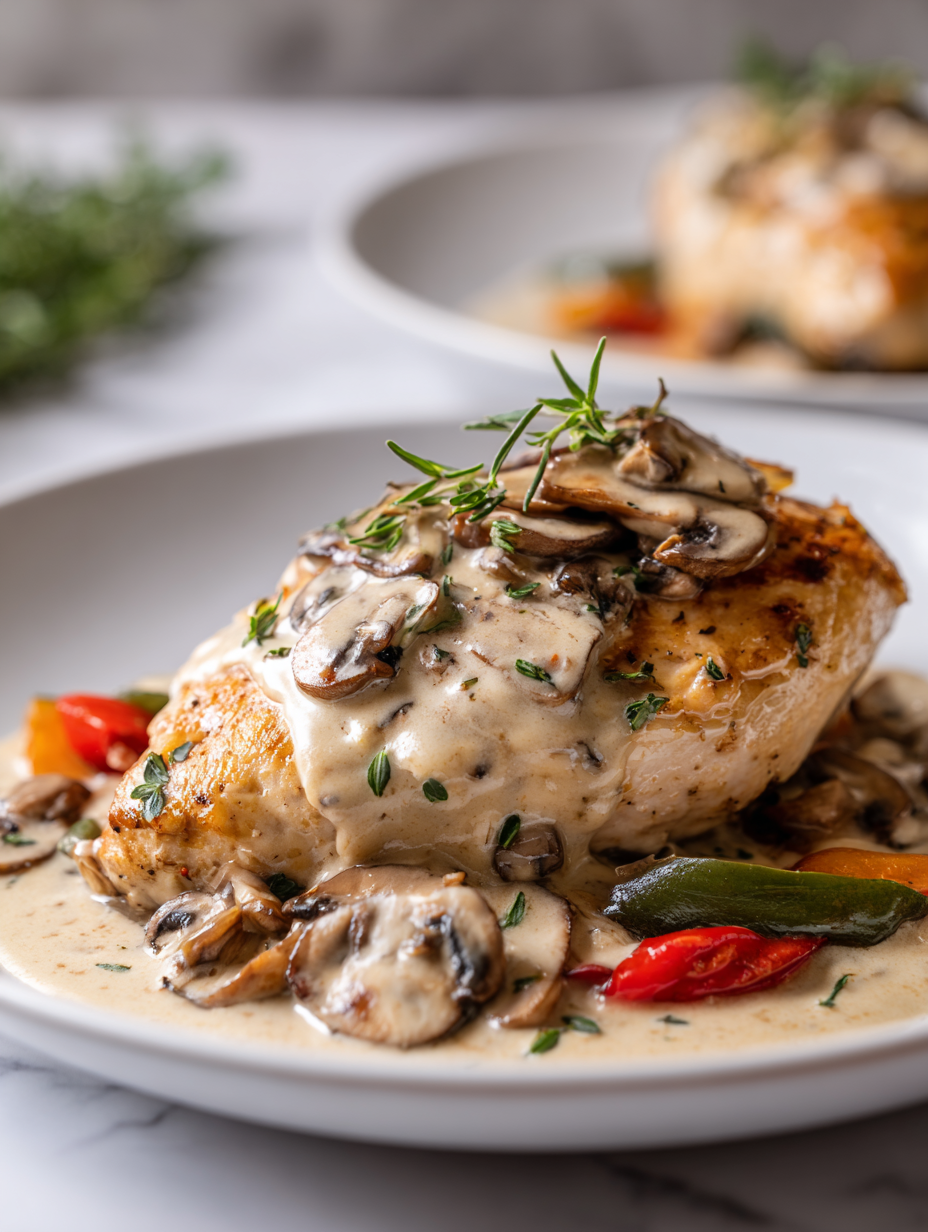
Chicken Supreme
Ingredients
Equipment
Method
- Pat the chicken breasts thoroughly dry with paper towels to remove excess moisture, which helps achieve crisp skin.
- Generously season each piece all over with sea salt, pressing it into the skin and underside; let sit at room temperature for about 30 minutes to enhance flavor and skin crispness.
- Heat your skillet over medium-high heat until shimmering, about 2-3 minutes, then add vegetable oil and swirl to coat the bottom evenly.
- Place the chicken breasts skin-side down in the hot skillet. Sear without moving for 5-7 minutes, until the skin turns deep golden brown and crackles softly as you press with tongs.
- Flip the chicken carefully using tongs and reduce the heat to medium. Add butter and herb sprigs to the pan, allowing the butter to melt and bubble around the chicken.
- Continue cooking the chicken for about 8-10 minutes, occasionally basting with the melted butter and juices, until the internal temperature reaches 75°C (165°F) and the meat feels firm but tender.
- Remove the chicken from the skillet and tent loosely with foil. Let rest for 5 minutes to allow juices to redistribute, keeping the skin crispy and the meat moist.
- While the chicken rests, squeeze fresh lemon juice over the meat and sprinkle with chopped herbs if desired.
- Carve the chicken breasts, ensuring the skin remains crackly and golden. Serve immediately, skin side up, for maximum crunch and flavor.
Notes
Top tips for perfect chicken
- Crisp skin: Ensure chicken skin is thoroughly dried—moisture is the enemy of crispness, so pat it dry with paper towels before seasoning.
- Hot pan: Preheat your skillet over medium-high heat until shimmering—this is key to that golden, crackly skin.
- Gentle sear: Place chicken skin-side down and resist the urge to move it—allow it to sear undisturbed for 5-7 minutes until deep golden and crispy.
- Butter basting: Add a small knob of butter and herbs towards the end of cooking; baste the chicken for rich, aromatic flavor and even browning.
- Rest properly: Let the chicken rest for 5 minutes after cooking—this redistributes juices and keeps the meat moist when carved.
- Avoid overcooking: Check for doneness by internal temp (75°C/165°F) or a slight jiggle—overcooking leads to dry meat, so keep an eye on it.
- Finish with lemon: A squeeze of fresh lemon juice brightens the rich, crispy skin and tender interior, adding a fresh zing that elevates the dish.
Common mistakes and how to fix them
- FORGOT to dry chicken skin thoroughly → Results in soggy skin, fix by patting dry with paper towels.
- DUMPED salt on hot pan → Causes uneven seasoning, fix by seasoning chicken before cooking.
- OVER-TORCHED skin → Burns and becomes bitter, fix by adjusting heat and watching closely.
- UNDER-COOKED chicken → Juices run pink, fix by cooking longer or checking internal temp.
Quick fixes and pantry swaps
- When skin isn’t crisp enough → Splash with hot oil, then return to heat for 30 seconds.
- If chicken is dry → Rest longer, cover loosely, then add a splash of warm broth before serving.
- Dumped salt on skin → Brush off excess, then season lightly again after searing.
- Over-torched skin → Lower heat immediately, cover loosely, and finish in the oven at 180°C (350°F).
- If juices run pink → Continue cooking a few more minutes, then check internal temp again.
Prep, store, and reheat tips
- Season the chicken with salt and let it sit uncovered in the fridge up to 24 hours; the salt enhances flavor and helps dry the skin for crisping.
- You can prepare the chicken breasts in advance, pat dry thoroughly, and store covered in the fridge for up to 1 day before cooking to maintain dryness.
- Cooked chicken Supreme can be refrigerated in an airtight container for up to 2 days. Reheat gently in a hot skillet, skin side up, until the skin re-crisps and the meat is warmed through, about 3-4 minutes.
- For best texture, reheat only once. The skin may lose some crispness but can be refreshed with a quick sear in hot oil or butter, which will shimmer and crackle again.
Top questions about Chicken Supreme
1. How do I know when Chicken Supreme is perfectly cooked?
The skin should crackle with a golden hue and sound slightly crispy when pressed. Juices should run clear, and internal temp should reach 75°C (165°F).
2. What’s the best way to get crispy skin?
Use a heavy skillet over medium-high heat until shimmering, then sear the skin side down without moving it for 5-7 minutes until deep golden and crispy.
3. How do I ensure the skin crisps up properly?
Pat the chicken thoroughly dry with paper towels before seasoning and cooking. Moisture is the enemy of crispness.
4. Why is resting important for Chicken Supreme?
Let the chicken rest for about 5 minutes, loosely covered with foil. This helps juices redistribute and keeps the meat moist.
5. How do I fix over-browned or undercooked skin?
Adjust the heat as needed—if the skin burns or over-browns, lower the heat. If it’s not crisp enough, increase slightly toward the end.
6. Can I use dried herbs instead of fresh?
Use fresh herbs like thyme or rosemary in the pan during the final minutes of cooking to add aromatic flavor and a vibrant scent.
7. Should I add lemon or herbs at the end?
Finish with a squeeze of lemon juice right before serving to add brightness and cut through the richness of the crispy skin and tender meat.
8. Can I make the skin even crispier?
If you want extra crunch, lightly dust the chicken skin with flour before searing—this helps boost crispness.
9. What’s the safe internal temperature for Chicken Supreme?
Cook the chicken to an internal temperature of 75°C (165°F). Use a meat thermometer for accuracy, and check that juices run clear.
10. How should I store and reheat leftovers?
Refrigerate leftovers in an airtight container for up to 2 days. Reheat in a hot skillet, skin side up, until the skin re-crisps and the meat warms through.
Mastering the crispy skin on Chicken Supreme feels like a small victory each time I nail that crackle without sacrificing juiciness inside. It’s a dish that’s simple enough for weeknights but special enough to serve when you want to impress without fuss.
In the end, it’s about that perfect contrast—crisp skin, tender meat, and a moment of satisfaction in every bite. This recipe reminds me that good food doesn’t have to be complicated, just honest and well-executed.

Hi, I’m Grace Morgan, and welcome to my kitchen. This is a space shaped by family meals, curious hands reaching for snacks, paws under the table, and recipes that come together in the middle of real life. I’m a food blogger, a mother, and a passionate pet keeper. Most days, I’m cooking with one eye on the stove and the other on someone who needs me, whether that’s a child asking for a taste or a dog hoping something might fall.


