
This no-bake peanut butter cheesecake is my weekend lifesaver when time’s tight and the last thing I want is to turn on the oven. It’s honestly a relief to whip up something rich and creamy without the fuss of baking or heating up the kitchen during these hot days.
What I love most is how it becomes a little moment of comfort—like a quick hug in dessert form—especially after a busy week. It’s simple enough to toss together with ingredients I usually have on hand, but it still feels special enough for guests or a special treat.
And let’s be real, the smell of peanut butter melting into that smooth, tangy cream cheese? It’s what makes this recipe a total weekday win. No fuss, no oven, just pure, satisfying richness in every bite.
Focusing on how this no-bake cheesecake becomes a lifesaver during busy weekends, offering a rich, satisfying dessert without heating up the kitchen or fussing over complicated steps.
Weekend rescue in creamy bites
- This recipe saved my weekend plans when I was out of traditional ingredients but craved something indulgent.
- Biting into this cheesecake feels like a little victory—no oven, no fuss, just pure creamy peanut butter happiness.
- It reminds me of childhood afternoons, that nostalgic, oozing peanut butter scent wafting through the kitchen.
- Sharing this with friends always sparks surprise—everyone expects a complicated dessert, and I love watching their faces when it’s so simple.
- Making this during hot summer days keeps my kitchen cool and my sweet tooth satisfied without breaking a sweat.
The story behind this recipe
- This recipe started as a way to use up a jar of peanut butter that was just sitting in my pantry, waiting for something special. One lazy afternoon, I realized it could be the star of a no-bake cheesecake—rich, nutty, and surprisingly simple. It became a little project to bring together creamy cheese, crunchy crust, and that irresistible peanut butter aroma.
- What makes this cheesecake special to me is how it feels like a small rebellion against complicated baking. It’s honest, straightforward, and it always turns out better than I expect—smooth, sweet, with that perfect salty punch from the peanut butter. It’s become my go-to when I want something satisfying without the fuss or heat.
- heading: ‘The story behind this recipe’
Historical Fun Facts
- This no-bake peanut butter cheesecake has roots in 1970s dessert trends where quick, no-oven recipes gained popularity during busy post-war years.
- It’s believed to have originated in homes where dairy refrigeration was becoming common, allowing for creamy, chilled desserts without baking.
- Peanut butter-based desserts surged in the U.S. during the mid-20th century, reflecting the country’s love for nut butters and easy-to-prepare treats.
- This recipe’s simplicity echoes the evolution of homemade desserts that prioritize convenience without sacrificing flavor or richness.
Ingredient breakdown: key components
- Cream cheese: I love how it becomes silky smooth when softened—your mixer will thank you. Skip the patience, let it sit at room temp for 15 minutes before mixing.
- Peanut butter: I use creamy, natural peanut butter for that oozy, nutty flavor. If you prefer a saltier punch, sprinkle a little extra sea salt into the filling.
- Graham cracker crust: I crush the crackers finely—no big chunks—and mix with melted butter until it feels like damp sand. For a gluten-free version, try almond flour and butter.
- Sweetener: I stick with powdered sugar for a smoother finish, but honey or maple syrup can add a different, more floral note—just reduce the amount slightly.
- Lemon juice: Brightens the richness—just a teaspoon to cut through the heaviness. Skip if you want a deeper peanut flavor without the citrus zing.
- Whipped cream: I prefer heavy cream whipped to soft peaks—light and airy on top. For a dairy-free version, coconut cream works beautifully, with a subtle coconut aroma.
- Optional toppings: I love adding chopped peanuts or a drizzle of chocolate—this crunch or shimmer elevates every bite, making it feel more special.
Spotlight on key ingredients
Cream cheese:
- I love how it becomes silky smooth when softened—your mixer will thank you. Skip the patience, let it sit at room temp for 15 minutes before mixing.
- Peanut butter: I use creamy, natural peanut butter for that oozy, nutty flavor. If you prefer a saltier punch, sprinkle a little extra sea salt into the filling.
Peanut butter:
- Graham cracker crust: I crush the crackers finely—no big chunks—and mix with melted butter until it feels like damp sand. For a gluten-free version, try almond flour and butter.
- Lemon juice: Brightens the richness—just a teaspoon to cut through the heaviness. Skip if you want a deeper peanut flavor without the citrus zing.
Notes for ingredient swaps
- Dairy-Free: Swap cream cheese for cashew or coconut cream cheese. It’s lighter and slightly sweeter, but still creamy.
- Gluten-Free: Use gluten-free graham crackers or digestive biscuits. Expect a slightly different crumb texture, more crumbly than traditional.
- Sweetener: Replace powdered sugar with maple syrup or agave nectar. It adds a richer, more floral sweetness—adjust quantities to taste.
- Peanut Butter: Try almond or cashew butter for a different nutty flavor. Natural, runny nut butters work best for smoothness.
- Lemon Juice: Use lime juice for a more tropical tang or skip entirely for a richer peanut flavor without citrus brightness.
- Whipped Topping: Use coconut cream or store-bought dairy-free whipped topping. It’s softer and less stable but still delicious.
- Crust Base: Graham crackers can be replaced with Oreo cookies (remove filling) for extra chocolate flavor or with crushed pretzels for salty crunch.
Equipment & Tools
- Springform pan: To shape and easily remove the cheesecake.
- Food processor or zip-top bag and rolling pin: To crush cookies into fine crumbs.
- Spatula: To smooth the filling and finish the top.
- Mixing bowls: To prepare crust and filling components.
- Mixer (hand or stand): To beat cream cheese and whip cream for a fluffy texture.
Step-by-step guide to no-bake cheesecake
- Equipment & Tools: Gather a 20cm (8-inch) springform pan, a food processor or zip-top bag and rolling pin, a spatula, mixing bowls, and a hand or stand mixer. The springform pan is essential for easy removal of the cheesecake, and the food processor helps crush the cookies evenly.
- Make the crust. Crush 200g of graham crackers into fine crumbs using a food processor or by sealing them in a zip-top bag and crushing with a rolling pin. Mix with 100g melted butter until it resembles damp sand. Press this mixture evenly into the bottom of your springform pan. Chill in the fridge for 15 minutes to set.
- Prepare the filling. In a mixing bowl, soften 300g cream cheese at room temperature for 15 minutes. Beat with a mixer until smooth and fluffy, about 2-3 minutes. Add 1 cup creamy peanut butter, 1/4 cup powdered sugar, 2 teaspoons lemon juice, and a pinch of salt. Mix until well combined and creamy, about 2 minutes.
- Assemble the cheesecake. Fold in 1 cup whipped heavy cream or coconut cream gently with a spatula, until just combined. Pour the filling over the chilled crust, smoothing the top with a spatula. Cover with plastic wrap and refrigerate for at least 4 hours, preferably overnight, until set and firm.
- Check for doneness. The cheesecake should feel firm to the touch, with no jiggle in the center. The surface should be smooth and slightly matte. If it still jiggles significantly, give it more time to set in the fridge.
- Finish and serve. Carefully remove the sides of the springform pan. For a polished look, drizzle with melted chocolate or a swirl of peanut butter, and sprinkle chopped peanuts on top if desired. Slice with a hot, sharp knife for clean cuts.
- Resting & Finishing: Let the cheesecake sit at room temperature for 10 minutes before slicing. Serve chilled, with optional toppings like whipped cream, extra peanut butter, or chopped nuts. Keep leftovers refrigerated in an airtight container for up to 3 days.
Allow the cheesecake to chill in the fridge for at least 4 hours or overnight. Before serving, let sit at room temperature for 10 minutes, then slice with a hot knife. Decorate as desired and enjoy the creamy, nutty richness.
How to Know It’s Done
- The surface is smooth and matte, no shiny or wet patches.
- The center feels firm and holds shape when gently pressed.
- A clean slice reveals a creamy, stable interior with no cracks or sagging.
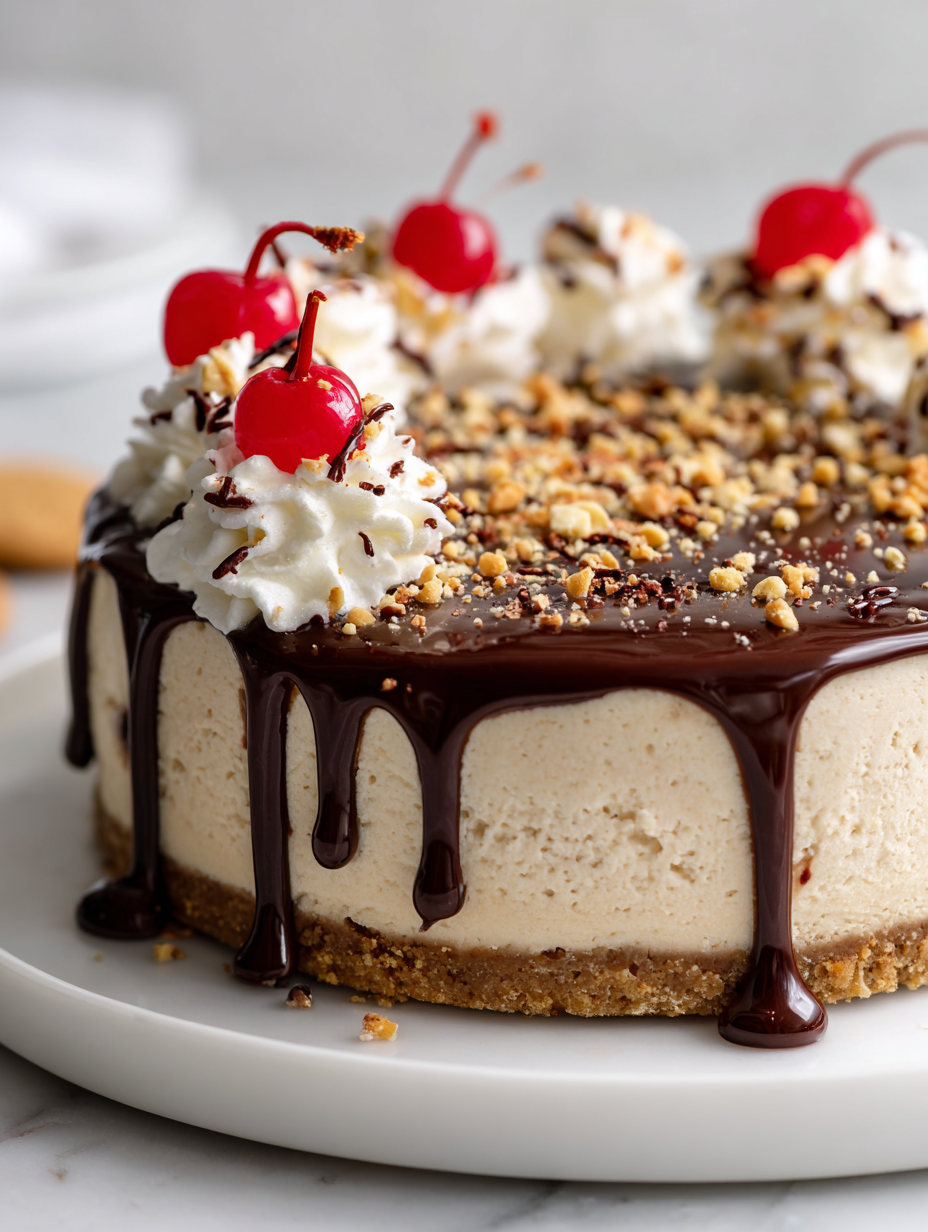
No-Bake Peanut Butter Cheesecake
Ingredients
Equipment
Method
- Crush the graham crackers into fine crumbs using a food processor or by sealing them in a zip-top bag and crushing with a rolling pin. Mix the crumbs with melted butter until evenly combined, resembling damp sand.
- Press the crumb mixture firmly into the bottom of a springform pan, creating an even crust. Chill in the refrigerator for about 15 minutes to firm up.
- In a large mixing bowl, beat the softened cream cheese until silky smooth and fluffy, about 2-3 minutes. This step helps create a creamy filling without lumps.
- Add the peanut butter, powdered sugar, lemon juice, and a pinch of salt to the cream cheese. Mix until well combined and creamy, about 2 minutes, scraping down the sides as needed.
- Whip the heavy cream to soft peaks using a mixer, then gently fold it into the cream cheese mixture with a spatula to keep the filling light and airy.
- Pour the smooth filling over the chilled crust, smoothing the top with a spatula. Cover with plastic wrap and refrigerate for at least 4 hours or overnight until set and firm.
- Once set, carefully remove the sides of the springform pan. Decorate the top with chopped peanuts, chocolate drizzle, or other toppings as desired.
- Slice with a hot, sharp knife dipped in hot water for clean cuts. Serve chilled, perhaps with additional toppings for extra flair. Enjoy your rich, creamy peanut butter cheesecake!
Pro tips for perfect cheesecake
- Bolded mini-head: Chill your peanut butter before mixing—cold peanut butter helps it incorporate smoothly without becoming greasy.
- Bolded mini-head: Use room temperature cream cheese—it whips up silky without lumps, making your filling extra creamy.
- Bolded mini-head: Press crust firmly—compact it well and chill for at least 15 minutes to prevent crumbling when slicing.
- Bolded mini-head: Fold whipped cream gently—preserve airiness for a light, fluffy texture that contrasts with the dense peanut butter.
- Bolded mini-head: Let the cheesecake sit at room temp for 10 minutes before slicing—this softens the cut and highlights the creamy interior.
- Bolded mini-head: Drizzle toppings just before serving—chocolate or peanut butter swirl adds shine and extra flavor, but do it right before slicing.
- Bolded mini-head: Use a hot, sharp knife—dip in hot water, wipe dry, then slice for clean cuts without cracks or smudges.
Common mistakes and how to fix them
- FORGOT to check crust consistency → Fix by pressing firmly and chilling before filling.
- DUMPED filling too hot → Chill filling slightly before pouring, avoid melting the crust.
- OVER-TORCHED edges → Cover edges with foil if they brown too fast.
- MISSED to fully chill → Ensure at least 4 hours in fridge, or overnight for best set.
Quick fixes and pantry swaps
- When the crust crumbles, patch with a thicker layer of melted butter and press firmly again.
- Splash a teaspoon of hot water into the filling if it’s too stiff to spread smoothly.
- When edges over-brown, shield with foil immediately to prevent burnt flavors and color.
- Dumped filling too hot? Chill it for 10 minutes before pouring to avoid melting the crust.
- heading
Make-Ahead and Storage Tips
- Prepare the crust and press it into the pan a day ahead. Keep refrigerated for a fresh, crisp base.
- Assemble the filling up to 24 hours in advance. Cover and store in the fridge to let flavors meld and thicken slightly.
- The cheesecake keeps well for 2-3 days in the fridge. The texture remains creamy, with peanut butter aroma intensifying overnight.
- To serve, let sit at room temperature for 10 minutes. Re-whip or gently stir if it appears a little firm after refrigerating.
Top questions about peanut butter cheesecake
1. Can I use crunchy peanut butter?
Use creamy peanut butter for the best smoothness and rich flavor. Crunchy can work but might make texture uneven.
2. Can I make it lighter or dairy-free?
Yes, you can substitute full-fat Greek yogurt for some of the cream cheese to lighten it up, but expect a tangier flavor.
3. How long do I need to chill it?
Chill the cheesecake for at least 4 hours, preferably overnight. It should feel firm and hold its shape when sliced.
4. My filling is too runny or too thick, what now?
If the filling is too runny, add a little more cream cheese or chill it longer. If it’s too thick, fold in a splash of milk or cream before pouring.
5. How do I get clean slices?
Use a hot knife to cut slices cleanly. Dip in hot water, wipe dry, then slice for smooth, crack-free pieces.
6. Why does my cheesecake crack?
To prevent cracks, don’t overmix the filling and avoid opening the fridge door during the first few hours of setting.
7. Can I freeze leftovers?
Yes, you can freeze it for up to a month. Wrap tightly in plastic wrap and thaw overnight in the fridge before serving.
8. Can I change the crust ingredients?
Yes, you can swap graham crackers for digestive biscuits or Oreo crumbs (remove the filling for a more intense chocolate flavor).
9. Should I add salt?
Adding a pinch of salt enhances the peanut flavor and balances the sweetness. Adjust to taste in the filling.
10. Can I decorate the cheesecake?
Yes, adding chopped peanuts or a drizzle of chocolate on top just before serving adds texture and visual appeal.
This no-bake peanut butter cheesecake feels like a little secret I keep in my fridge—rich, creamy, and surprisingly easy to make. It’s a reminder that sometimes, the best desserts come from simple ingredients and a bit of patience in the fridge. When I serve it, I know it’s not just about the flavor, but the quiet satisfaction of pulling something together without fuss.
In these busy days, it’s worth holding onto recipes that deliver comfort and joy without heating up the kitchen. A slice of this could be a small pause—something sweet to savor slowly, with a lingering peanut aroma and a melt-in-your-mouth finish. Honestly, it’s become a go-to for me, especially when I want something homemade that feels like a treat, no matter the hour.

Hi, I’m Grace Morgan, and welcome to my kitchen. This is a space shaped by family meals, curious hands reaching for snacks, paws under the table, and recipes that come together in the middle of real life. I’m a food blogger, a mother, and a passionate pet keeper. Most days, I’m cooking with one eye on the stove and the other on someone who needs me, whether that’s a child asking for a taste or a dog hoping something might fall.


