
There’s something quietly sacred about the slow process of braising lamb shanks. It’s not just about cooking meat; it’s about carving out a ritual that demands patience and presence. As the lamb slowly relaxes in its red wine bath, the kitchen fills with a rich, almost primal aroma that seems to settle into your bones.
This dish is a reminder that good things take time—time to develop deep flavors and textures that are worth every minute. When the shanks finally fall apart on your fork, that first taste will feel like a small victory, a reward for sticking with a method that’s as meditative as it is satisfying.
Cooking this way turns a simple piece of meat into a soulful experience. It’s honest, unpolished, and perfect for when you want to slow down, breathe deep, and enjoy something hearty and true. Nothing fancy, just a straightforward journey into rich, comforting flavors.
Focusing on the comforting ritual of slow braising lamb shanks with red wine, highlighting the meditative process and the rich, deep flavors that develop when patience meets heat.
Slow Braising as a Ritual
- Cooking this dish reminds me of quiet Sunday afternoons spent with family, the aroma filling the house with warmth.
- There’s a rush of pride when the lamb shanks finally fall apart, tender and packed with deep, wine-infused flavor.
- I find joy in the slow, deliberate process—each step feels like a small act of care that pays off in richness.
- This recipe connects me to my roots, a simple yet satisfying way to bring everyone around the table.
- Filing away the leftovers, I think about how the sauce tastes even better the next day, richer and more concentrated.
The story behind this recipe
- Cooking lamb shanks this way became a weekend ritual after I once found a dusty bottle of red wine tucked away in the back of my pantry. That wine, slightly oxidized but still rich, inspired me to slow cook with what I had, turning it into something deeply comforting and unexpectedly bright. It’s funny how a simple mistake—using an older wine—can lead to a new tradition.
- This dish reminds me that sometimes, the best flavors come from improvisation and patience. The aroma of braising lamb mingling with wine, garlic, and herbs fills the house with a warm, almost nostalgic scent that makes everything else fade away. It’s honest food, made with a bit of chaos and a lot of love.
- heading: ‘The story behind this recipe’
Historical and Cultural Notes
- Lamb shanks have been a comfort food in Mediterranean and Middle Eastern cuisines for centuries, often slow-cooked to tender perfection.
- The technique of braising tougher cuts like shanks originated as a way to transform inexpensive, collagen-rich meat into something rich and flavorful.
- Red wine has long been paired with lamb in European culinary traditions, believed to enhance the meat’s natural gaminess and add depth.
- In medieval Europe, slow-cooked meats with wine and herbs were reserved for feasts among the nobility, evolving into the hearty stews we enjoy today.
- The tradition of braising meat in wine actually dates back to ancient times, where it was used to tenderize and flavor meat before modern refrigeration.
Ingredient breakdown: key components
- Lamb shanks: I love how the marrow and connective tissue melt into rich, silky goodness. If yours are a bit leaner, add a splash of beef broth to boost the flavor.
- Red wine: I use a hearty, full-bodied wine, but feel free to swap for a decent bottle of Chianti or Merlot. The key is that deep, almost smoky aroma it brings to the sauce.
- Garlic: I prefer lots of it in this dish—its pungent aroma transforms during braising into something sweet and mellow. Skip if you’re not a garlic fan, but it really rounds out the flavor.
- Onions: I opt for yellow or Spanish onions for sweetness, but shallots can bring a more subtle, nuanced depth. Caramelize them until golden for extra richness.
- Herbs: Fresh thyme and rosemary are my go-to—they infuse the sauce with a piney, fragrant note. Dried works in a pinch, just use a little more and add early to release their oils.
- Olive oil: I use a good-quality extra virgin for browning the shanks—its grassy, slightly peppery note really shines through. You could swap for vegetable oil, but it’ll lose that bright aroma.
- Broth or stock: I choose beef or chicken to deglaze the pan, adding a layer of savory depth. Water is fine if that’s what you have, but it won’t be quite as rich.
Spotlight on key ingredients
Lamb shanks:
- I love how the marrow and connective tissue melt into rich, silky goodness. If yours are a bit leaner, add a splash of beef broth to boost the flavor.
- Red wine: I use a hearty, full-bodied wine, but feel free to swap for a decent bottle of Chianti or Merlot. The key is that deep, almost smoky aroma it brings to the sauce.
Herbs:
- Red wine: I prefer a robust, full-bodied variety—think Merlot or Cabernet—because it develops a rich, smoky aroma as it reduces. Use what you like to sip; it’ll deepen the sauce.
- Fresh thyme and rosemary are my go-tos—they infuse the sauce with a piney, fragrant note during braising. Dried herbs work, but add early to release their oils.
Notes for ingredient swaps
- Lamb shanks: Swap for beef short ribs for a similar richness, but expect a slightly different texture and flavor profile.
- Red wine: Use a robust grape juice or non-alcoholic red wine alternative for a family-friendly version with less depth.
- Garlic: Substitute with garlic powder—use about half the amount—though the fresh aroma won’t be quite the same.
- Onions: Shallots can replace onions for a subtler sweetness, or leeks for a milder, more aromatic note.
- Herbs: Fresh thyme and rosemary can be swapped for dried, but add dried herbs early to extract maximum flavor.
- Broth: Beef or chicken broth are ideal, but mushroom broth offers an earthy, umami twist that complements the lamb.
- Olive oil: Any neutral oil like vegetable or canola can be used, though it will lack the grassy aroma of extra virgin olive oil.
Equipment & Tools
- Dutch oven or heavy braising pan: for even heat and braising in the oven
- Chef’s knife: to season and prep ingredients
- Wooden spoon or spatula: for scraping up browned bits and stirring
- Meat thermometer (optional): to check for doneness if unsure
- Aluminum foil: to tent the meat while resting
Step-by-step guide to braising lamb shanks
- Equipment: Heavy Dutch oven or braising pan with a lid for even heat distribution.
- Preheat your oven to 160°C (320°F). Season lamb shanks generously with salt and pepper.
- Heat a tablespoon of olive oil over medium-high heat in the pan. Brown the shanks for about 4-5 minutes per side until deeply golden. Remove and set aside.
- In the same pan, add sliced onions and chopped garlic. Cook until softened and fragrant, about 5 minutes. Scrape up browned bits for flavor.
- Deglaze with a cup of red wine, scraping the bottom. Bring to a simmer and cook for 2 minutes to reduce slightly, about 150 ml.
- Add herbs (thyme, rosemary), a bay leaf, and enough beef or chicken broth to partially cover the shanks. Return shanks to the pan, nestling them into the liquid.
- Bring the mixture to a simmer on the stovetop, then cover with the lid. Transfer to the oven and braise for 2.5 to 3 hours, until meat is tender and falling off the bone.
- Check after 2 hours: the meat should be soft and easily pull apart. If not, continue cooking, checking every 15 minutes.
- Once cooked, remove shanks and tent with foil. Place the pan on the stovetop over medium heat. Simmer the sauce until thickened, about 10-15 minutes, stirring occasionally.
- Taste and adjust seasoning with salt and pepper. If sauce is too thin, add a splash of red wine or a teaspoon of cornstarch slurry and simmer until glossy.
- Rest the lamb shanks for 10 minutes. Serve hot, spooning sauce over the meat, with crusty bread or mashed potatoes.
Let the shanks rest loosely covered with foil for 10 minutes. Then, spoon the thickened sauce over the meat and serve immediately. Pair with mashed potatoes, polenta, or crusty bread for soaking up the sauce.
How to Know It’s Done
- Lamb shanks: meat should be tender and falling apart when gently prodded with a fork.
- Sauce: should be rich, glossy, and thick enough to coat the back of a spoon.
- Color: browned exterior on shanks, deep ruby hue in the wine reduction.
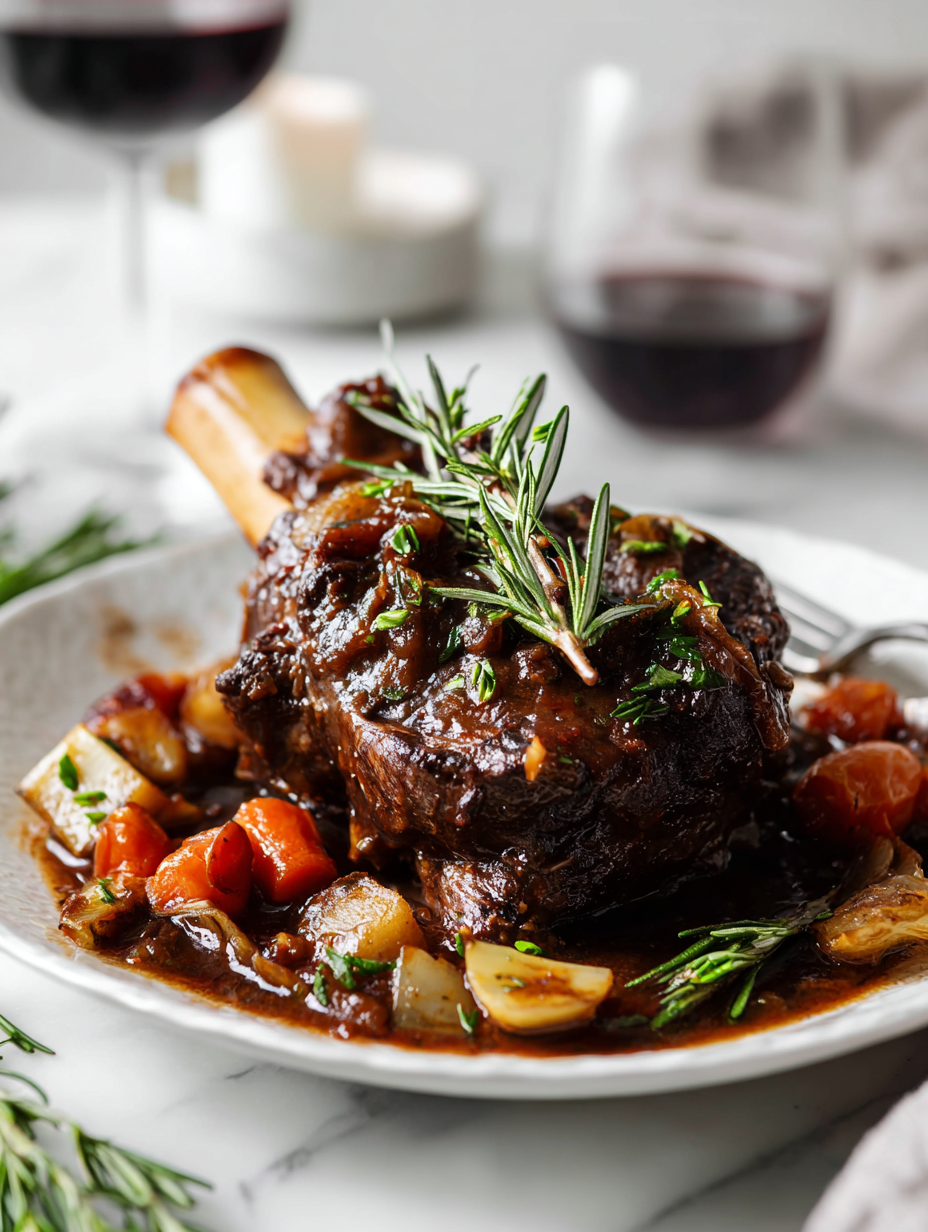
Slow Braised Lamb Shanks in Red Wine
Ingredients
Equipment
Method
- Preheat your oven to 160°C (320°F). Season the lamb shanks generously with salt and pepper.
- Heat olive oil in a Dutch oven over medium-high heat until shimmering. Carefully add the lamb shanks and sear for about 4-5 minutes per side until they develop a deep golden-brown crust. This step creates a rich base flavor.
- Remove the browned shanks and set aside. In the same pot, add sliced onions and chopped garlic. Cook, stirring occasionally, until the onions soften and become fragrant, about 5 minutes. The kitchen will fill with a savory aroma.
- Pour in the red wine, scraping up any browned bits from the bottom of the pan. Bring to a gentle simmer and cook for about 2 minutes, allowing the wine to reduce slightly and deepen in flavor.
- Return the lamb shanks to the pot, nestling them into the aromatic liquid. Add herbs (thyme, rosemary), bay leaf, and pour in enough broth to come halfway up the sides of the shanks. Bring the mixture to a simmer on the stove.
- Cover the pot with a tight-fitting lid and transfer it to the preheated oven. Braise for 2.5 to 3 hours, until the meat is tender and falling off the bone. Check after 2 hours; cook longer if needed.
- Once cooked, remove the shanks and tent them with foil to rest while you focus on the sauce. Place the Dutch oven on the stovetop over medium heat and simmer the remaining liquid until it thickens into a glossy, rich sauce, about 10-15 minutes.
- Taste the sauce and adjust seasoning with additional salt and pepper if needed. If the sauce is too thin, add a splash of wine or a teaspoon of cornstarch mixed with water, then simmer until it coats the back of a spoon.
- Rest the lamb shanks for about 10 minutes, then serve them generously coated with the luscious sauce. Pair with mashed potatoes, polenta, or crusty bread to soak up all those rich flavors.
Pro tips for tender lamb shanks
- BROWN WELL: Ensure lamb shanks are deeply caramelized for maximum flavor—don’t rush the searing process, it’s where the richness starts.
- DEGLAZE PROPERLY: Use warm wine to loosen flavorful browned bits; it prevents sticking and builds a deeper sauce.
- LOW AND SLOW: Keep the oven at 160°C (320°F); slow braising breaks down connective tissue, making the meat fall-apart tender.
- SAUCE CONSISTENCY: Reduce the braising liquid until glossy and thick enough to coat the back of a spoon—this intensifies flavor.
- REST BEFORE SERVING: Let the shanks rest for at least 10 minutes; it redistributes juices and keeps the meat juicy.
- TASTE AND ADJUST: Always taste the sauce before serving—balance acidity with a pinch of salt or a splash of wine if needed.
Common mistakes and how to fix them
- FORGOT to brown the lamb shanks thoroughly → Sear until deeply caramelized for flavor depth.
- DUMPED in cold wine → Warm wine slightly to aid better reduction and flavor infusion.
- OVER-TORCHED the sauce → Reduce heat and stir constantly to avoid burning or sticking.
- SKIPPED resting time → Let the meat rest for 10 minutes for juicier, more tender results.
Kitchen quick fixes for lamb shanks
- If the sauce is too thin → Splash in a little red wine or a teaspoon of cornstarch slurry, then simmer until glossy.
- When the lamb isn’t tender → Cover and cook longer, checking every 15 minutes for fall-apart goodness.
- Splash extra oil if lamb sticks → Use a neutral oil and ensure the pan is hot enough for browning.
- Patch over burnt sauce → Remove from heat immediately, add fresh wine, and stir vigorously to lift burnt bits.
- Shield shanks from over-torquing → Use medium heat and avoid rushing the searing step to prevent over-browning.
Prep, store, and reheat tips
- You can prep the lamb shanks and brown them a day ahead; store in an airtight container in the fridge for up to 24 hours. The aroma will deepen overnight.
- The sauce can be made a day in advance; once cooled, keep it covered in the fridge for up to 2 days. Reheat gently, smelling the rich, wine-infused aroma as it warms.
- Leftovers keep well in the fridge for 3-4 days. Reheat on the stove over low heat, stirring occasionally until steaming and the sauce thickens slightly.
- For longer storage, freeze the braised shanks and sauce separately for up to 2 months. Thaw overnight in the fridge and reheat slowly, watching for the sauce to regain its glossy sheen.
Top questions about Lamb Shanks with Red Wine Sauce
1. What kind of lamb shanks should I choose?
Look for shanks with plenty of marrow and some connective tissue—those parts melt into the sauce, adding richness. If yours are leaner, add a splash of beef broth during braising.
2. Which wine works best for this recipe?
Use a full-bodied red wine like Merlot or Cabernet Sauvignon for depth. The wine should smell rich and slightly smoky, which enhances the sauce’s flavor.
3. How do I know when the lamb is browned enough?
Brown the shanks until they’re deeply caramelized, about 4-5 minutes per side. The rich aroma of browned meat is key to flavor. If they’re not browning well, increase the heat gradually.
4. How long should I braise the lamb shanks?
Cook the meat slowly in the oven at 160°C (320°F) for about 2.5 to 3 hours until it’s falling apart. Check after 2 hours; if it’s not tender, give it more time.
5. How do I know when the sauce is ready?
The sauce should be glossy and thick enough to coat a spoon. If it’s too thin, simmer it until it reduces and deepens in color.
6. Can I make this dish ahead of time?
You can prepare the braised lamb and sauce a day ahead. Store in the fridge for up to 2 days, then reheat gently on the stove until steaming and fragrant.
7. What if the lamb isn’t falling apart?
If the lamb isn’t tender after braising, cover and cook longer, checking every 15 minutes. For a sauce that’s too thin, add a splash of wine or a cornstarch slurry and simmer.
8. Why does olive oil matter in this recipe?
Use a good-quality olive oil for browning. During cooking, the oil’s grassy, peppery aroma will infuse the meat, making it more flavorful.
9. What should I do if the sauce burns?
To fix a burnt sauce, remove it from heat immediately, add a splash of wine, and stir vigorously to lift the burnt bits. Keep stirring until smooth.
10. How do I get the seasoning right?
Always taste and adjust seasoning at the end. A pinch of salt or a splash of wine can balance the richness and highlight the flavors. Rest the meat for 10 minutes before serving.
This dish isn’t just about the flavors; it’s about the slow, deliberate act of bringing meat and wine together into something soulful. When the aroma hits your nose, it’s a reminder of how patience can turn simple ingredients into a memorable meal.
Sharing this with others feels like a quiet victory—an unspoken celebration of time, care, and honest cooking. It’s a dish that demands nothing fancy, just a moment to slow down and enjoy something genuinely satisfying.

Hi, I’m Grace Morgan, and welcome to my kitchen. This is a space shaped by family meals, curious hands reaching for snacks, paws under the table, and recipes that come together in the middle of real life. I’m a food blogger, a mother, and a passionate pet keeper. Most days, I’m cooking with one eye on the stove and the other on someone who needs me, whether that’s a child asking for a taste or a dog hoping something might fall.


