
There’s something almost hypnotic about that caramel glaze forming on pork ribs, especially when you’re slow roasting them to perfection. It’s that sticky, smoky-sweet crust that makes you want to grab the ribs with your bare hands and dive right in, no utensils needed. I love how the process turns simple ingredients into a glossy, irresistible finish that’s more about texture and flavor than any fancy marinade.
This recipe isn’t about quick fixes or flash-in-the-pan techniques. It’s about patience—building layers of flavor as the ribs gently cook, developing that caramelized exterior that crackles when you bite into it. It’s a messy, joyful kind of cooking that’s all about savoring every sticky, tender moment, and I’ve come to cherish how that slow transformation makes every bite worth the wait.
Focusing on the sticky, caramelized glaze that develops during slow oven roasting, this recipe emphasizes the transformation of simple pork ribs into a finger-licking, glossy masterpiece through a deliberate, low-and-slow technique, highlighting the sensory joy of that first crackling bite.
The caramelization secret
- I still get excited just thinking about that first bite, where the glaze is crackly and sweet, clinging to my fingers.
- There’s a quiet pride in pulling off a perfectly sticky, fall-off-the-bone rack after slow roasting for hours.
- Nostalgic memories flood back when I see the glaze turn deep amber, reminding me of family barbecues and lazy weekends.
- Sometimes, I feel a rush of relief knowing I’ve managed to balance that smoky-sweet coating without it turning bitter or burnt.
The story behind this recipe
- This recipe actually started from a simple craving for something deeply savory and sticky, but I wanted to push beyond the usual barbecue glazes. One day, I found myself experimenting with different sweeteners and soy-based sauces, aiming for that perfect balance of caramelized richness and smoky depth. It became a Sunday ritual—slow-cooking and tasting until the glaze just cracked, sticky and glossy, right off the ribs.
- What keeps me coming back to this recipe is that moment when the ribs come out of the oven, their surface shimmering with a thick, caramelized coat that crackles when you bite into it. It’s a messy, imperfect process—sometimes the glaze gets a little too thick, or I overdo the broil—but that’s part of the charm. Every batch feels like a small victory, a little bit of culinary chaos turned into something worth savoring.
- heading: ‘The inspiration behind this glaze’
Trivia and Cultural Roots
- Pork ribs have been a staple in many cultures, from Chinese char siu to American BBQ, each with their own sticky, sweet glaze traditions.
- The technique of slow roasting ribs with a caramelized glaze dates back to rustic cooking methods, where patience turned simple cuts into tender, flavorful bites.
- Historically, sticky glazes often used honey, molasses, or fruit preserves—ingredients that add both sweetness and a shiny, sticky finish.
Key ingredients in the glaze
- Pork ribs: I love using meaty, well-marbled racks that have a good balance of fat and lean—gives that juicy, tender bite. Swap for chicken wings if you want a leaner, quicker option, but the texture won’t be quite the same.
- Soy sauce: It adds that savory, umami backbone that deepens the glaze. If you’re avoiding soy, coconut aminos work well, though they’re a bit sweeter and less salty.
- Honey: The sticky sweetness that helps the glaze caramelize beautifully. Maple syrup is a good substitute, but it’s earthier and less floral—adjust the amount for sweetness.
- Brown sugar: I prefer the molasses note it brings, but coconut sugar can be a good swap—just be aware it’s a bit milder and less sticky.
- Garlic: Fresh cloves give that pungent, aromatic kick. Dried garlic powder works in a pinch, but it’s less vibrant and can taste more muted.
- Liquid smoke: It’s the secret to that smoky depth without a grill. If you don’t have it, smoked paprika can add some smoky aroma, but it’s not quite the same.
- Rice vinegar: Adds a bright tang that balances the sweetness. Apple cider vinegar can also work, giving a slightly fruitier note that livens up the glaze.
Spotlight on key ingredients
Soy sauce:
- Pork ribs: I love using meaty, well-marbled racks that have a good balance of fat and lean—gives that juicy, tender bite. Swap for chicken wings if you want a leaner, quicker option, but the texture won’t be quite the same.
- It adds that savory, umami backbone that deepens the glaze. If you’re avoiding soy, coconut aminos work well, though they’re a bit sweeter and less salty.
- Honey: The sticky sweetness that helps the glaze caramelize beautifully. Maple syrup is a good substitute, but it’s earthier and less floral—adjust the amount for sweetness.
Brown sugar:
- I prefer the molasses note it brings, but coconut sugar can be a good swap—just be aware it’s a bit milder and less sticky.
- Garlic: Fresh cloves give that pungent, aromatic kick. Dried garlic powder works in a pinch, but it’s less vibrant and can taste more muted.
Notes for ingredient swaps
- Pork Ribs: I prefer using baby back or spare ribs for more meat and flavor, but beef short ribs can work if you want a richer, more intense chew.
- Soy Sauce: It adds umami and saltiness. Tamari or coconut aminos are good gluten-free or soy-free options, though they may be less salty and slightly sweeter.
- Honey: The sticky element. Maple syrup or agave nectar can be substitutes, but expect a different floral or earthy note, so adjust the quantity slightly.
- Brown Sugar: I like molasses richness. Coconut sugar or muscovado sugar can replace it, adding depth but slightly altering the caramelization.
- Garlic: Fresh garlic gives punch and aroma. Garlic powder can be used in a pinch, but it’s less vibrant and can taste more muted during cooking.
- Liquid Smoke: It mimics smoky flavor. Smoked paprika is a good alternative, adding aroma and color, but it won’t replicate the true smoky depth.
- Rice Vinegar: For brightness and tang. Apple cider vinegar works well, offering a fruitier note that complements the sweetness and umami.
Equipment & Tools
- Oven: For slow roasting and caramelizing.
- Wire rack: Elevates ribs for even heat and prevents sitting in juices.
- Saucepan: To simmer and thicken the glaze.
- Basting brush: To apply the glaze evenly during broiling.
- Aluminum foil or baking sheet: To catch drips and make cleanup easier.
- Tongs: For handling hot ribs and turning them.
Step-by-step guide to sticky ribs
- Preheat your oven to 150°C (300°F). Place a large baking sheet with a wire rack inside. This setup helps air circulate and keeps the ribs from sitting in their juices.
- Pat the pork ribs dry with paper towels. Remove the thin membrane from the back for better texture and flavor penetration. Use a butter knife to loosen, then peel it off.
- Mix your dry rub—salt, pepper, garlic powder, smoked paprika, a pinch of chili powder. Rub it all over the ribs generously. Let sit for 15 minutes to absorb the flavors.
- Place the ribs on the wire rack, bone-side down, and slide into the oven. Roast slowly for about 2.5 to 3 hours. You want the meat to be tender but not falling apart.
- While they cook, make the glaze: combine soy sauce, honey, brown sugar, minced garlic, a dash of liquid smoke, and rice vinegar in a saucepan. Bring to a gentle simmer over medium heat, stirring until thickened, about 5-7 minutes.
- After the initial roasting, remove the ribs and brush generously with the glaze. Turn on the broiler to high, about 220°C (430°F). Broil for 3-5 minutes, keeping a close eye to prevent burning. The glaze should bubble and turn glossy.
- Flip the ribs and brush with more glaze. Broil for another 2-3 minutes, until the surface is crackly and caramelized. Watch for signs of burning—if the glaze darkens too quickly, lower the oven temp slightly.
- Remove from the oven and let rest for 5 minutes. This helps juices redistribute. Slice between the bones to serve. Serve hot, with any remaining glaze drizzled over.
- For the perfect finish, sprinkle with chopped scallions or sesame seeds if you like. The ribs should be sticky, glossy, with a crackly crust and tender meat inside.
Let the ribs rest for 5 minutes after removing from the oven. Slice between the bones, drizzle with any remaining glaze, and serve immediately while sticky and hot.
How to Know It’s Done
- Color: Ribs should have a deep, caramelized glaze with crackling edges.
- Texture: Meat should be tender and slightly pull away from the bone.
- Appearance: Glaze should be bubbling and glossy, not burnt or dry.
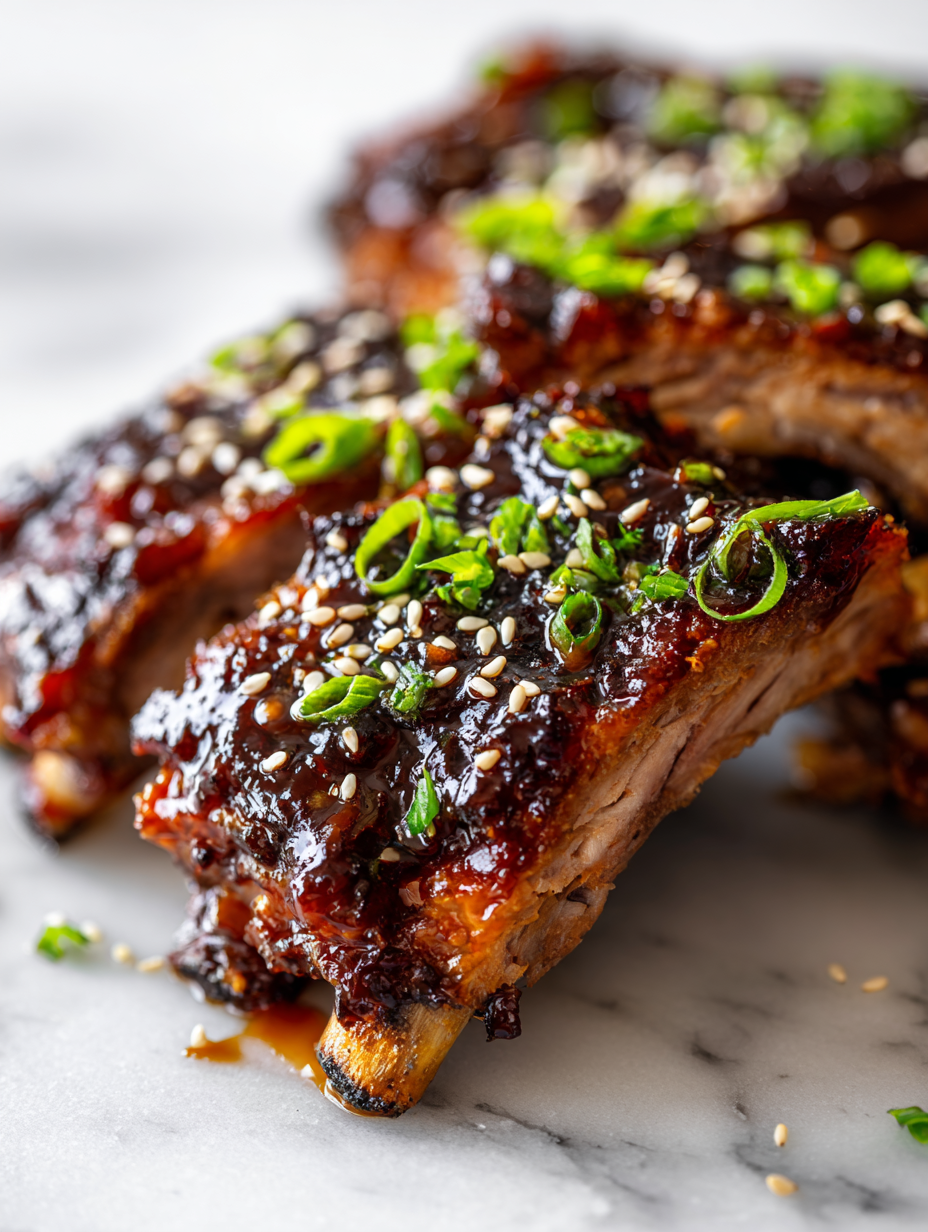
Slow-Roasted Sticky Caramel Glazed Pork Ribs
Ingredients
Equipment
Method
- Preheat your oven to 150°C (300°F). Line a baking sheet with foil and place a wire rack inside it to elevate the ribs. This setup ensures even slow roasting and easy cleanup.
- Pat the pork ribs dry with paper towels to remove excess moisture. Carefully slide a butter knife under the thin membrane on the back of the ribs and peel it off—this helps the seasonings penetrate and keeps the ribs tender.
- Mix together salt, black pepper, garlic powder, smoked paprika, and chili powder. Rub this dry spice mixture all over the ribs generously, pressing it into the meat for flavor penetration. Let the ribs sit for about 15 minutes while the flavors meld.
- Place the ribs on the wire rack, bone-side down, and slide into the oven. Roast slowly for 2.5 to 3 hours, until the meat is tender and pulling back from the bones slightly.
- Meanwhile, combine soy sauce, honey, brown sugar, minced garlic, liquid smoke, and rice vinegar in a saucepan. Bring the mixture to a gentle simmer over medium heat, stirring constantly until the glaze thickens slightly—about 5-7 minutes. It should be glossy and sticky.
- Once the ribs are cooked and tender, remove them from the oven. Using a basting brush, generously coat the top of the ribs with the thickened glaze. Turn on the oven's broiler to high (around 220°C/430°F).
- Broil the ribs for 3-5 minutes, keeping a close eye. The glaze should bubble and turn a deep amber color, forming a crackly, glossy crust. If the glaze starts to burn, reduce the broiler heat or remove from the oven sooner.
- Flip the ribs carefully with tongs, then brush more glaze over the underside. Broil for another 2-3 minutes to develop a crackling, sticky exterior that gleams beautifully.
- Remove the ribs from the oven and let them rest on the rack for about 5 minutes. This allows the juices to redistribute, making the meat tender and juicy.
- Slice the ribs between the bones to serve, optionally garnishing with chopped herbs or sesame seeds. The ribs should be sticky, glossy, and crackling on the outside, with tender meat inside ready to enjoy.
Tips for Perfect Sticky Ribs
- Bolded mini-head: Caramelize slowly → Keep an eye on the glaze during broiling to avoid burning; a deep amber is perfect.
- Bolded mini-head: Use a silicone brush → Apply glaze evenly with a heat-resistant brush for glossy, sticky coverage.
- Bolded mini-head: Watch the timing → Broil in short bursts, about 2-3 minutes, to develop crackly, caramelized surface without charring.
- Bolded mini-head: Rest before slicing → Let ribs sit for 5 minutes; this redistributes juices and prevents the meat from being rubbery.
- Bolded mini-head: Keep an eye on the oven → Maintain consistent temperature at 150°C (300°F) for tender, slow-cooked ribs with a sticky exterior.
Common mistakes and how to fix them
- FORGOT to preheat oven → Always heat oven before roasting for even cooking.
- DUMPED sauce too early → Wait until glaze bubbles and darkens for maximum flavor.
- OVER-TORCHED ribs → Reduce broil time or lower heat to prevent burning glaze.
- MISSED resting time → Let ribs rest 5 minutes for juicier, more tender meat.
Quick fixes and pantry swaps
- When sauce thickens too much, splash in a teaspoon of water to loosen it.
- If ribs stick to the rack, brush with oil before roasting for easy release.
- Splash some lemon juice if glaze becomes too sweet or cloying.
- Patch a crackling glaze by brushing on more sauce and broiling briefly again.
- Shield ribs with foil if glaze shimmers and smells like it’s burning—rescue in 5 seconds.
Prep, store, and reheat tips
- You can prep the ribs up to a day in advance: rub with seasoning, wrap tightly, and refrigerate—meat stays juicy, flavors deepen overnight.
- Store cooked ribs in an airtight container in the fridge for up to 3 days. The glaze will firm up but reheat well, developing that sticky, glossy texture again.
- Reheat gently in the oven at 150°C (300°F) covered with foil for about 15-20 minutes, or until heated through. Expect a slightly softer glaze, but still plenty sticky.
- For longer storage, freeze cooked ribs wrapped tightly in foil and then in a freezer bag. They’ll keep for up to 2 months and can be reheated from frozen with extra time, still sticky and flavorful.
Sticky Pork Ribs FAQs
1. How do I choose the best pork ribs?
Look for ribs with good marbling and a firm texture. They should feel heavy and have a pinkish hue. If they look dried out or pale, they might be old or low quality.
2. What’s the best way to prepare the ribs before cooking?
Preheat your oven to 150°C (300°F). Pat the ribs dry, remove the membrane for tenderness, then rub with seasoning. Roast on a wire rack for about 2.5-3 hours until tender.
3. How do I get that perfect sticky glaze?
Apply a generous layer of glaze in the final broil stage. Broil for 3-5 minutes until the glaze bubbles and turns glossy, but watch closely to prevent burning.
4. Can I make these ribs ahead of time?
Yes, you can refrigerate cooked ribs in an airtight container for up to 3 days. Reheat in a low oven covered with foil for about 15-20 minutes until hot and sticky again.
5. How can I add smoky flavor without a smoker or grill?
For extra smoky flavor, add a dash of smoked paprika to the glaze or brush ribs with a little liquid smoke before roasting. These add aroma and depth without a grill.
6. How do I know when the ribs are perfectly cooked?
Overcooking can make the meat dry. Check for tenderness around 2.5 hours, and look for meat that pulls away from the bone but isn’t falling apart. The glaze should be caramelized and crackling.
7. What tools are essential for making sticky ribs?
Use tongs to handle hot ribs, and a silicone brush for glazing. Keep an eye on the broiler to prevent burning. Rest the ribs for 5 minutes before slicing to keep juices in.
8. Can I substitute ingredients in the glaze?
You can swap honey with maple syrup or agave nectar for a different but still sticky sweetness. Use coconut sugar instead of brown sugar for a milder, less sticky option. Soy sauce can be replaced with coconut aminos if needed.
9. What’s the secret to perfect texture and flavor?
The key is slow roasting at a moderate temperature. Keep the glaze thick but not burnt, and broil in short bursts. Resting the ribs helps juices settle, making them tender and easy to cut.
10. What quick fixes if the glaze burns or gets too thick?
When the glaze starts to burn or smell acrid, quickly remove the ribs from the broiler. If the glaze is too thick, splash with a little water to loosen it. Keep a close eye during broiling to avoid charring.
The sticky pork ribs really capture that perfect balance of sweet, smoky, and tender, all in one messy bite. It’s a dish that’s about patience and embracing the imperfect, crackly glaze that develops naturally with slow roasting.
Whenever I make these ribs, I’m reminded of lazy weekends and backyard gatherings—simple, honest food that brings people together without fuss or fancy tricks. They’re a reminder that sometimes, the best bites come from just slow, honest cooking and a bit of sticky sauce.

Hi, I’m Grace Morgan, and welcome to my kitchen. This is a space shaped by family meals, curious hands reaching for snacks, paws under the table, and recipes that come together in the middle of real life. I’m a food blogger, a mother, and a passionate pet keeper. Most days, I’m cooking with one eye on the stove and the other on someone who needs me, whether that’s a child asking for a taste or a dog hoping something might fall.