
Roast chicken is a classic, but adding lemon and herbs transforms it into something unexpectedly lively. The citrus cuts through the richness of the meat, making each bite feel brighter and more invigorating. It’s a simple tweak that turns an everyday meal into a celebration of fresh, seasonal flavors.
I love how the lemon’s zing and the herbal aroma fill the kitchen as it roasts, creating a warm, inviting scent. It’s the kind of dish that makes me pause and take a deep breath, grateful for the little moments of cooking that remind me why I love food so much. Plus, it’s honest, unpolished, and straightforward—just like a good home-cooked meal should be.
This recipe is perfect for spring or whenever you need a punch of fresh flavor that feels both comforting and exciting. It’s not complicated, but it’s deeply satisfying, especially with a side of roasted vegetables or a simple green salad. Sometimes, it’s the simplest ingredients—lemon, herbs, chicken—that make the biggest impact.
Focusing on how the citrus and herbs create a symphony of bright, fresh flavors that cut through richness, making this roast chicken unexpectedly lively and perfect for spring dinners.
Bright Flavors, Simple Roast
- Nothing beats the smell of roasting citrus filling the kitchen, it’s pure comfort in aroma form.
- I remember the first time I added extra lemon zest—made the chicken unexpectedly vibrant, like spring on a plate.
- Cooking this dish always takes me back to family dinners, where simplicity and good flavors mattered most.
- There’s a quiet pride in mastering a recipe that feels both humble and sophisticated at the same time.
- When I see the golden skin crackle as it comes out of the oven, I feel a little rush of satisfaction.
The story behind this recipe
- This dish came together one rainy afternoon when I was craving something bright and comforting at the same time. I found myself rummaging through the fridge, grabbing lemons, fresh herbs, and a whole chicken, thinking of how those simple ingredients could somehow lift the gloom. It’s funny how a little citrus and a handful of herbs can turn an ordinary roast into a celebration of fresh flavors, especially when the weather feels heavy.
- I remember the first time I made this for friends—seeing their surprised faces when the meat was perfectly crispy and infused with lemon and thyme. It’s one of those recipes that feels honest, straightforward, and totally forgiving. It’s become a go-to for me whenever I want something familiar yet unexpectedly lively, especially during spring when everything feels ready to bloom.
- heading: ‘The story behind this recipe’
Historical and Cultural Trivia
- Historically, roast chicken with herbs and citrus has roots in Mediterranean cuisine, where lemon and fresh herbs are staples.
- Lemon was once considered a luxury ingredient in medieval Europe, often used to brighten dishes and preserve freshness.
- Herbs like thyme and rosemary have been used since ancient times for their aromatic and preservative qualities, especially in roasted meats.
- The combination of lemon and herbs in roasting techniques gained popularity in French country cooking, emphasizing simplicity and bright flavors.
- In many cultures, citrus-infused roasted poultry was believed to bring good luck and ward off evil spirits during festive seasons.
Ingredient breakdown
- Chicken: I prefer a whole bird for even cooking and flavor. You can swap with a smaller one, but watch cooking time and adjust accordingly.
- Lemon: The zest and juice bring brightness and acidity. If lemons are scarce, lime or orange zest can add a different but pleasant citrus note.
- Herbs: Fresh thyme and rosemary are my go-tos—they fill the kitchen with a fragrant, piney aroma. Dried herbs work in a pinch, but use less.
- Garlic: I love the pungent burst it adds, especially when roasted until golden. Skip if you’re sensitive to garlic or want a milder flavor.
- Olive oil: It helps crisp the skin and keeps the herbs sticking. Use a good quality extra virgin for that smoky, fruity depth.
- Salt & pepper: Essential for seasoning. Don’t skimp, especially on the skin—this is what makes it crave-worthy.
- Optional: A splash of white wine or chicken broth in the pan adds moisture and a subtle layer of flavor—perfect if you want extra juiciness.
Spotlight on key ingredients
Lemon:
- I love how the zest and juice brighten the chicken with a zesty, sharp aroma that fills the kitchen. It becomes the lively heart of the dish, especially when the skin crackles with a smoky edge.
- Herbs: Fresh thyme and rosemary release an intoxicating piney fragrance as they roast. Their aromatic oils seep into the meat, creating a layered, fragrant flavor that’s both earthy and bright.
Herbs:
- Chicken: I prefer a whole bird for even cooking and a juicy interior. The skin turns golden and crispy, with a delicate crackle that’s satisfying to bite into, especially after resting.
- Dried herbs can work in a pinch but lack the vibrant aroma of fresh. The fresh herbs release bursts of pine and earth, infusing the meat with a lively, aromatic essence during roasting.
Notes for ingredient swaps
- Dairy-Free: Olive oil or avocado oil can replace butter for roasting, keeping the skin crispy but missing the richness of butter.
- Herb Variations: Swap thyme and rosemary for sage or oregano; each adds a different aromatic note, but might alter the overall brightness.
- Citrus Alternatives: Lime or orange zest and juice can be used instead of lemon, offering a different but equally vibrant flavor profile.
- Garlic: Use garlic powder or roasted garlic if fresh isn’t available; the flavor will be milder or sweeter, respectively.
- Salt & Pepper: Use sea salt or smoked salt for a deeper, more complex seasoning; freshly cracked pepper provides a lively kick.
- Oil Choices: Canola or vegetable oil can substitute olive oil, but you’ll lose some smoky, fruity aroma and flavor depth.
- Stuffing Options: Add fresh herbs like parsley or basil in place of lemon and thyme; these change the aroma but still add fresh flavor.
Equipment & Tools
- Roasting pan or ovenproof skillet: To hold the chicken and collect drippings during roasting.
- Kitchen tongs: For turning and handling the hot chicken safely.
- Meat thermometer: To check internal temperature for doneness.
- Paper towels: To dry the chicken skin for crisping.
- Basting brush or spoon: To baste the chicken with pan juices for extra flavor.
Step-by-step roast chicken with lemon and herbs
- Preheat your oven to 220°C (430°F). Find a roasting pan or ovenproof skillet large enough to hold the chicken comfortably.
- Dry the chicken thoroughly with paper towels—this helps achieve crispy skin later. Season generously with salt and pepper inside and out.
- Stuff the cavity with halved lemons, a handful of fresh thyme sprigs, and a few garlic cloves if using. Ties the legs if needed to hold the stuffing.
- Rub the outside with olive oil, then sprinkle with more salt, chopped herbs, and lemon zest for a fragrant, crispy skin. Tuck lemon slices under the skin if desired.
- Place the chicken in the pan, breast side up. Roast uncovered for about 20 minutes at 220°C (430°F) to get a golden start.
- Lower the oven temperature to 180°C (350°F). Roast for about 1 hour to 1 hour 15 minutes, depending on size. Baste occasionally with pan juices.
- Check for doneness: the skin should be deeply golden, juices run clear when pierced, and the internal temperature reaches 75°C (165°F).
- If the skin is too dark before the chicken is cooked through, tent loosely with foil. If juices are not clear, give it a few more minutes.
- Remove from oven, cover loosely with foil, and let rest for 10–15 minutes. This allows juices to redistribute, keeping the meat moist.
- Carve and serve with a squeeze of fresh lemon and a sprinkle of herbs. Drizzle pan juices over the slices for extra flavor.
Rest the chicken loosely tented with foil for 10–15 minutes. Carve and serve with lemon wedges and herbs, drizzling pan juices over the meat for added brightness.
How to Know It’s Done
- Golden, crispy skin with a slight crackle when pressed.
- Juices run clear when pierced with a knife or skewer.
- Internal temperature reaches 75°C (165°F) in the thickest part of the thigh.
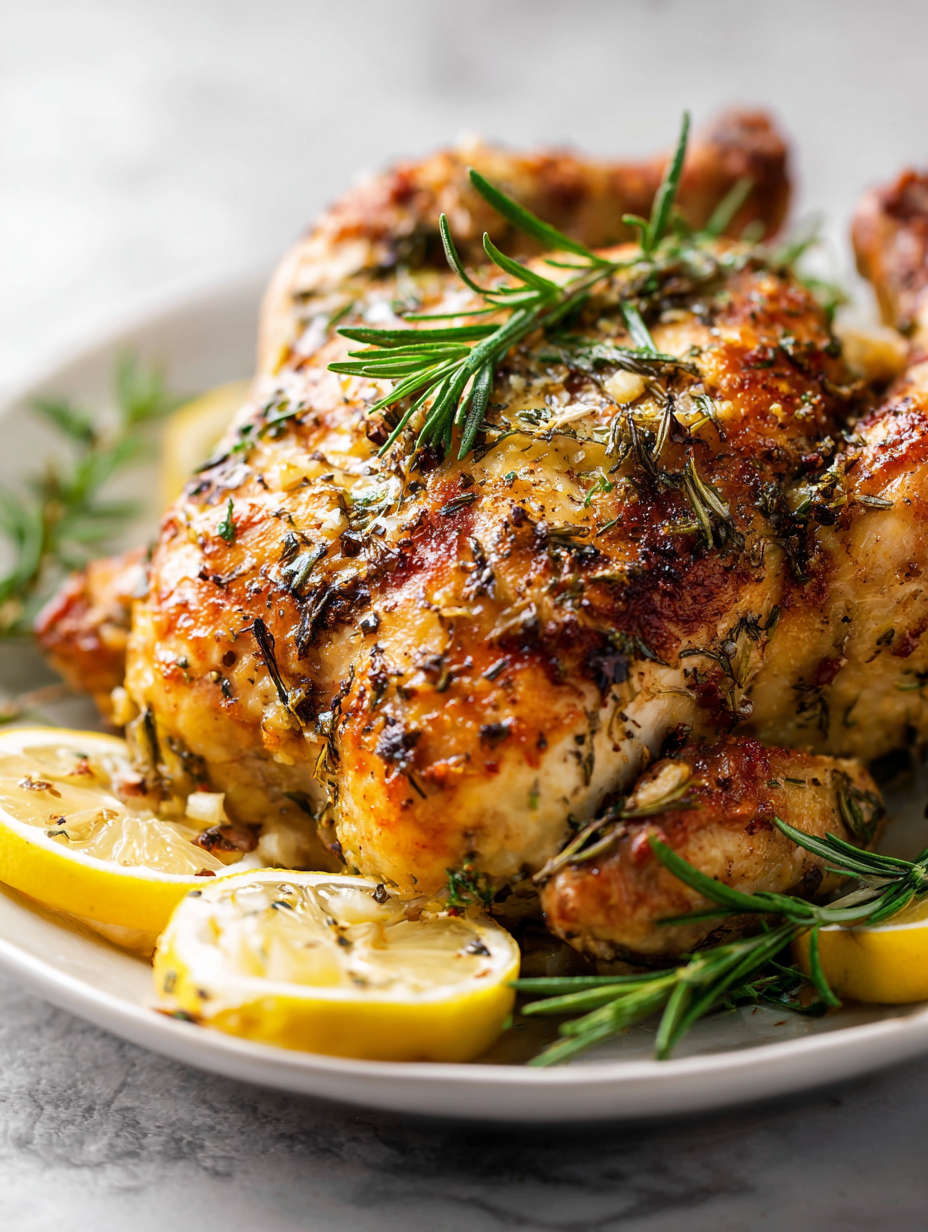
Lemon and Herb Roast Chicken
Ingredients
Equipment
Method
- Preheat your oven to 220°C (430°F). Place the chicken on a clean surface and pat it dry thoroughly with paper towels; this helps achieve crispy skin. Season the inside and outside generously with salt and pepper, rubbing it into the skin for flavor.
- Halve the lemons and stuff them inside the cavity along with a few sprigs of thyme and slices of garlic. Tuck the herbs under the skin or place them on top of the chicken for aromatic infusion.
- Rub the outside of the chicken with olive oil, then sprinkle over lemon zest, additional salt, chopped thyme, and rosemary. Use your hands to massage the herbs and zest into the skin, ensuring even coverage.
- Place the chicken in a roasting pan or ovenproof skillet, breast side up. Roast uncovered at high heat for about 20 minutes until the skin starts to turn golden and crispy.
- Reduce the oven temperature to 180°C (350°F). Continue roasting for approximately 1 hour to 1 hour 15 minutes, basting the chicken with pan juices every 20 minutes to keep the meat moist and flavorful.
- Check for doneness by inserting a meat thermometer into the thickest part of the thigh; it should read 75°C (165°F). The juices should run clear when pierced, and the skin should be deep golden and crispy.
- If the skin darkens too quickly, tent the chicken loosely with foil and continue roasting until fully cooked.
- Remove the chicken from the oven, transfer to a platter, and tent loosely with foil. Let it rest for 10 to 15 minutes to allow the juices to redistribute, ensuring moist, tender meat.
- Carve the chicken, squeeze fresh lemon juice over the slices for brightness, and sprinkle with additional herbs if desired. Serve with pan juices drizzled over the top for extra flavor.
Notes
Tips for Perfect Roast Chicken
- Crispy Skin: Pat the chicken dry thoroughly to remove excess moisture, helping the skin crisp up beautifully in the oven.
- Flavor Penetration: Rub the chicken generously with salt and herbs under the skin for more intense, aromatic flavor.
- Lemon Placement: Tuck lemon halves under the skin or inside the cavity for a burst of citrus aroma during roasting.
- Baste for Juiciness: Spoon pan juices over the chicken every 20 minutes to keep the meat moist and add flavor layers.
- Rest Properly: Let the chicken rest tented with foil for at least 10 minutes; this redistributes juices and keeps the meat tender.
- Monitor Temperature: Use a meat thermometer to ensure the thickest part reaches 75°C (165°F) for safe, juicy poultry.
- Herb Variations: Add sprigs of fresh herbs like parsley or sage in the cavity for extra aromatic complexity during roasting.
Common mistakes and how to fix them
- FORGOT to pat chicken dry → Leaves skin less crispy, dry thoroughly before roasting.
- DUMPED too much lemon juice → Use moderate amount to prevent overpowering the delicate flavors.
- OVER-TORCHED the skin → Lower oven temp or tent with foil if skin darkens too quickly.
- SKIPPED resting time → Rest meat for 10-15 minutes to keep juices from running out when carved.
Quick fixes and pantry swaps
- If skin isn’t crispy, splash with a little vinegar during roasting to help crackle.
- When chicken is undercooked, patch with foil and roast 5 more minutes, then check temperature.
- Dumped too much lemon juice? Pat the skin dry before roasting for better crispness.
- Over-torched skin? Shield with foil and lower oven temp, then continue roasting gently.
- When in doubt, use a meat thermometer—juices should run clear, and internal temp should hit 75°C.
Prep, store, and reheat tips
- You can prepare the chicken—dry, season, and stuff it—up to a day in advance. Keep it uncovered in the fridge to maintain crisp skin.
- Store leftovers in an airtight container in the fridge for up to 3 days. The lemon-herb flavor intensifies, making reheated slices bright and juicy.
- Reheat gently in a 150°C (300°F) oven, covered loosely with foil. Expect the skin to lose some crunch but stay flavorful and tender.
- For best results, use within 2-3 months if freezing. Thaw in the fridge overnight, then reheat as above for a quick, bright meal.
Top questions about roast chicken with lemon and herbs
1. How do I choose the best chicken?
Look for a chicken that feels heavy for its size, with smooth, unbroken skin. Freshness is key for flavor and juiciness.
2. Can I use dried lemon zest instead of fresh?
Use fresh lemons for the zest and juice; they add a bright, sharp flavor. Dried lemon zest can work if fresh is unavailable.
3. How do I know when the chicken is fully cooked?
Roast the chicken until the internal temperature hits 75°C (165°F) in the thickest part of the thigh; the juices should run clear.
4. Why isn’t my chicken skin crispy?
Pat the chicken dry thoroughly before roasting; excess moisture prevents the skin from crisping up and can make the meat soggy.
5. Why should I rest the chicken before carving?
Rest the cooked chicken loosely tented with foil for 10-15 minutes. This helps juices redistribute, keeping the meat moist and tender.
6. Is there a way to check doneness without a thermometer?
Use a meat thermometer for accuracy; visual cues can be misleading, and undercooked poultry is unsafe.
7. How can I prevent the skin from burning?
To keep the skin crispy, avoid covering the chicken too early. If it darkens too much, tent loosely with foil during roasting.
8. Can I substitute different herbs?
Add fresh herbs like thyme or rosemary inside and on top of the chicken for aromatic, fragrant roasting. Use dried herbs if fresh aren’t available.
9. Can I use a different oil instead of olive oil?
Use olive oil or a neutral oil for roasting. Olive oil adds smoky, fruity notes, but other oils can work if you prefer a milder flavor.
10. What’s the best oven temperature for roasting chicken?
Roast the chicken at high heat initially to get a golden, crispy skin, then reduce to ensure the meat cooks through without burning.
This roast chicken with lemon and herbs feels like a quiet celebration of simple, bright flavors that lift any meal. It’s not flashy, but the aroma alone makes the whole house feel warmer and more inviting. Sometimes, it’s these honest, straightforward dishes that remind us why we cook in the first place.
Whether it’s a weekend dinner or an impromptu feast, this recipe is a dependable anchor. The crispy skin, juicy meat, and zing of lemon stay fresh in my mind long after the last slice—proof that good food doesn’t need to be complicated to be memorable.

Hi, I’m Grace Morgan, and welcome to my kitchen. This is a space shaped by family meals, curious hands reaching for snacks, paws under the table, and recipes that come together in the middle of real life. I’m a food blogger, a mother, and a passionate pet keeper. Most days, I’m cooking with one eye on the stove and the other on someone who needs me, whether that’s a child asking for a taste or a dog hoping something might fall.


