
This dish came about from a craving for something rich but with a zing of freshness. Pork belly, with its crispy crackle and melt-in-your-mouth fat, pairs unexpectedly well with a simple apple puree that cuts through the heaviness with bright, tart notes. It’s a combo I keep returning to when I want something satisfying but not overly complicated.
There’s a messy joy in roasting pork belly until it’s crackling perfection, then balancing that with a smooth, slightly sweet apple mash. It feels like a little celebration of contrasts—the crispy skin and tender meat, the savory pork and zesty fruit. Honestly, it’s one of those dishes that makes the kitchen smell like a Sunday roast, even if it’s a weeknight.
This recipe explores the surprising harmony between the rich, fatty pork belly and the bright, tart apple puree, highlighting how contrasting textures and flavors can create a balanced, comforting dish that feels both indulgent and refreshingly simple.
Balancing indulgence with brightness
- Pulling apart that crispy pork skin still makes me smile, like a small victory every time.
- That first bite, with the sweet-tart apple puree, always takes me back to lazy Sunday afternoons at my grandma’s house.
- I love how the richness of the pork makes the apple’s brightness feel even sharper, like a little zing of joy.
- Sometimes I get a little too ambitious with the apple, ending up with mash that’s more sauce than side—still good, just messier.
- There’s a weird pride in mastering the crackling skin, knowing it’s all about patience and slow heat—worth every minute.
The story behind this recipe
- This dish grew out of my obsession with finding ways to elevate simple pork. One day, I was playing around with different fruit purees, trying to mimic the kind of brightness I missed in winter meals. The apple puree stuck because it reminded me of childhood—crisp apples and sweet memories. I wanted a way to make the pork both rich and lively, so I kept tweaking until the balance felt just right.
- Cooking pork belly has a kind of chaotic charm—cracking that crackling skin, waiting patiently as the fat renders down. Pairing it with the apple puree felt natural; the tartness cuts through the richness and makes the dish feel more alive. It’s honest cooking, simple but with a little twist of nostalgia and pride—something I keep coming back to when I want comfort with a spark.
- heading: ‘The story behind this recipe’
Contextual origin, trivia, or history
- Pork belly has been a staple in Asian cuisines for centuries, prized for its rich flavor and texture.
- The combination of pork and apple dates back to medieval Europe, where apples were used to balance fatty meats.
- In France, ‘poitrine de porc’ was often paired with fruit preserves, a precursor to modern apple puree pairings.
- Apple and pork pairings gained popularity in the 20th century as part of farm-to-table movements emphasizing local ingredients.
- The crispy crackling technique originated in Chinese roast pork recipes, now embraced worldwide for its satisfying texture.
Ingredient breakdown: key components
- Pork belly: I love the rich, fatty layers that melt in your mouth; for a leaner version, try pork shoulder, but it won’t get as crispy.
- Apple: The tartness and sweetness of a good cooking apple like Bramley or Fuji bring life to the puree; substitute with pears for a softer, milder flavor.
- Salt: I always salt the pork skin generously—this is what helps it crackle; don’t skimp, or you’ll miss that satisfying crunch.
- Sugar: Just a touch in the apple puree helps balance acidity; skip if you prefer a more tangy flavor, but it’s a nice counterpoint.
- Vinegar: A splash of apple cider vinegar in the puree brightens the fruit; use lemon juice for a sharper, more citrusy note.
- Herbs: Fresh thyme or rosemary adds a fragrant layer; dried herbs work too if fresh isn’t available, but use less.
- Oil: A neutral oil like vegetable or canola helps crisp the pork skin evenly; avoid strongly flavored oils that might mask the crackle.
Spotlight on Key Ingredients
Pork Belly:
- I love the way the fat melts into the meat, creating a contrast of crispy and tender layers; for a leaner option, try pork shoulder, but it won’t crackle the same.
- Pork skin: The key to crackling—must be dry and salted generously; its crackly texture is what elevates this dish beyond simple roasted pork.
Apple:
- Tart and firm apples like Bramley or Fuji give the puree a bright, zingy flavor that cuts through the richness; softer apples like Golden Delicious will make it milder and sweeter.
- The juiciness and acidity are essential to balance the pork; during cooking, they soften and intensify, releasing a fragrant aroma that’s both sweet and tangy.
Notes for ingredient swaps
- Pork Belly: I prefer the rich, fatty layers for maximum crackle and flavor; for a leaner feel, try pork shoulder, but it won’t get as crispy.
- Apple: Tart apples like Bramley or Fuji give the best brightness; substitute with pears if you want a softer, subtler sweetness.
- Salt: I salt generously to help crackling; if you’re low on salt, add a bit more during the final seasoning for crunch and flavor.
- Sugar: A little in the puree balances tartness, but skip if you want a more tangy, less sweet profile.
- Vinegar: Apple cider vinegar adds brightness; lemon juice can be a sharper, citrusy alternative for zing.
- Herbs: Fresh thyme or rosemary work beautifully; dried herbs are fine if fresh isn’t available—just use less to avoid overpowering.
- Oil: Neutral oils like vegetable or canola help crisp the skin evenly; steer clear of strongly flavored oils that could compete with pork’s richness.
Equipment & Tools
- Oven: To cook and crisp the pork belly at high heat.
- Wire rack: Elevates the pork for even roasting and crisping.
- Baking sheet: Catches drippings and supports the wire rack.
- Saucepan: To cook and mash the apple puree.
- Immersion blender or fork: To blend the cooked apples into a smooth or chunky puree.
- Sharp knife: To score the pork skin for crackling.
- Kitchen towels/paper towels: To dry the pork skin thoroughly before roasting.
Step-by-step guide to pork belly with apple puree
- Preheat your oven to 180°C (355°F). Pat the pork belly dry with paper towels. Score the skin in a crisscross pattern, being careful not to cut into the meat. Salt generously all over, especially pressing salt into the skin for crackling.
- Place the pork belly on a wire rack set over a baking sheet. Roast in the oven for 30 minutes to start rendering the fat and crisping the skin. Meanwhile, prepare the apple puree.
- While the pork is roasting, peel and core 3-4 tart apples (like Bramley or Fuji). Chop into chunks. In a saucepan, melt 1 tablespoon of butter on medium heat. Add the apples and cook until soft, about 10 minutes, stirring occasionally.
- Add 1-2 tablespoons of sugar and a splash of apple cider vinegar to the apples. Cook for another 5 minutes until the mixture is thick and glossy. Blend until smooth with an immersion blender or mash with a fork for a chunkier texture. Season with a pinch of salt. Keep warm.
- After the initial roasting, increase the oven temperature to 220°C (430°F). Return the pork to the oven, uncovered, and roast for an additional 20-25 minutes or until the skin is deeply golden and crispy. Keep an eye on it to prevent burning.
- Check the crackling: it should be crackly and puffed up. If not, turn up the heat slightly for a few minutes, but watch closely. If the skin isn’t crisping, increase oven temp and try broiling for 2-3 minutes, keeping a close eye.
- Remove the pork from the oven. Let it rest for 10 minutes on a cutting board, loosely covered with foil. This allows the juices to redistribute and the crackling to set.
- Slice the pork belly into thick pieces. Plate with a generous spoonful of warm apple puree on the side. Serve immediately, ensuring the skin remains crackly and the meat stays juicy.
- Resting tip: Let the pork sit for at least 10 minutes before slicing. This helps keep the meat tender and moist. Finish with a sprinkle of flaky sea salt for extra crunch.
Let the pork rest for 10 minutes, then slice. Serve with a spoonful of warm apple puree, ensuring the crackling remains crispy. Finish with a sprinkle of flaky sea salt if desired. Plate immediately to preserve the crackle.
How to Know It’s Done
- Crackling is golden, puffed, and crackly when pressed gently.
- Pork internal temperature reaches 70°C (158°F) for safe, juicy meat.
- Apple puree is smooth, bright, and slightly thick, with no excess liquid.
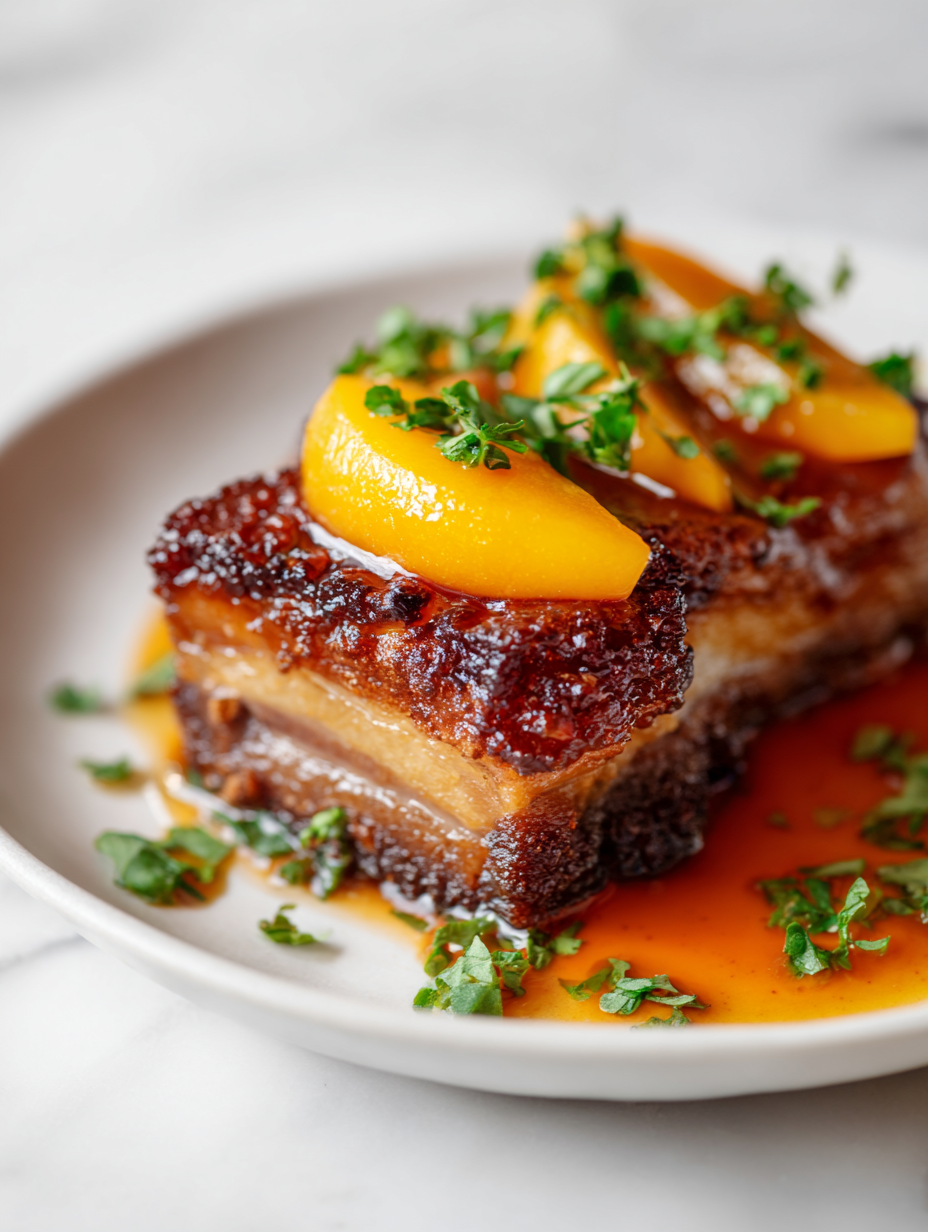
Crispy Pork Belly with Bright Apple Puree
Ingredients
Equipment
Method
- Preheat your oven to 180°C (355°F). Pat the pork belly dry with paper towels, especially the skin, to ensure maximum crispiness. Use a sharp knife to score the skin in a crosshatch pattern, being careful not to cut into the meat. Rub coarse salt generously over the skin and into the scores, pressing it in for a good seal.
- Place the pork belly on a wire rack set over a baking sheet, skin side up. Roast in the oven for about 30 minutes to start rendering the fat and beginning to crisp the skin. Meanwhile, peel, core, and chop the apples into chunks.
- Heat a saucepan over medium heat and melt the butter. Add the chopped apples along with a tablespoon of sugar and cook gently, stirring occasionally, until the apples are soft and fragrant, about 10 minutes. Add a splash of apple cider vinegar and cook for another 5 minutes, then blend the mixture until smooth with an immersion blender or mash with a fork for a chunkier texture. Season with a pinch of salt and set aside.
- Increase the oven temperature to 220°C (430°F). Return the pork to the oven and roast uncovered for another 20-25 minutes, or until the skin is deeply golden, puffed, and crispy. Keep a close eye to prevent burning, and if needed, broil for 2-3 minutes to enhance the crackle.
- Check the crackling by pressing gently; it should be puffed and crackly. Once ready, remove the pork from the oven and let it rest on a cutting board, loosely covered with foil, for 10 minutes. This helps the juices redistribute and the crackling set.
- Slice the pork belly into thick pieces, ensuring the crackling remains crisp. Plate the slices alongside a generous spoonful of warm apple puree. Garnish with fresh thyme or rosemary if desired, and serve immediately to enjoy the contrast of textures and flavors.
Notes
Pro tips for perfect crackling and flavor
- Bolded mini-head: Dry the pork skin thoroughly before salting to ensure maximum crackle.
- Bolded mini-head: Use a hot oven (220°C/430°F) for the final blast to achieve crispy, puffed crackling.
- Bolded mini-head: Score the skin in a crosshatch pattern to help the fat render and the crackling puff up evenly.
- Bolded mini-head: When blending the apple, taste and adjust sugar or vinegar to balance tartness and sweetness.
- Bolded mini-head: Rest the pork for at least 10 minutes before slicing to keep the meat juicy and the crackling crisp.
- Bolded mini-head: For an extra crispy skin, broil for 2-3 minutes at the end—watch closely to prevent burning.
- Bolded mini-head: Incorporate a splash of cider vinegar in the puree for a lively, bright contrast to the richness.
Common mistakes and how to fix them
- FORGOT to dry pork skin thoroughly → Results in soggy crackling, fix by patting dry and salting overnight.
- DUMPED the salt from the skin → Misses crackle; salt generously before roasting for crispy skin.
- OVER-TORCHED the pork skin → Causes burning; lower oven temp or cover if skin darkens too fast.
- MISSED resting time → Rest meat for 10 minutes to retain juices and crispness.
Quick fixes and pantry swaps
- When crackling isn’t crispy enough, splash a little vinegar on the skin and roast briefly.
- If the pork skin remains soggy, patch with more salt and blast at high heat for 5 minutes.
- Splash excess apple puree with lemon juice if too sweet or bland, to brighten the flavor.
- Damp pork skin? Shield with foil then return to oven—rescue the crackle with dry heat.
- If the apple puree is too thick, open the fridge briefly and microwave for 20 seconds for a shimmer of warmth.
Prep, store, and reheat tips
- You can prepare the apple puree a day in advance; store in an airtight container in the fridge for up to 2 days, where it will develop a richer, slightly tangy flavor.
- Roasted pork belly can be kept in the fridge for up to 3 days, wrapped tightly in foil or stored in an airtight container; reheat gently in a low oven (~120°C/250°F) until warmed through, keeping an eye on the crackle to prevent sogginess.
- For best crackling, reheat the pork uncovered to help maintain crispness—avoid microwaving which softens the skin and dulls the crackle.
- The pork’s fat will solidify when chilled, so let it come to room temperature before reheating for even warmth and to preserve the tender, juicy texture.
- Leftover apple puree can be frozen in a zip-top bag or container for up to a month; thaw in the fridge overnight and reheat gently, watching for any separation or loss of brightness.
Top questions about Pork Belly with Apple Puree
1. Can I use different apples or fruits?
Use tart apples like Bramley or Fuji for a bright, tangy puree that balances the richness of the pork. You can substitute pears for a softer flavor, but the tartness will be less pronounced.
2. How do I get crispy crackling?
Ensure the pork skin is completely dry and salted generously before roasting. This is crucial for achieving that crisp, crackly texture. If the skin is damp, it won’t crackle properly.
3. What’s the secret to perfect crackling?
Roast the pork at high heat (around 220°C/430°F) for the last 20-25 minutes to puff up and crisp the skin. Keep an eye on it to prevent burning.
4. How long should I rest the pork?
Rest the cooked pork belly for at least 10 minutes after roasting. This helps keep the meat juicy and the crackling crispy when sliced.
5. Can I make the puree in advance?
You can prepare the apple puree a day ahead, store it in the fridge, and reheat gently. The flavors deepen overnight, making it even more vibrant when served.
6. What if the crackling isn’t crispy enough?
If the pork skin isn’t crackling, try increasing oven temperature slightly or broiling briefly at the end. Just watch closely to avoid burning.
7. Should I score the pork skin?
Use a sharp knife to score the pork skin deeply in a crosshatch pattern. This helps fat render out and creates more surface area for crackling.
8. How do I fix thick apple puree?
If the apple puree is too thick, microwave it briefly or stir in a splash of hot water or lemon juice to loosen it up before serving.
9. How do I reheat without losing crunch?
When reheating leftovers, do so slowly in a low oven or covered in the microwave. Keep the crackling crisp by reheating uncovered at high heat for a few minutes.
10. How can I enhance the apple flavor?
For an extra lively flavor, add a splash of apple cider vinegar or lemon juice to the puree. It brightens the tartness and complements the pork beautifully.
This dish is a reminder that simple ingredients can come together in a way that feels both comforting and exciting. The crispy pork skin and bright apple puree make every bite a little celebration of textures and flavors. It’s a dish that feels like a warm hug, but with a spark of something unexpected.
Whenever I make this, I’m reminded how much joy there is in mastering a technique—like getting the crackling just right—and in balancing rich, tart, and sweet. It’s not just food; it’s a small act of love that turns a weeknight into something special. And honestly, that’s what keeps me coming back to the kitchen.

Hi, I’m Grace Morgan, and welcome to my kitchen. This is a space shaped by family meals, curious hands reaching for snacks, paws under the table, and recipes that come together in the middle of real life. I’m a food blogger, a mother, and a passionate pet keeper. Most days, I’m cooking with one eye on the stove and the other on someone who needs me, whether that’s a child asking for a taste or a dog hoping something might fall.


