
Making mushroom risotto is more than just cooking; it’s a slow, deliberate act that turns into a kind of meditation. Each stir releases a nutty, earthy aroma that fills the kitchen and calms my nerves. It’s a ritual I return to when I need grounding, a reminder that patience in the kitchen can translate to patience in life.
There’s something about the quiet rhythm of stirring that makes me focus on the present moment. Watching the rice gradually absorb the broth, transforming from plain to creamy, feels like a small piece of magic. It’s imperfect, messy at times, but that’s where the charm lives—this dish is about the process, not perfection.
Focusing on the meditative process of making mushroom risotto, highlighting how the slow stirring and aroma release turn cooking into a calming ritual.
The meditative art of stirring
- Cooking this dish always grounds me; the slow stirring feels like a gentle meditation.
- The earthy aroma of mushrooms filling the kitchen sparks a nostalgic rush of childhood weekends.
- There’s a quiet pride in watching the rice turn creamy and perfect after patience and attention.
- I love how this risotto invites a moment of pause, a small ritual amidst the chaos of daily life.
The story behind this recipe
- Making mushroom risotto is a ritual that reminds me of the quiet mornings at my grandmother’s house. She’d have a pot bubbling away with earthy mushrooms and stirring it patiently, whispering stories about her childhood. Those moments of slow, deliberate cooking felt like a meditation, and I try to carry that feeling into my own kitchen now.
- This dish came about during a particularly hectic week when I needed a grounding, calming project. The slow process of stirring and watching the rice absorb the broth, releasing that deep mushroom aroma, became a small act of mindfulness. It’s not just about the flavor—it’s about creating a space to breathe and focus.
- heading: The meditative art of stirring
Trivia and historical notes
- Mushroom risotto has roots in Italy’s northern regions, especially Lombardy, where rice paddies thrive in the Po Valley’s damp climate.
- The dish traditionally uses Arborio rice, named after the town of Arborio in Italy, known for its starchy grains that create that signature creamy texture.
- Mushrooms have been foraged and celebrated in Italian cuisine for centuries, symbolizing the earthy bounty of the forests and fields.
- Risotto’s slow-cooking method was historically a way to stretch expensive ingredients, turning simple rice and mushrooms into a luxurious comfort food.
- The dish’s popularity soared in the 20th century, becoming a symbol of rustic elegance and home cooking across Italy and beyond.
Ingredient breakdown
- Mushrooms: I love using a mix of cremini and shiitake—each adds a different earthy depth, and the smoky aroma when sautéed is irresistible. Feel free to swap in portobellos for a meatier bite.
- Arborio Rice: This rice’s starchy core makes the risotto creamy without cream. If you’re out, Carnaroli works well too, but skip short-grain sushi rice—won’t absorb broth the same way.
- Vegetable Broth: I prefer homemade or low-sodium to control salt. It’s the canvas for all those mushroom and rice flavors—use warm, so it doesn’t cool down the cooking process.
- Shallots & Garlic: They form the flavor base—finely chop and soften until translucent, about 5 minutes. Skip the garlic if you want a more subdued, earthy mushroom focus.
- Butter & Parmesan: I add butter at the end for richness and fresh Parmesan for that salty, umami punch. Use good quality cheese—cheap stuff can taste watery and dull.
- White Wine: A splash of dry white wine while cooking lifts everything—look for one you’d drink. If you skip it, add a tiny splash of lemon juice for brightness.
- Olive Oil: A drizzle of good olive oil at the start helps sauté and adds a fruity note. Skip the extra oil at the end unless you want a glossier finish.
Spotlight on key ingredients
Mushrooms:
- I love using a mix of cremini and shiitake—each adds a different earthy depth, and the smoky aroma when sautéed is irresistible. Feel free to swap in portobellos for a meatier bite.
- Arborio Rice: This rice’s starchy core makes the risotto creamy without cream. If you’re out, Carnaroli works well too, but skip short-grain sushi rice—won’t absorb broth the same way.
Arborio Rice:
- This rice’s starchy core makes the risotto creamy without cream. If you’re out, Carnaroli works well too, but skip short-grain sushi rice—won’t absorb broth the same way.
- ingredient
Notes for ingredient swaps
- Dairy-Free: Use coconut cream or cashew cheese instead of Parmesan for creaminess, but expect a slightly sweeter or nuttier flavor.
- Vegetarian: Swap chicken broth for vegetable broth—keeps it plant-based and preserves that savory depth.
- Gluten-Free: Ensure the rice is labeled gluten-free, and skip any thickening agents; risotto is naturally gluten-free.
- Mushroom Varieties: Porcini or maitake can replace cremini or shiitake—add a deeper umami and earthy aroma, but adjust cooking time slightly.
- Wine: Use dry vermouth or apple cider vinegar diluted with water if you want to avoid alcohol—adds acidity without the boozy note.
- Onions: Replace shallots with finely chopped regular onion—milder flavor, still adds sweetness and depth.
- Oil & Fats: Swap olive oil for avocado oil for a neutral, high-smoke point fat—good for a lighter finish.
Equipment & Tools
- Heavy-bottomed saucepan: Ensure even heat for consistent cooking.
- Wooden spoon: Stir and scrape the bottom without damaging the pan.
- Ladle: Add warm broth in controlled, small amounts.
- Sharp knife: Prep mushrooms, shallots, and garlic efficiently.
- Measuring cups and spoons: Maintain accurate liquid and ingredient portions.
Step-by-step guide to mushroom risotto
- Equipment & Tools: Use a heavy-bottomed saucepan or wide skillet (2-3 liters capacity) for even heat distribution. Have a wooden spoon for stirring, a ladle for broth, and a sharp knife for prepping mushrooms and aromatics.
- Prepare the broth: Warm vegetable broth in a pot over low heat, keeping it simmering but not boiling. This ensures quick addition without cooling the rice.
- Clean and chop mushrooms: Wipe mushrooms with a damp cloth, then slice them evenly. Finely chop shallots and garlic. Keep everything handy.
- Sauté mushrooms: Heat a tablespoon of olive oil over medium (about 160°C / 320°F). Add mushrooms, cook until they release their juices and turn a rich brown, about 8 minutes. Remove and set aside.
- Cook aromatics: In the same pan, add a little more oil if needed. Sauté shallots and garlic over medium heat until translucent, about 5 minutes. They should smell sweet and earthy.
- Toast the rice: Add Arborio rice to the aromatics, stir to coat each grain with oil. Cook for 2 minutes until edges look slightly translucent. The rice should smell nutty.
- Deglaze and begin simmering: Pour in white wine (about 100 ml). Stir until absorbed, about 1-2 minutes. The wine should shimmer and evaporate quickly.
- Add broth gradually: Ladle in about 1/2 cup (120 ml) of warm broth. Stir continuously until most liquid is absorbed. Repeat this process, adding broth in small increments, stirring constantly. Keep the heat at medium-low (around 85°C / 185°F).
- Monitor consistency: After about 18-20 minutes, taste the rice. It should be tender yet slightly al dente, with a creamy but not soupy texture. The rice should jiggle slightly when gently shaken.
- Incorporate mushrooms and finish: Return sautéed mushrooms to the pan. Stir in a knob of butter and freshly grated Parmesan cheese. Adjust seasoning with salt and pepper to taste. The risotto should look glossy and inviting.
- Rest briefly and serve: Remove from heat. Let sit for 2 minutes to thicken slightly. Plate immediately, garnishing with extra Parmesan or herbs if desired.
Let the risotto sit off heat for 2 minutes. Serve immediately, garnished with extra Parmesan or herbs. The final stir should reveal a luscious, creamy consistency.
How to Know It’s Done
- Rice is tender with a slight bite (al dente) upon tasting.
- Risotto appears glossy and creamy, not soupy or dry.
- Arborio grains jiggle slightly but hold their shape when shaken.
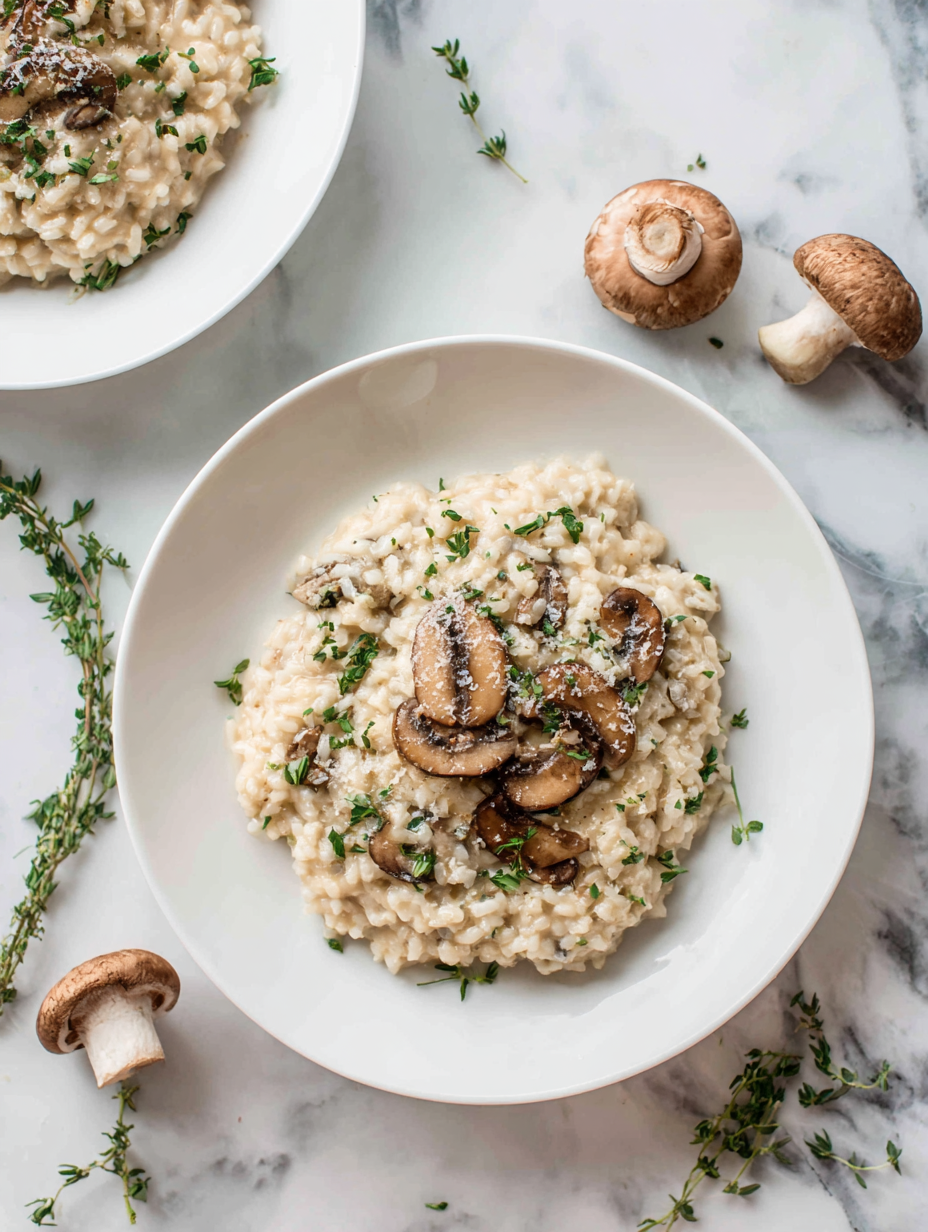
Creamy Mushroom Risotto
Ingredients
Equipment
Method
- Begin by warming your vegetable broth in a saucepan over low heat, keeping it hot but not boiling.
- Clean the mushrooms with a damp cloth and slice them evenly. Finely chop the shallots and garlic, keeping everything within reach.
- Heat 1 tablespoon of olive oil in a large, heavy-bottomed pan over medium heat. Add the sliced mushrooms and sauté until they release their juices and turn a deep brown, about 8 minutes. Remove them from the pan and set aside.
- In the same pan, add another tablespoon of olive oil if needed, then add the chopped shallots and garlic. Cook gently until they become translucent and fragrant, about 5 minutes.
- Add the Arborio rice to the pan with the aromatics. Stir well to coat each grain with oil and cook for about 2 minutes until the edges look slightly translucent and the rice smells nutty.
- Pour in the white wine and stir until it’s mostly absorbed, about 1-2 minutes. You’ll see the wine shimmer and evaporate, leaving a fragrant aroma.
- Begin adding the warm broth a ladleful at a time, about half a cup, stirring constantly. Wait until most of the liquid is absorbed before adding the next ladleful. Maintain medium-low heat for gentle simmering.
- Continue stirring and adding broth until the rice is tender yet slightly al dente, about 18-20 minutes. The mixture should be creamy and the rice grains should jiggle lightly when shaken.
- Gently fold the sautéed mushrooms back into the rice, then stir in the butter and Parmesan cheese until melted and glossy. Season with salt and pepper to taste.
- Remove the pan from heat and let it sit for 2 minutes to thicken slightly. Serve immediately, garnished with extra Parmesan or herbs if desired.
Notes
Pro tips for perfect risotto
- BOLD BASICS: Use a wide, shallow pan to promote even heat and prevent overcrowding, which can cause steaming instead of sautéing.
- STIR OFTEN: Keep a gentle, steady motion while adding broth and cooking to release the rice’s starchy creaminess without breaking grains.
- TOAST THE RICE: Before adding liquid, lightly toast the rice for about 2 minutes until edges look translucent; it boosts flavor and texture.
- BURN WARNING: If the rice sticks or smells burnt, turn the heat down immediately and add a splash of warm broth to deglaze and cool the pan.
- FINAL TOUCH: Finish with a generous knob of butter and freshly grated Parmesan off heat for that glossy, flavorful finish.
- BROTH TEMPERATURE: Keep your broth warm, not boiling, so it doesn’t shock the rice and slows down absorption—warmth keeps everything smooth.
- MUSHROOMS LAST: Sauté mushrooms separately until deeply browned, then fold in at the end to keep their texture and smoky aroma intact.
Common mistakes and how to fix them
- FORGOT to stir constantly → Stir gently but continuously to prevent rice sticking.
- DUMPED all broth at once → Add broth gradually, in small ladles for creamy texture.
- OVER-TORCHED mushrooms → Sauté mushrooms over medium heat, not high, to avoid burning.
- USED cold broth → Keep broth warm for even cooking and quick absorption.
Quick fixes and pantry swaps
- When rice sticks, splash a little warm broth and stir gently.
- If broth runs out too quickly, patch with hot water to maintain creaminess.
- Splash with lemon juice if mushrooms smell off or too earthy.
- Shield overcooked mushrooms with a quick sauté to revive their smoky aroma.
- If you forget to stir, do a quick five-second rescue with a splash of broth and vigorous stirring.
Prep, store, and reheat tips
- Prep the broth: Keep it warm on the stove, so it’s ready to add—cold broth will slow cooking and make rice clump.
- Slice and sauté mushrooms ahead: Cool completely, then refrigerate in an airtight container for up to 1 day. Reheat briefly before adding to rice.
- Chop shallots and garlic in advance: Store in an airtight container in the fridge—use within 1-2 days for fresh flavor.
- Cooked risotto can be refrigerated: Store in an airtight container for up to 2 days. Reheat gently over low heat, adding a splash of broth or water, and stir until creamy and hot to the touch.
- Reheating note: Risotto tends to lose creaminess when cold. To restore texture, stir in a bit of warm broth and heat slowly, watching for that glossy, oozy finish.
Top questions about Mushroom Risotto
1. Can I use regular rice instead of Arborio?
Use a starchy rice like Arborio or Carnaroli for the best creamy texture. Skipping this makes the risotto less velvety.
2. Should I sauté the mushrooms separately?
Cook the mushrooms until deeply browned, not just softened. They’ll release smoky aroma and deepen flavor.
3. How much broth should I add at once?
Add broth gradually, about half a cup at a time, stirring constantly. This releases starch and creates creaminess.
4. How do I know when the risotto is done?
Taste the rice near the end; it should be tender but still have a slight bite, not mushy.
5. Can I skip the cheese?
Finish with a knob of butter and freshly grated Parmesan for richness and shine. Adjust salt to taste.
6. How long can I keep leftovers?
Serve immediately for the best texture. Risotto tends to thicken as it cools and can become gluey.
7. How do I reheat leftover risotto?
Reheat gently over low heat, stirring in a splash of broth or water to restore creaminess and prevent sticking.
8. Should broth be hot or cold when added?
Use warm broth to keep the cooking process consistent. Cold broth cools down the pan and slows absorption.
9. How do I prevent mushrooms from becoming rubbery?
Avoid overcooking the mushrooms; sauté until deeply browned, not just cooked through, to preserve smoky flavor.
10. How often should I stir during cooking?
Stir frequently but gently, especially when adding broth, to release enough starch and keep grains intact.
Cooking this risotto turns a simple ingredient list into a slow, mindful act. The earthy aroma, the gentle simmer, that creamy, cheesy finish—each step feels like a quiet conversation with the kitchen.
In a world that’s always rushing, this dish reminds me to slow down and savor the process. It’s not just about the flavor, but about carving out a moment of calm, one gentle stir at a time.

Hi, I’m Grace Morgan, and welcome to my kitchen. This is a space shaped by family meals, curious hands reaching for snacks, paws under the table, and recipes that come together in the middle of real life. I’m a food blogger, a mother, and a passionate pet keeper. Most days, I’m cooking with one eye on the stove and the other on someone who needs me, whether that’s a child asking for a taste or a dog hoping something might fall.